
Herb gardens work hardest when they combine good design with easy access. Position them where you can reach them from the kitchen, plant the herbs you actually cook with, and give the layout enough structure to look good even in winter when half the planting has died back.
This guide covers three workable herb garden layouts for UK spaces, the herbs that survive SE England winters, the costs for 2026, and the design principles that make a herb garden readable from October through to May.
Three Herb Garden Layouts That Work
Herb gardens fall into three main layout types, each suited to different spaces and how you use herbs.
1. Formal Geometric Pattern (Knot Garden or Parterre)
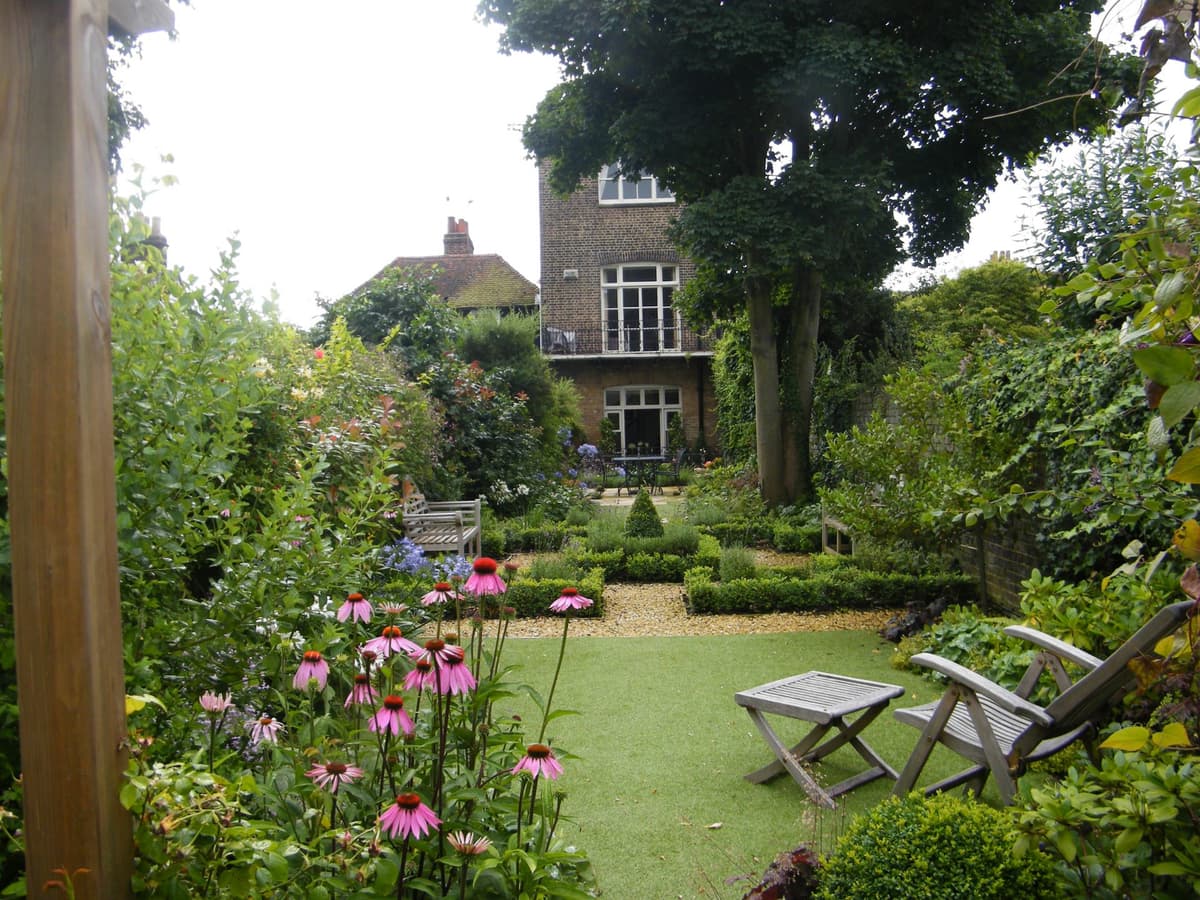
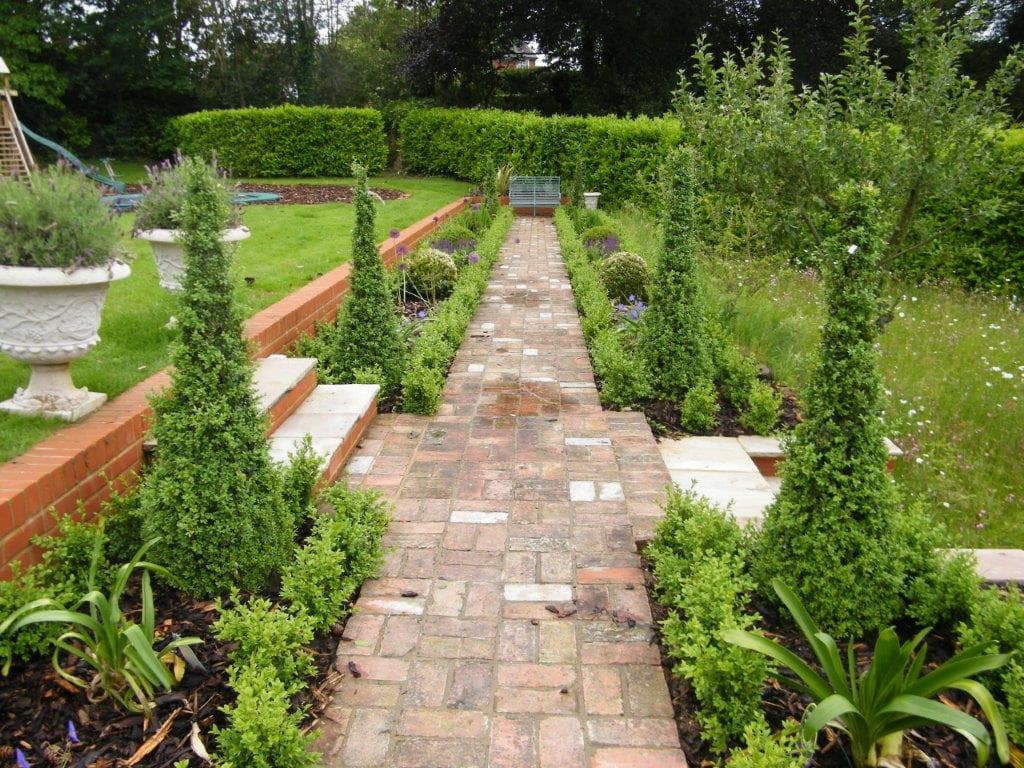
The formal herb garden uses low evergreen hedging (usually box, but increasingly yew or germander) to create geometric compartments, each filled with a single herb or a mix. It reads strongly in winter when the structure plants hold the design together.
Best for: Front gardens, courtyard focal points, larger plots (minimum 3m x 3m for a simple four-square pattern).
Dimensions: Four 1.2m x 1.2m squares with 60cm paths between. Total footprint 3.6m x 3.6m including edging.
Structure plants: Box (Buxus sempervirens Suffruticosa) for 20-30cm edging, £4.50-£7 per plant, 5 plants per metre. For a 12m perimeter, expect £270-£420 for box edging.
Alternative hedging: Yew (Taxus baccata, slower but box blight resistant, £5-£9 per plant), germander (Teucrium chamaedrys, Mediterranean, drought-tolerant, £8-£12 per plant).
Maintenance: Clip box or yew twice a year (May and August). Formal patterns need commitment.
2. Raised Bed Kitchen Herb Garden
Raised beds give you control over soil, drainage, and height. They warm up faster in spring (Mediterranean herbs like that), and you can work the beds without bending. Most practical layout for serious cooking.
Best for: Vegetable gardens, side returns, patios, anywhere you want instant access and good drainage.
Dimensions: Three 2.4m x 1.2m raised beds, 45cm high, with 60cm paths. Total footprint 5m x 4.8m.
Build cost: Pressure-treated softwood sleepers £15-£25 each (need 16 for three beds), scaffold board edges £8-£12 per 3m length, or brick/block raised beds £180-£350 per bed built. Railway sleepers (reclaimed) £25-£60 each but may contain creosote.
Soil mix: 60% topsoil, 30% sharp sand or grit (for drainage), 10% compost. For three 2.4m x 1.2m x 0.45m beds, you need 3.9 cubic metres. Topsoil £45-£65 per cubic metre delivered, sharp sand £40-£55 per tonne, compost £35-£50 per cubic metre. Total soil cost £280-£420.
Maintenance: Top-dress with compost each spring. Mulch Mediterranean herbs (rosemary, thyme, oregano) with 2-3cm gravel to prevent winter wet rot.
3. Container Herb Garden (Patio or Balcony)
Containers let you move tender herbs under cover in winter, group by water needs, and garden on solid surfaces. Use terracotta for Mediterranean herbs (it breathes, prevents waterlogging), plastic or glazed for moisture-lovers like mint and parsley.
Best for: Patios, balconies, rental properties, tiny spaces.
Pot sizes: 30cm diameter minimum for single herbs (rosemary, bay), 40-50cm for herb mixes (basil, parsley, coriander trio).
Cost: Terracotta pots £12-£35 (30cm), £25-£65 (50cm). Glazed ceramic £20-£80. Lightweight resin £15-£40. For a six-pot herb garden (three 30cm, three 40cm), expect £180-£350.
Compost: John Innes No.2 for woody herbs (rosemary, thyme, sage), peat-free multipurpose for leafy herbs (basil, coriander, parsley). Add 20% horticultural grit to Mediterranean herb pots.
Drainage: Raise pots on feet (£3-£8 per set) to prevent waterlogging. Essential for terracotta in winter.
Essential UK Herbs: What to Plant
Start with perennial woody herbs (rosemary, thyme, sage) for structure, add hardy perennials (chives, mint, oregano) for reliability, and sow annual leafy herbs (basil, coriander, parsley) in succession from April.
Perennial Woody Herbs (Evergreen Structure)
Rosemary (Rosmarinus officinalis): Evergreen, 60-120cm depending on variety. Upright forms (Miss Jessopp, Tuscan Blue) for hedging, prostrate (Prostratus) for edges. Needs full sun, sharp drainage. Survives -10°C but hates winter wet on heavy clay. £6-£12 per 2-litre pot.
Thyme (Thymus vulgaris): Low evergreen mat, 15-25cm. Common thyme for cooking, lemon thyme (T. citriodorus) for fish, creeping thyme (T. serpyllum) for paths. Full sun, tolerates drought. £4-£8 per 9cm pot.
Sage (Salvia officinalis): Grey-green evergreen, 60cm. Common green sage for cooking, purple sage (Purpurascens) and golden sage (Icterina) for colour. Full sun to part shade, good drainage. Replace every 4-5 years when leggy. £5-£9 per 2-litre pot.
Bay (Laurus nobilis): Evergreen tree, slow-growing, clips to shape. Standard lollipop forms £35-£150 depending on stem height, bushy plants £15-£30. Needs shelter from cold east wind (below -5°C, leaves scorch). Grow in pot and move to shelter in hard winters.
Hardy Perennial Herbs (Die Back in Winter)
Chives (Allium schoenoprasum): Grassy clumps, 30cm, pink pom-pom flowers May-June (edible). Full sun to part shade. Divide clumps every 3 years. £3-£6 per plant.
Mint (Mentha species): Invasive spreader, 40-60cm. Grow in sunken pots or it will take over. Spearmint (M. spicata) for general use, peppermint (M. x piperita) for tea, apple mint (M. suaveolens) for fruit salads. Part shade tolerates. £4-£7 per plant. Confine roots or regret it.
Oregano/Marjoram (Origanum vulgare): Low mat, 30cm, pink flowers July-August (bees love it). Greek oregano (O. vulgare subsp. hirtum) has strongest flavour. Full sun, good drainage. £4-£8 per plant.
Fennel (Foeniculum vulgare): Tall feathery foliage, 1.5-2m, yellow umbels. Bronze fennel (Purpureum) for colour. Self-seeds freely. Full sun. £6-£10 per plant. Warning: grows large, not for tiny spaces.
Annual Leafy Herbs (Sow Fresh Each Year)
Basil (Ocimum basilicum): Tender annual, 30-40cm. Needs warmth (15°C+ at night), full sun, consistent moisture. Sow indoors March-April, plant out after last frost (mid-May in SE England). Pinch out tips to keep bushy. Sweet basil for Italian, Thai basil for Asian cooking, purple basil for salads. £2.50-£4 per plant or £2 for seed packet (50+ plants).
Coriander (Coriandrum sativum): Fast-growing, bolts in heat. Sow every 3 weeks April-August for continuous leaf supply. Prefers cool weather (spring/autumn best). Full sun to part shade. £2-£3 per plant or £1.50 for seed (successive sowings needed).
Parsley (Petroselinum crispum): Biennial (treat as annual). Flat-leaf (Italian) for flavour, curly for garnish. Slow to germinate (3-4 weeks), soak seed overnight. Sow March-July. Part shade tolerates. £2-£4 per plant or £2 for seed.
Dill (Anethum graveolens): Feathery annual, 60-90cm, yellow umbels. Sow direct April-June (dislikes transplanting). Full sun. £2 for seed.
SE England Soil Considerations
Most culinary herbs are Mediterranean (rosemary, thyme, oregano, sage) and hate winter waterlogging. SE England soils vary from heavy London clay to Kent chalk to Essex sandy loam. All need amendments for herbs.
London Clay (Westminster, Wimbledon, Bromley, Croydon): Heavy, waterlogged in winter, cracks in summer. Dig in 30-40% horticultural grit (3-6mm) or sharp sand to 30cm depth before planting woody herbs. Raise beds 20-30cm or grow in containers. Clay kills rosemary faster than cold.
Chalk (North Downs, Kent, Surrey Hills): Free-draining, alkaline (pH 7.5-8.5), thin topsoil. Herbs love it. Add organic matter (compost, leaf mould) annually to retain moisture in summer. Avoid acid-lovers (none in culinary herbs anyway).
Sandy Loam (Essex, Suffolk border): Free-draining, warms fast, low fertility. Perfect drainage for Mediterranean herbs but needs annual compost mulch (5cm) to hold moisture and fertility. Water young plants until established.
Design Principles That Work Year-Round
Herb gardens look best when evergreen structure plants (box, rosemary, sage) create a permanent framework, and you fill gaps with seasonal annuals and short-lived perennials. The structure reads in winter, the fillers give abundance in summer.
Evergreen bones (40-50% of planting): Rosemary, box edging, bay, sage, thyme. These hold the design October-May.
Deciduous perennials (30-40%): Chives, oregano, fennel, mint. These fill out May-September and die back cleanly.
Annuals (20-30%): Basil, coriander, parsley, dill. Sow/plant fresh each year for abundance.
Hardscaping: Use gravel paths (self-binding £45-£65 per tonne, 10cm deep), brick edging (reclaimed £0.80-£1.50 each, need 30-40 for 3m x 3m bed perimeter), or stone sett borders (£18-£35 per square metre). Hard surfaces separate herb foliage from soil splash (reduces rot, keeps leaves cleaner).
Costs: Three Herb Garden Budgets
Budget Container Herb Garden (£180-£280)
- Three 30cm terracotta pots: £36-£105
- Three 40cm terracotta pots: £75-£195
- John Innes No.2 compost (70 litres): £18-£28
- Horticultural grit (25 litres): £8-£12
- Six herb plants (rosemary, thyme, sage, chives, oregano, mint): £28-£48
- Pot feet (6 sets): £18-£48
Total: £183-£436
Mid-Range Raised Bed Herb Garden (£950-£1,650)
- Three 2.4m x 1.2m raised beds (sleeper construction): £180-£375
- Soil mix (3.9 cubic metres topsoil/sand/compost): £280-£420
- 24 perennial herb plants (rosemary, thyme, sage, chives, oregano, mint, fennel): £120-£192
- Annual herb seeds/plants (basil, coriander, parsley, dill): £18-£32
- Gravel mulch for Mediterranean herbs (0.5 cubic metres): £25-£40
- Self-binding gravel paths (2 cubic metres): £90-£130
- Labour (DIY): £0 | Professional installation: £650-£1,200
Total (DIY): £713-£1,189 | Total (Professional): £1,363-£2,389
Formal Box-Edged Herb Garden (£1,850-£3,200)
- Box edging plants (60 plants for 12m perimeter): £270-£540
- Brick or stone edging (20 square metres): £360-£700
- Topsoil and compost (2 cubic metres): £160-£230
- 32 perennial herb plants: £160-£256
- Annual herb plants: £24-£40
- Gravel infill for paths (1.5 cubic metres): £68-£98
- Labour (professional installation): £800-£1,500
Total: £1,842-£3,364
Herb Garden Placement: Where to Put It
Herbs need 6+ hours sun for strong flavour (part shade acceptable for parsley, chives, mint). Position within 10 metres of the kitchen door, or you will not use it. A 15-metre walk in the rain means you reach for dried herbs instead.
Ideal positions:
- Side return between kitchen and back garden (if south/west facing)
- Raised beds near patio doors
- Pots clustered by kitchen window
- Sunny front garden (if no better options)
Avoid: North-facing walls (insufficient sun), under trees (too shady, dry soil, root competition), far corners of the garden (you will forget they exist).
Maintenance Through the Year
March-April: Cut back woody herbs (rosemary, sage, thyme) by one-third to encourage bushy growth. Sow basil indoors. Plant new perennials. Top-dress raised beds with compost.
May-June: Plant out basil after last frost. Sow coriander every 3 weeks. Clip box edging. Mulch Mediterranean herbs with gravel. Divide chives clumps if overcrowded.
July-August: Harvest herbs before flowering for strongest flavour (except oregano and thyme, which are fine in flower). Deadhead to extend leafy growth. Water containers daily in heat. Clip box edging second time.
September-October: Sow parsley for overwintering. Take rosemary and sage cuttings (insurance against winter losses). Last coriander sowing. Reduce watering as temperatures drop.
November-February: Protect tender herbs (bay, lemon verbena) with fleece if frost forecast below -5°C. Avoid harvesting in hard frost (damages plants). Plan next year's layout and order seeds.
Common Mistakes to Avoid
1. Planting mint in open ground: It spreads by underground runners and will colonise a 2-metre radius in three years. Grow in sunken pots (bury a 30cm pot to the rim, plant mint inside).
2. Overwatering Mediterranean herbs: Rosemary, thyme, oregano, and sage hate wet feet. Water until established (first 6 weeks), then leave them alone except in severe drought. Winter wet kills more than cold.
3. Growing basil outdoors too early: Basil is tropical. Below 10°C at night, it sulks and gets mildew. Wait until late May in SE England, or grow in a greenhouse.
4. Letting herbs flower unchecked: Once herbs flower, leaf production drops and flavour declines. Pinch out flower buds on basil, coriander, and parsley to extend harvest. Exception: let thyme and oregano flower (bees love them, flavour holds).
5. Planting too far from the kitchen: Convenience matters. If the herb garden is 30 metres away, you will not use it. Put it where you can see it from the kitchen window.
Herb Garden Design Services in SE England
Designing a herb garden as part of a broader garden layout requires balancing practical access with visual structure. At Soil Sisters, we integrate herb gardens into Kent, Surrey, Essex, and London garden designs, using formal edging, raised beds, or container groupings to create year-round interest.
We provide full design plans (£1,500-£3,500 depending on complexity), 3D visuals showing the herb garden in context, detailed planting plans with UK suppliers, and construction drawings for raised beds or formal layouts. Build costs vary from £800 for a simple three-bed layout to £3,500+ for box-edged parterre herb gardens with brick paths.
Our approach starts with how you cook. We ask what herbs you use weekly, how much sun the space gets, and whether you want low-maintenance perennials or are happy to sow annuals. The design follows from that. For professional herb garden design across SE England, get in touch or call 0203 834 9807 for a free consultation.
Frequently Asked Questions
What is the best layout for a small herb garden?
For spaces under 2m x 2m, use containers or a single raised bed. Group pots by height (tall rosemary at back, low thyme at front) and water needs (Mediterranean herbs in terracotta, leafy herbs in plastic). A 1.2m x 2.4m raised bed holds 12-15 herb plants comfortably with 20cm spacing.
Can I grow a herb garden on a shady patio?
Parsley, chives, and mint tolerate part shade (3-4 hours sun). Rosemary, thyme, sage, and basil need 6+ hours for strong flavour. If your patio is north-facing, stick to shade-tolerant herbs or move pots to a sunnier spot.
How do I stop rosemary dying in winter?
Rosemary survives -10°C but hates waterlogged soil. On heavy clay, plant in raised beds or large pots with 30% grit mixed into compost. Mulch around the base with 3-5cm gravel to keep the stem dry. Avoid winter pruning (wait until April).
Should I use box edging or an alternative?
Box blight (Cylindrocladium buxicola) is widespread in SE England. If you want formal edging, use yew (slower but blight-free) or germander (Teucrium chamaedrys, Mediterranean, clips well). Yew is poisonous, so avoid if you have young children or pets.
What herbs can I grow in full shade?
No culinary herbs thrive in full shade (under 2 hours direct sun). Mint and parsley survive but produce weak, stretched growth. If your only space is shady, grow herbs in pots and rotate them to a sunny spot for a week every month.
How often should I replace perennial herbs?
Sage gets woody and leggy after 4-5 years (replace or hard prune in April). Thyme lasts 5-7 years before centres die out (lift, divide, replant outer sections). Rosemary lives 10-15 years if drainage is good. Chives need dividing every 3 years. Bay lasts decades.
Can I grow herbs in the same bed as vegetables?
Yes, but separate by water and fertility needs. Mediterranean herbs (rosemary, thyme) hate the rich, moist soil vegetables need. Plant woody herbs at bed edges where soil is drier, or dedicate one raised bed to herbs and adjacent beds to vegetables.
What is the cheapest way to start a herb garden?
Buy seeds (not plants) for annuals: basil, coriander, parsley, dill cost £1.50-£2.50 per packet (50-200 seeds). Buy one plant each of rosemary, thyme, sage, and chives (£20-£35 total), and take cuttings to multiply. Grow in recycled containers (drill drainage holes in plastic pots, old buckets, wooden crates). Total cost £25-£45 for a 10-herb garden.
Should I mulch herb beds?
Mulch Mediterranean herbs (rosemary, thyme, sage, oregano) with 2-3cm gravel or grit to prevent stem rot and suppress weeds. Mulch leafy herbs (parsley, coriander, basil) with 3-5cm compost to retain moisture. Do not mulch mint (it spreads through mulch and becomes impossible to control).
How long does it take to establish a herb garden?
Perennial herbs (rosemary, thyme, sage) establish in one growing season (April-September) and are fully productive in year two. Annuals (basil, coriander) grow from seed to harvest in 8-12 weeks. Formal box edging takes 3-4 years to form a solid 25cm hedge from 15cm plants.