
Raised Bed Garden Design UK: Complete Guide to Planning, Building and Planting (2026)
Raised beds solve the three problems that plague UK gardens: poor drainage, terrible soil, and aching backs. They warm up faster in spring, drain better in winter, and let you grow vegetables, herbs and flowers in soil you've actually chosen rather than the clay or chalk you inherited.
A well-designed raised bed isn't just a box. It's part of the garden's architecture. The beds should relate to paths, seating, boundaries and the house. Get the layout right and they look deliberate. Get it wrong and they look like an allotment dropped into a residential garden.
This guide covers materials, dimensions, layout patterns, costs, soil mixes, and what to grow. All prices are 2026 UK rates for South East England (London, Kent, Surrey, Essex).
Why Raised Beds Work in UK Gardens
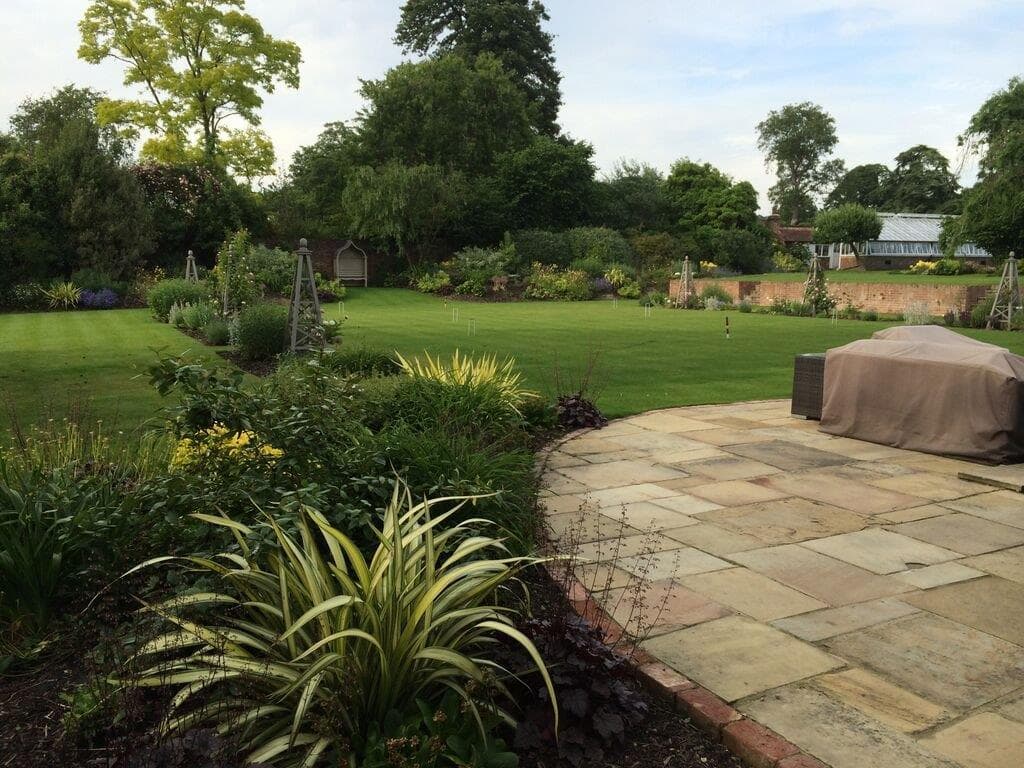
Raised beds solve specific British problems:
Drainage. London Clay, Gault Clay, Weald Clay across Surrey, Kent and Essex. All hold water. Raised beds lift roots 300-600mm above the waterlogged zone. In heavy clay, raised beds are the difference between growing courgettes and watching them rot.
Soil quality. Rather than spending £15-£30/sqm improving clay or adding topsoil to thin chalk, you fill beds with exactly the mix your plants need. One-time cost, permanent fix.
Access and comfort. A 600mm-high bed lets you garden from a seated position or without bending. Essential for older gardeners, anyone with back problems, or wheelchair users (DDA-compliant raised beds need 600-750mm height).
Earlier crops. Raised soil warms up 2-3 weeks faster than ground-level beds in spring. You can sow lettuce, spinach, radishes in late March rather than mid-April.
Season extension. Easy to add hoops and fleece or clear covers for winter salads and early sowings.
Pest control. Copper tape around the edge stops slugs. Fine mesh over the top keeps pigeons, cats and cabbage white butterflies out. Ground-level beds offer neither option.
Visual structure. Raised beds create year-round architecture in a garden. Even in winter when empty, the geometry holds the design together.
Raised Bed Materials: What Works, What Doesn't
Five materials dominate UK raised bed design. Each has different costs, lifespans, aesthetics and practical limits.
Timber
Railway sleepers (new oak, not reclaimed creosote-treated). 200mm x 100mm x 2.4m. £25-£60 per sleeper depending on grade. Stacked two-high gives 400mm depth. Three-high (600mm) needs internal bracing every 1.2m or they bow out.
Scaffold boards (new, not site-salvage). 225mm x 38mm x 3.9m. £15-£30 per board. Four boards stacked = 900mm height (excessive for most plants, ideal for accessible/wheelchair-height beds). Needs vertical posts every 1m or boards warp.
Tanalised softwood sleepers (green-treated, not brown). 200mm x 100mm x 2.4m. £18-£35. Lighter than oak, easier to move, lifespan 10-15 years vs 20+ for oak.
Pros: Natural appearance, easy to cut and drill, integrates with traditional and contemporary gardens. Timber ages to grey (can look weathered and informal) or can be stained/painted.
Cons: Oak sleepers are heavy (60kg+ per sleeper, two people to lift). All timber eventually rots — expect 10-20 years depending on grade and drainage. Avoid old railway sleepers (creosote contamination leaches into soil and damages plants).
Best for: Informal cottage gardens, traditional vegetable plots, large kitchen gardens where the rustic aesthetic fits.
Brick and Block
Engineering brick (Class B, frost-resistant). £400-£600/1000 bricks. A 2.4m x 1.2m x 450mm bed needs ~120 bricks = £50-£75 in bricks plus £200-£400 labour (bricklayer day rate £250-£350).
Concrete block (solid dense block, not lightweight). £1.20-£2.50 per block. Rendered and painted, or faced with brick slips, or left as raw blockwork for industrial aesthetic.
Pros: Permanent. Lifespan 50+ years. Can be built to any height. Matches house brickwork for visual cohesion. Retains heat (helps in cooler climates).
Cons: Expensive. Requires foundations (150mm concrete footing below ground) and DPC (damp-proof course) to stop moisture wicking from soil into masonry. Needs skilled bricklayer. Not DIY unless you have masonry experience. Permanent (can't be moved).
Best for: Formal gardens, contemporary minimalist designs, high-end kitchen gardens, gardens where brick or rendered walls are already a feature (London Victorian terraces, Georgian townhouses).
Galvanised Steel
Corrugated metal planters (powder-coated). 1.2m x 0.6m x 0.45m high. £80-£180 per bed. Pre-made, flat-pack or welded.
Corten steel (weathering steel, rusts to stable orange-brown patina). Custom fabrication. 300-600mm high beds. £150-£400/linear metre depending on height and thickness (2-3mm plate typical).
Pros: Contemporary industrial aesthetic. Thin walls maximise planting area. Steel doesn't rot. Corten patina looks intentional and architectural (suits modern extensions, steel-framed glazing, contemporary hard landscaping).
Cons: Expensive (especially Corten). Conducts heat (soil dries out faster in summer, may need irrigation). Corten rust runoff stains paving (must be sealed or expect orange streaks on pale stone). Galvanised steel without powder coating looks utilitarian/cheap unless embraced as part of an allotment-chic aesthetic.
Best for: Contemporary gardens, urban courtyards, roof gardens (lightweight), architects' own gardens, industrial-style renovations.
Rendered Blockwork
Concrete blocks (£1.20-£2.50 each) built to height (typically 450-600mm), then rendered (sand/cement scratch coat + finishing coat) and painted (masonry paint, Farrow & Ball or Sandtex).
Cost: £250-£600 per bed for a 2.4m x 1.2m x 450mm raised bed. Includes blocks, foundations, DPC, render, paint, labour.
Pros: Crisp, architectural, modern. Can be painted any colour (white/off-white most common: Pointing, Strong White, Cornforth White). Matches rendered house extensions. Permanent.
Cons: Expensive. Needs foundations. Not movable. Render can crack (frost, ground movement, poor application). Requires skilled labour.
Best for: Contemporary gardens, rear extensions with bi-fold doors opening onto patio, minimalist designs, formal herb/kitchen gardens in townhouses.
Composite Boards
Recycled plastic-wood composite boards. WPC (wood-plastic composite). 150mm x 25mm boards. £8-£15 per linear metre. Slotted into aluminium corner posts.
Pros: Won't rot. No splinters. Low maintenance (no staining or treating). Available in brown, grey, black. Lightweight.
Cons: Looks synthetic (fine for contemporary spaces, jarring in traditional cottage gardens). Can warp in direct sun. Cheaper ranges fade over 5-10 years. More expensive than treated timber, less permanent than brick.
Best for: Contemporary gardens, roof gardens, low-maintenance spaces, family gardens where splinter-free edges matter.
Dimensions: How Big, How Deep, How High
Bed Width
1.2m maximum. You need to reach the centre from both sides without stepping into the bed (compacts soil, damages roots). Arm reach from kneeling position = 600mm. Double that = 1.2m total width.
0.6-0.9m for narrow beds. If the bed backs onto a wall or fence (accessible from one side only), keep it 600-900mm deep so you can reach the back.
1.5m+ for shrub beds or perennial borders. Decorative raised beds (not vegetable production) can go wider because you're not harvesting daily.
Bed Length
2.4m is the sweet spot. Matches standard timber lengths (scaffold boards, sleepers). Easy to build without joins. Visually balanced in most gardens.
1.2m for small courtyards. A 1.2m x 1.2m square bed fits a tight space and still grows 4-6 courgette/tomato plants or a season's worth of salad.
3m+ for kitchen gardens. Long runs of raised beds (3m, 4m, 6m) create allotment-style productive gardens. Works in large gardens where the beds are in a dedicated zone.
Bed Height
300-450mm for general veg growing. Enough depth for carrots, parsnips, potatoes (if earthing up), tomatoes, courgettes, beans, all salads. Most productive kitchen gardens use 300-400mm depth.
600mm for accessible gardening. Allows seated or standing access without bending. Needs internal bracing (steel or timber cross-members every 1.2m) or the sides bow under soil pressure.
150-200mm for alpine/gravel beds. Shallow beds for drought-tolerant planting (sedums, sempervivums, thyme, lavender, Mediterranean herbs). Free-draining gritty mix.
900mm for wheelchair access (DDA-compliant). Council-funded accessible gardens and therapeutic gardens often specify 900mm height so wheelchair users can garden at table height. Requires heavy-duty construction (brick, block, or thick timber with serious bracing).
Path Width Between Beds
600mm minimum. Enough for one person to walk between beds. Tight but functional.
900mm comfortable. Room to walk, kneel, turn, use a wheelbarrow.
1200mm accessible. Wheelchair-accessible paths (DDA-compliant) need 1200mm minimum width. Firm, level surface (paving, bonded gravel, or compacted self-binding gravel).
Raised Bed Layouts: Kitchen Gardens, Formal Designs, Contemporary Patterns
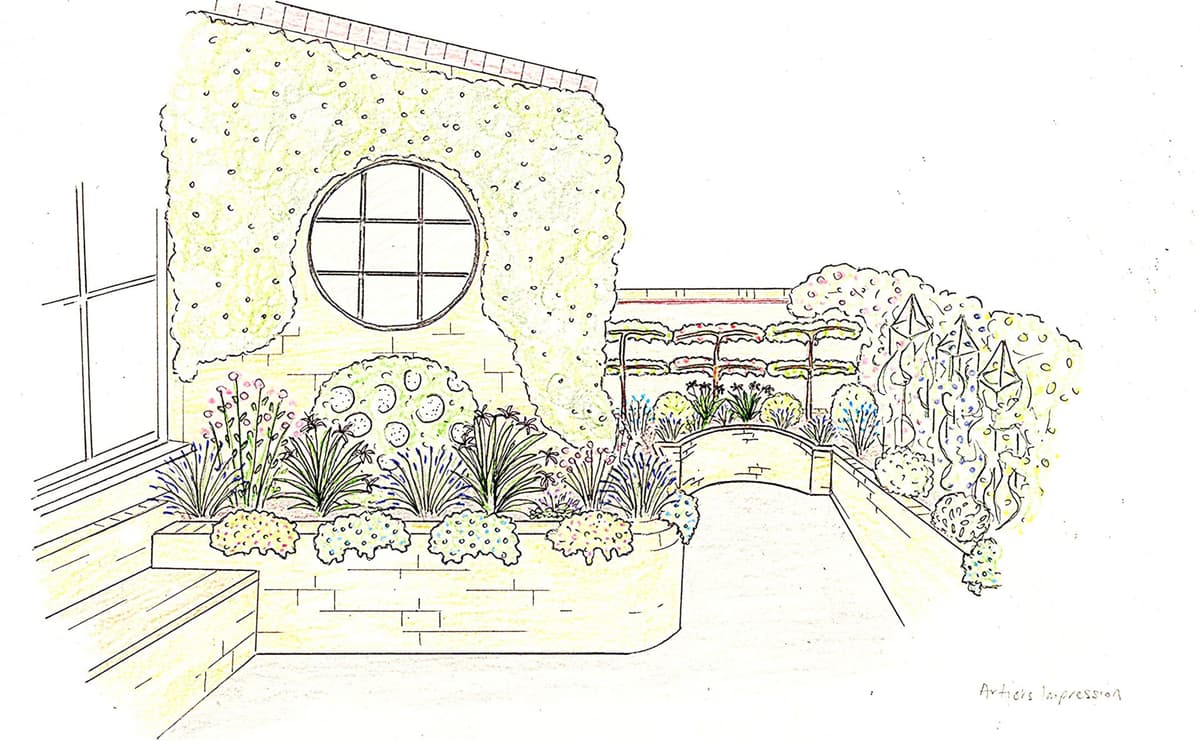
Allotment Grid (Productive)
Four to six rectangular beds (2.4m x 1.2m each) in parallel rows. Paths between: 600-900mm.
Total footprint: 6m x 5m for four beds with 900mm paths.
Grows: Enough veg for a family of four (salads, tomatoes, courgettes, beans, squash, onions, garlic, herbs).
Style: Utilitarian, productive. Best in a dedicated kitchen garden zone or screened from main garden by hedge/trellis.
Cost: £800-£2,000 depending on materials (scaffold board DIY vs sleepers with gravel paths).
Four-Square Formal (Decorative)
Four square beds (1.2m x 1.2m each) arranged around a central junction. Paths cross in the centre (often marked with an urn, obelisk, or specimen plant in a central raised bed).
Total footprint: 3.6m x 3.6m (four 1.2m beds + 600mm paths).
Grows: Herbs, cutting flowers, compact veg (salads, chard, beetroot, dwarf beans). Visual display rather than maximum production.
Style: Formal, geometric, cottage-garden charm. Suits front gardens, courtyard gardens, visible kitchen gardens near house.
Cost: £600-£1,500 (timber or brick).
L-Shape or U-Shape (Space-Efficient)
Raised beds wrapping around two or three sides of a courtyard or patio. Beds back onto walls/fences. Accessible from inside edge only, so keep beds 600-900mm deep.
Total footprint: Variable (fits available space).
Grows: Salads, herbs, climbers (beans, peas trained up wall), compact fruiting plants (tomatoes, chillies, aubergines).
Style: Space-efficient, suits small urban gardens where every sqm counts.
Cost: £400-£1,200 depending on length.
Single Statement Bed (Architectural)
One large raised bed (3m x 1.5m or 4m x 1.2m) as a focal feature. Rendered block or Corten steel. Planted with perennials, grasses, or shrubs for year-round structure.
Grows: Ornamental planting (grasses, sedums, lavender, euphorbia, bronze fennel) rather than food production.
Style: Contemporary, minimalist. Anchors a patio or courtyard. Low maintenance.
Cost: £800-£2,500 (rendered block or Corten).
Soil Mix: What to Fill Raised Beds With
Raised beds need free-draining, nutrient-rich, weed-free growing medium. Don't fill them with subsoil or cheap topsoil (compacts, poor drainage, weed seeds).
Standard Vegetable Mix
60% topsoil (screened, weed-free). £25-£45 per bulk bag (0.73 cubic metres). 30% compost (multi-purpose or peat-free). £5-£8 per 60L bag, or £60-£100 per cubic metre bulk. 10% horticultural grit or sharp sand (improves drainage). £4-£7 per 20kg bag, or £35-£55 per bulk bag.
Cost per cubic metre: £60-£110 mixed.
Works for: Tomatoes, courgettes, squash, beans, salads, onions, garlic, most annual veg.
No-Dig Compost-Only
100% peat-free compost or well-rotted manure/garden compost. Layer 150-200mm deep on top of cardboard (suppresses weeds). Top up annually with 50mm compost.
Cost: £60-£120 per cubic metre (compost or manure delivered bulk).
Works for: Charles Dowding-style no-dig beds. Salads, brassicas, roots (except long carrots/parsnips in first year).
Pros: Weed-free (if you use quality compost and cardboard base). Excellent structure. Easy to fork over.
Cons: Expensive (compost costs add up). Settles over time (needs topping up). Nutrient levels fluctuate (may need feeding mid-season for heavy feeders like tomatoes/squash).
Free-Draining Mediterranean Mix
50% topsoil 30% horticultural grit (6mm or 10mm) 20% compost
Cost per cubic metre: £55-£90.
Works for: Herbs (rosemary, thyme, sage, oregano, lavender), Mediterranean veg (tomatoes, peppers, aubergines), alpines, sedums.
Essential for: Heavy clay areas where drainage is the main problem. Raised beds with Mediterranean mix drain freely even after prolonged rain.
How Much Do You Need?
A 2.4m x 1.2m x 0.4m bed = 1.15 cubic metres of soil.
Four beds = 4.6 cubic metres = £275-£500 for soil alone.
Most bulk suppliers deliver 1-tonne bags (roughly 0.73 cubic metres). You'll need 6-7 bags for four standard raised beds.
What to Grow in Raised Beds
Vegetables That Love Raised Beds
Tomatoes. Deep roots, heavy feeders. Need 300mm+ depth. Benefit from the warmer soil (earlier ripening). Trailing/cordon varieties (Gardener's Delight, Sungold, Tigerella) grow 1.5-2m tall, need staking. Bush varieties (Red Alert, Maskotka) = 60cm, no staking.
Courgettes. One plant per bed (spreads 1m+). Massive feeders (add slow-release fertiliser at planting or liquid feed weekly). Harvest every 2-3 days or they turn into marrows.
Salad leaves. Cut-and-come-again. Sow direct March-September. Rocket, mizuna, mustard, lettuce, spinach. Harvest in 4-6 weeks. Succession sow every 2 weeks for continuous supply.
Beans. Climbing French beans (6-8 plants per 1.2m bed, canes or trellis 1.8m high). Dwarf French beans (16-20 plants per bed, no support needed). Runner beans (need 2m+ canes, heavy croppers).
Carrots. Need loose, stone-free soil (why raised beds work so well on clay). Early varieties (Amsterdam, Nantes) 10-12cm long. Maincrop (Autumn King, Chantenay) 15-20cm. Need 200mm minimum depth for maincrop, 150mm for early.
Garlic. Plant cloves October-November, harvest July. 15-20cm spacing. Low-maintenance, occupies bed through winter (perfect winter filler).
Onions and shallots. Sets (small bulbs) planted March-April, harvest August. 10-15cm spacing. Shallots less prone to bolting than onions.
Chard and perpetual spinach. Sow April-July, harvest leaves continuously from June-March (overwinters). Tough, low-maintenance, productive for 8-10 months. One sowing = nearly a year of greens.
Beetroot. Sow direct April-July, harvest 8-12 weeks later. Bolt-resistant varieties (Boltardy, Detroit) for early sowings. Thin to 10cm spacing. Leaves edible (baby beet leaves = salad).
Herbs for Raised Beds
Perennial herbs (rosemary, sage, thyme, oregano) need Mediterranean mix (free-draining, 30-40% grit). Annual herbs (basil, coriander, parsley, dill) need richer compost-heavy mix.
Rosemary. 60-90cm spread. Full sun. Survives -10°C. Prune after flowering to keep compact. Lifespan 10-15 years.
Thyme. Compact (20-30cm). Creeping thyme (Thymus serpyllum) trails over bed edges. Full sun, free-draining.
Basil. Annual. Needs warmth (15°C+ at night). Plant mid-May (South East England). Pinch out flower buds to keep leaves productive. Sweet basil (Genovese), Thai basil, purple basil.
Mint. Invasive. Must be grown in sunken pots inside raised beds or it takes over. Spreads 2m+ via underground runners. Spearmint, peppermint, apple mint, chocolate mint.
Chives. Hardy. Flowers edible. Self-seeds. Low-maintenance. Harvest leaves from March-October.
Fruit in Raised Beds
Strawberries. 6-10 plants per 1.2m x 1.2m bed. Plant August-October or March-April. Crop June-July (summer varieties) or August-October (perpetual varieties). Replace every 3-4 years.
Blueberries. Need ericaceous (acidic) compost. Raised beds let you create acidic conditions even if your garden soil is alkaline chalk. 2-3 bushes per bed. Cross-pollination improves yields (plant 2+ varieties). Crop July-September. Lifespan 20+ years.
Dwarf fruit trees. M27 rootstock apples (1.5m height x 1.5m spread) or VVA-1 rootstock cherries grow in deep raised beds (600mm+). Need 200-300L soil volume per tree. Stake for first 3 years.
Costs: Budget, Mid-Range, Premium Raised Bed Builds
Budget DIY: Scaffold Board Beds (£150-£250 per bed)
Materials: - 8 scaffold boards (3.9m, cut to 2.4m + 1.2m lengths): £120-£180 - 4 fence posts (75mm x 75mm x 0.9m): £20-£32 - Coach screws, brackets: £15-£25 - Weed membrane: £5-£10
Soil (1.15 cubic metres): £60-£110
Total per 2.4m x 1.2m x 0.4m bed: £220-£357.
DIY build time: 3-4 hours per bed (cutting, assembling, levelling, filling).
Mid-Range: Oak Sleeper Beds (£400-£650 per bed)
Materials: - 6 new oak sleepers (200mm x 100mm x 2.4m, stacked 2-high for 400mm depth): £150-£360 - Rebar (12mm, 600mm lengths) or timber dowels to pin sleepers: £15-£30 - Weed membrane: £5-£10
Soil (1.15 cubic metres): £60-£110
Labour (if not DIY): £150-£250 (half-day landscaper + labourer).
Total per bed: £380-£760.
Premium: Rendered Block Beds (£800-£1,400 per bed)
Materials: - Concrete blocks (70-100 blocks for 2.4m x 1.2m x 0.45m bed): £90-£180 - Foundations (concrete, hardcore, DPC): £80-£150 - Sand/cement render (2 coats): £40-£70 - Masonry paint (2 coats): £30-£50
Labour: £400-£700 (bricklayer 2 days, labourer 1 day).
Soil (1.15 cubic metres): £60-£110
Total per bed: £700-£1,260.
Four-Bed Kitchen Garden: Total Project Costs
Budget (scaffold board, DIY, gravel paths): £1,200-£1,800 Mid-range (oak sleepers, DIY or part-labour, gravel paths): £2,000-£3,500 Premium (rendered block, professional build, paved paths): £4,500-£7,500
Raised Bed Design Service: What We Do
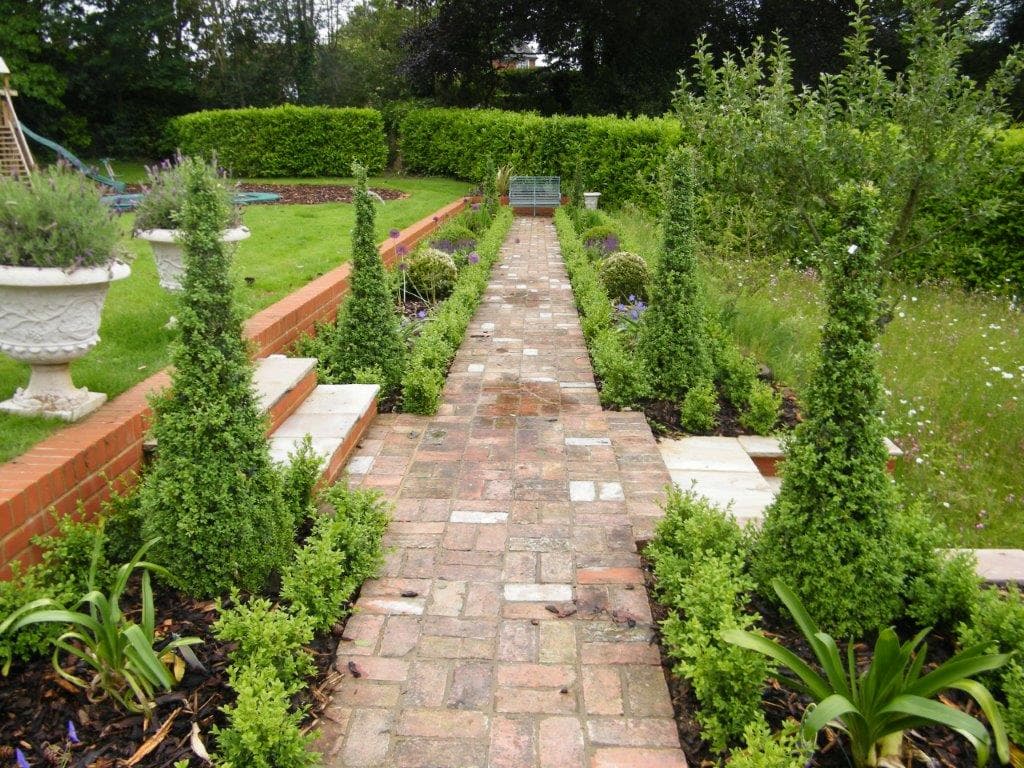
Soil Sisters designs kitchen gardens, herb gardens, and productive raised bed gardens across London, Kent, Surrey and Essex. We handle the full design, build, soil-fill and planting.
What's included in a raised bed garden design:
- Site survey and soil/drainage assessment - Layout plan (bed positions, path widths, access) - Material specification (timber, brick, render, Corten) - Planting plan (veg rotation schedule, herb varieties, companion planting) - Irrigation recommendations (if needed) - 3D visualisations (shows finished design before build) - Construction drawings for builder (if you're using your own contractor)
Design fees: Small (1-4 beds): £1,500-£2,500 Medium (4-8 beds): £2,500-£4,000 Large kitchen garden (8+ beds): £4,000-£6,000+
Full design-and-build (including materials, labour, soil, planting): Four-bed kitchen garden: £4,000-£8,000 (timber) or £7,000-£12,000 (brick/render) Eight-bed productive garden: £8,000-£18,000
Timeline: Design 2-4 weeks. Build 1-2 weeks on site (depends on number of beds and material). Planting 1-2 days.
Contact us for a free consultation or call 0203 834 9807.
Common Mistakes (and How to Avoid Them)
Building too deep. Beds over 600mm need internal bracing (cross-ties, steel rods, or they bow out under soil weight). Most veg grows fine in 300-400mm. Going deeper is expensive, uses more soil, and doesn't improve yields unless you're growing long carrots/parsnips.
Poor drainage at bed base. If you build raised beds on heavy clay and fill with free-draining mix, water drains into the bed but can't escape the clay below. Beds sit in a puddle. Fix: drill or fork the ground beneath each bed, add 50-100mm hardcore or gravel before filling with soil.
Using contaminated timber. Old railway sleepers treated with creosote leach tar into soil and damage plants (especially edibles). Use new sleepers (oak, treated softwood) or salvaged untreated hardwood.
Paths too narrow. 600mm paths force you to turn sideways between beds. Fine if you're building alone, miserable if two people want to work at once. 900mm is comfortable for most people. 1,200mm is accessible (wheelchair/mobility scooter).
Filling beds with subsoil or cheap topsoil. Clay subsoil compacts, has no structure, and drowns roots. Cheap topsoil contains weed seeds and sometimes debris (stones, roots, rubbish). Use screened topsoil or quality compost.
Ignoring sunlight. Veg needs 6+ hours direct sun. Salads tolerate 4-5 hours. Herbs (basil, tomatoes, peppers, courgettes) need full sun (8+ hours). Don't build raised beds in shade and expect productive crops.
No access to water. Watering 4-6 raised beds with a watering can from an indoor tap is a 30-minute daily job in summer. Install an outdoor tap, run a hose, or fit drip irrigation (£150-£400 for 4 beds).
Skimping on paths. Gravel, bark, or paving between beds keeps boots clean, prevents mud being dragged indoors, and makes the garden usable year-round. Budget £15-£35/sqm for self-binding gravel or £30-£80/sqm for paving.
Is a Raised Bed Kitchen Garden Worth It?
A four-bed timber raised bed kitchen garden costs £1,200-£3,500 to build (depending on materials and whether you DIY or pay labour). You'll spend £100-£250/year on compost, seeds, slug pellets, fertiliser.
What you get:
- Salads from March-November (£3-£5/week shop-bought = £90-£200 saved) - Tomatoes June-October (20-40kg per season from 4-6 plants = £60-£120 saved) - Herbs year-round (rosemary, thyme, sage, chives = £30-£50 saved) - Courgettes, beans, chard, beetroot, garlic (hard to quantify but reduces weekly veg shop by £10-£20)
Financial payback: 3-5 years if you value organic produce and count your time as free. Faster payback if you already enjoy gardening.
Non-financial value:
- Therapeutic (gardening reduces stress, gets you outside, physical activity) - Educational (children learn where food comes from) - Taste (home-grown tomatoes, salads, herbs are incomparably better than supermarket) - Control (no pesticides, you choose varieties, harvest at peak ripeness) - Satisfaction (grew it yourself)
Most people who build raised beds say the return isn't financial, it's quality of life.
Next Steps
If you're planning a raised bed kitchen garden and want professional design or build support:
- Garden design service – full design and build across London, Kent, Surrey, Essex - Garden Design Kent – Kent-specific service with local soil and climate knowledge - Garden Design Surrey – Surrey raised bed and kitchen garden design - Garden Design Essex – Essex kitchen gardens and productive planting - Contact us – or call 0203 834 9807 for a free consultation