
December brings the shortest days and, in most years, the first hard frosts. The garden feels quiet, but that does not mean the work stops. December is the month when small, deliberate tasks set up next year's success.
We have managed December gardens across London, Kent, Surrey and Essex for over a decade. The same lesson repeats itself: the gardeners who get ahead in December have less work to do in March, and better-looking gardens by May.
Why December Matters
December is not about planting or blooming. It is about damage prevention and setting up structure for the spring.
In the South East:
- First hard frost typically arrives mid-December (though 2025-2026 saw frost as early as late November in Kent)
- Rainfall averages 70-90mm, with London clay holding water longer than chalk or sandy soils
- Wind damage peaks in exposed gardens, especially on the North Downs and coastal Essex
The three December priorities: protect vulnerable plants from frost, maintain structure and tools so they are ready when you need them in February, and harvest and clear anything that will rot or harbour disease over winter. Everything else is optional.
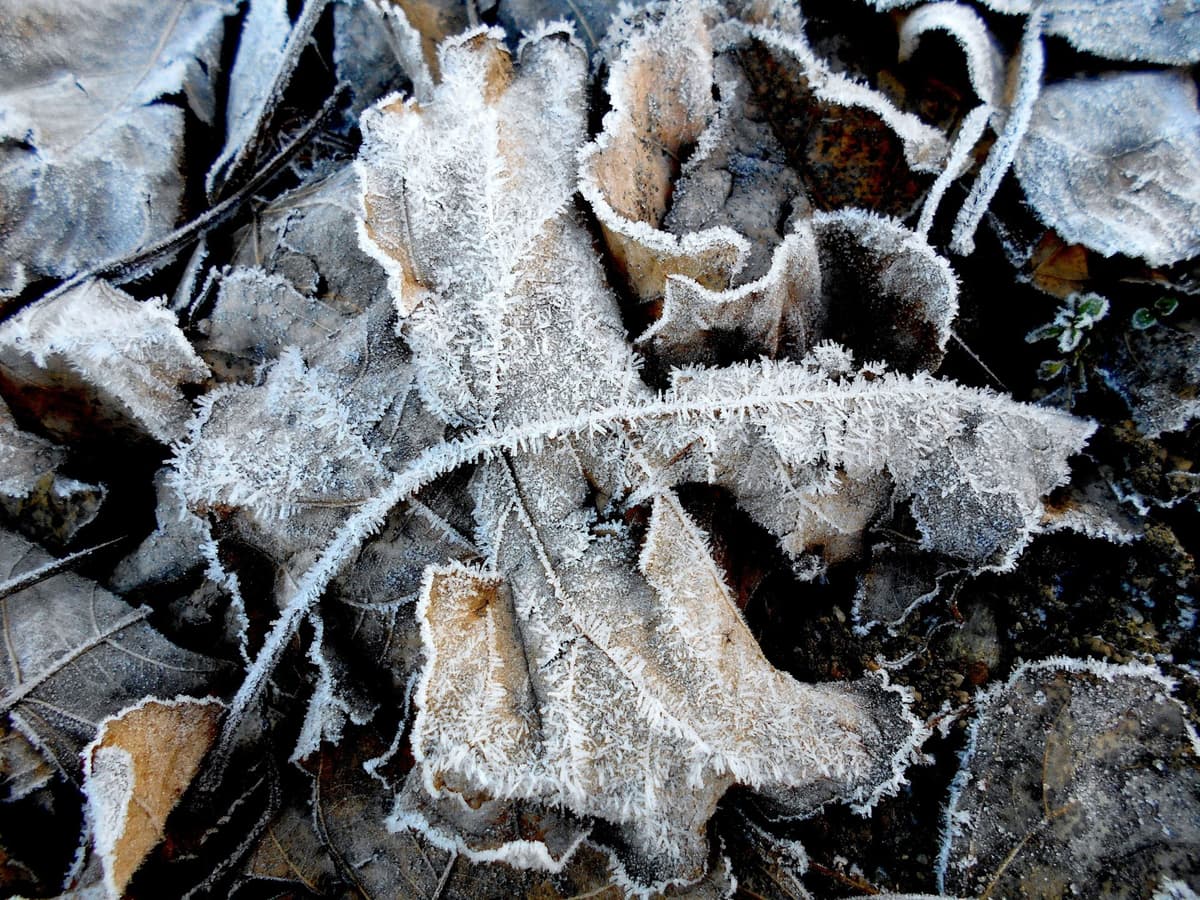
1. Protect Tender Plants from Frost
In South East gardens, these are the plants most vulnerable to December frost: tree ferns, cordylines and phormiums (especially young plants under 3 years old), tender salvias, citrus trees in pots, echiums and agapanthus in exposed positions, and newly planted evergreens.
How to protect them: Wrap the crown of tree ferns and cordylines with horticultural fleece. Apply a 10-15cm layer of well-rotted compost or bark around the base of tender perennials. Move citrus, olives, and tender shrubs in pots into an unheated greenhouse or conservatory. Terracotta pots crack in hard frost—wrap them in bubble wrap or hessian.
Established hardy perennials (geraniums, salvias, nepeta, perovskia) are fine. Let them die back naturally. Roses do not need fleece jackets in December either. Save your energy.
2. Prune Fruit Trees (But Not Stone Fruits)
December is the best month for winter pruning of top fruit (apples and pears). The trees are fully dormant, and you can see the structure clearly without leaves.
Apples and pears (free-standing trees only): Remove dead, diseased, and damaged wood first. Then thin out crossing branches, inward-facing growth, and anything clogging the centre of the tree. Cut just above an outward-facing bud at a 45° angle. Do not leave stubs.
Do NOT prune: Wall-trained apples and pears (leave until summer), stone fruits (cherries, plums, gages—prune in July to avoid silver leaf), figs (leave until March), or any fruit trees that look unhealthy.
Ornamental trees and shrubs: Prune acers, birches, and walnuts before Christmas—they bleed sap heavily if cut from January onwards. If you pruned wisteria in July, tidy up now by shortening summer shoots to 2-3 buds. For roses, remove any diseased or damaged stems, but save the main prune for February-March. Do NOT prune hydrangeas yet—the old flowerheads protect buds from frost.
3. Harvest Winter Vegetables
December is the peak month for hardy winter crops: leeks (harvest as needed), parsnips (sweetest after the first frost—dig them before the ground freezes solid), Brussels sprouts (pick from the bottom upwards), winter cabbages, and celeriac, swede, and turnips (lift and store if hard frost is forecast).
If your sprouts or kale get frosted, leave them until the frost thaws naturally. Picking frozen veg damages the cell structure and turns them to mush.
4. Clear Fallen Leaves from Lawns
Rake any remaining leaves off lawns. A thick blanket of wet leaves blocks light and air, causing bare patches and moss. Do NOT clear leaves from borders—they insulate plant roots, suppress weeds, and break down into free organic matter by spring.
If you have masses of leaves (from mature oaks, limes, or London planes), collect them in wire mesh bins or old compost bags with holes punched in. Leave for 12-24 months to rot down into leafmould.
5. Check Winter Protection Structures
If you put fleece, cloches, or netting in place in November, check them now. Are fleece jackets still tied securely? December winds can rip loose fleece away. Is fruit cage netting still taut? Are greenhouse vents and doors closing properly?
If you heat your greenhouse, test the heater now. Set the thermostat to 4-7°C for frost protection. A single night of heater failure in late December can kill a greenhouse full of tender plants.
6. Protect Ponds from Freezing
If your pond has fish, it needs to stay partially unfrozen to allow gas exchange. Float a tennis ball or piece of wood on the surface, or install a pond heater (small floating units cost £30-50). If the pond does freeze, do NOT smash the ice—place a pan of hot water on it to melt a hole slowly.
For wildlife ponds (no fish), let them freeze. Ice is fine.
7. Plant Bare-Root Trees and Hedging
December is prime time for bare-root planting: bare-root hedging (hawthorn, beech, hornbeam), fruit trees (apples, pears, plums, cherries), ornamental trees (Betula, Sorbus, Amelanchier, Crataegus), and roses (bare-root roses establish better than container-grown and cost half the price).
For clay soil (London, Essex, parts of Kent and Surrey): if your planting hole fills with water and sits there for more than an hour, do NOT plant. Wait until the soil drains naturally, or amend the planting hole with 30-40% sharp grit.
Do NOT plant evergreens (box, bay, yew, holly) in December—wait until March-April when soil is warmer.
8. Maintain Garden Tools
December is the month for tool maintenance. Clean, sharpen, and oil now, and your secateurs, spades, and shears will be ready when you need them in February.
Secateurs and shears: Wipe blades with an oily rag (WD-40 or 3-in-1 oil), sharpen with a whetstone or diamond file, tighten the pivot bolt if loose.
Spades, forks, hoes: Scrape off dried mud with a wire brush, oil wooden handles with linseed oil, sharpen spade edges with a flat file.
Mowers: Drain the fuel (old fuel gums up the carburettor) or add a fuel stabiliser. Clean the blade and chassis. For electric mowers, wipe clean and store in a dry shed.
9. Feed the Birds
December is the hardest month for garden birds. Put out suet balls and fat cakes (high-energy, essential in cold snaps), sunflower hearts, mealworms, peanuts in a mesh feeder, and fresh water. Clean feeders every 2-3 weeks with hot soapy water to prevent disease spread.
10. Order Seeds and Plan for Spring
December is the month for seed catalogues and planning. Order before January to avoid sold-out varieties and price rises. Order vegetable seeds (tomatoes, courgettes, runner beans, salads) for sowing from February onwards, hardy annuals (calendula, cornflowers, nigella), and dahlia tubers, canna rhizomes, begonia corms for planting in May.
What NOT to Do in December
- Do NOT dig or work heavy clay soil when it is waterlogged. You will destroy the structure and create a compacted, airless mess. Wait until it dries out naturally.
- Do NOT cut back herbaceous perennials yet. Leave stems and seedheads standing until February-March. They provide winter structure, food for birds, and hibernation sites for insects.
- Do NOT walk on frosty lawns. Frozen grass blades are brittle and snap under footfall, leaving brown footprints that take weeks to recover.
- Do NOT apply fertiliser. Plants are dormant and cannot take up nutrients. Winter rain will wash fertiliser straight into waterways.
December Garden Checklist
Early December: Protect tender plants with fleece, check winter protection structures, harvest winter veg, clear leaves from lawns, put out bird food.
Mid-December: Prune apples, pears, wisteria, acers, protect pond from freezing, clean and sharpen garden tools, order seeds, check greenhouse heater.
Late December: Plant bare-root trees and hedging (if ground not frozen), insulate outdoor taps, mulch bare soil in borders, check stored dahlia tubers, plan spring projects.
Common December Mistakes
Overprotecting hardy plants: Roses, lavender, hardy geraniums, and established shrubs do NOT need fleece jackets. Overprotecting creates condensation, which rots stems faster than frost kills them.
Cutting back too early: Leaving perennial stems and seedheads standing until February protects crowns from frost, provides food and shelter for wildlife, and looks better (frosted seedheads are beautiful).
Planting in waterlogged soil: If your planting hole fills with water, do NOT plant. The tree or shrub will drown. Wait until it drains naturally (late January-February) or amend the planting area with 30-40% grit.
Ignoring greenhouse heaters until it is too late: Test your heater in early December. A heater failure on 22 December, when you are away for Christmas, kills everything tender inside.
How Soil Sisters Can Help
We design and build gardens across London, Kent, Surrey, and Essex, and part of that work is advising on seasonal maintenance that protects your investment.
If you have a newly planted garden that needs winter protection advice, fruit trees that need pruning, or a large plot where December tasks feel overwhelming, we offer one-off garden consultations (£150-250 for 1-2 hours on-site) covering seasonal maintenance, pruning advice, and plant health checks.
For larger projects—new borders, hard landscaping, full garden redesigns—our design fees start at £1,500. See our full garden design services in Kent, Surrey, Essex, or London, or contact us for a free initial consultation.
Phone: 0203 834 9807
Frequently Asked Questions
Can I still plant in December if the ground is frozen?
No. Wait until the ground thaws. Planting in frozen soil damages roots, and the plant cannot establish.
Should I feed my lawn in December?
No. Grass is dormant. Fertiliser will not be absorbed and will wash away in winter rain, polluting waterways. Save lawn feeding for March-April.
How do I protect outdoor taps from freezing?
Turn off the stopcock inside the house, drain the external tap by opening it fully, then insulate with foam pipe lagging or bubble wrap. Frozen taps crack and cause expensive leaks.
Can I compost diseased plant material?
No. Fungal spores and bacterial infections survive in cool compost heaps. Bag diseased material (rose black spot, box blight, potato blight) and dispose of it in your green waste bin or burn it.
Is December too late to plant spring bulbs?
For daffodils, tulips, and crocuses, ideally planted by late November. But you can still plant them in December if the ground is workable. They will flower, just a bit later than ideal.
What is the best mulch for December?
Well-rotted compost, composted bark, or leafmould. Apply a 5-10cm layer around plants (not touching stems). Mulch insulates roots, suppresses weeds, and improves soil structure as it breaks down.
Related articles: November Garden Jobs UK, How to Prepare Your Garden for Winter UK, Garden Design Kent, Garden Design Surrey.