
A well-designed garden border can transform even the most uninspiring outdoor space into something truly special. Whether you have a sprawling country plot or a compact urban courtyard, borders provide the backbone of your planting scheme, adding colour, texture, structure and seasonal rhythm to every view from the house. At Soil Sisters, we design and plant borders across London, Kent, Surrey, Essex and Buckinghamshire, and we know from experience that getting the fundamentals right makes all the difference between a border that thrives and one that disappoints.
In this guide, we share our favourite garden border ideas, from planning and soil preparation through to plant selection, styling and ongoing care. Whether you are starting from scratch or refreshing tired beds, you will find practical, actionable advice rooted in our years of working with South East England's soils and climate.
Why Borders Matter in Garden Design
Borders are far more than decorative strips along a fence. They define the spatial structure of a garden, guide the eye through a space, soften hard landscaping and create habitat for pollinators and wildlife. A thoughtfully planned garden border design connects the built elements of your garden, patios, paths, walls, to the natural world beyond. For the patio itself, our garden patio ideas guide covers materials, costs and design inspiration. It is the single element that changes most dramatically through the seasons, rewarding you with something new to admire every month of the year.
From a practical standpoint, well-planted borders also help manage surface water (particularly important on London clay), suppress weeds, and even improve privacy. When we begin any garden design project at Soil Sisters, the borders are always central to the conversation.
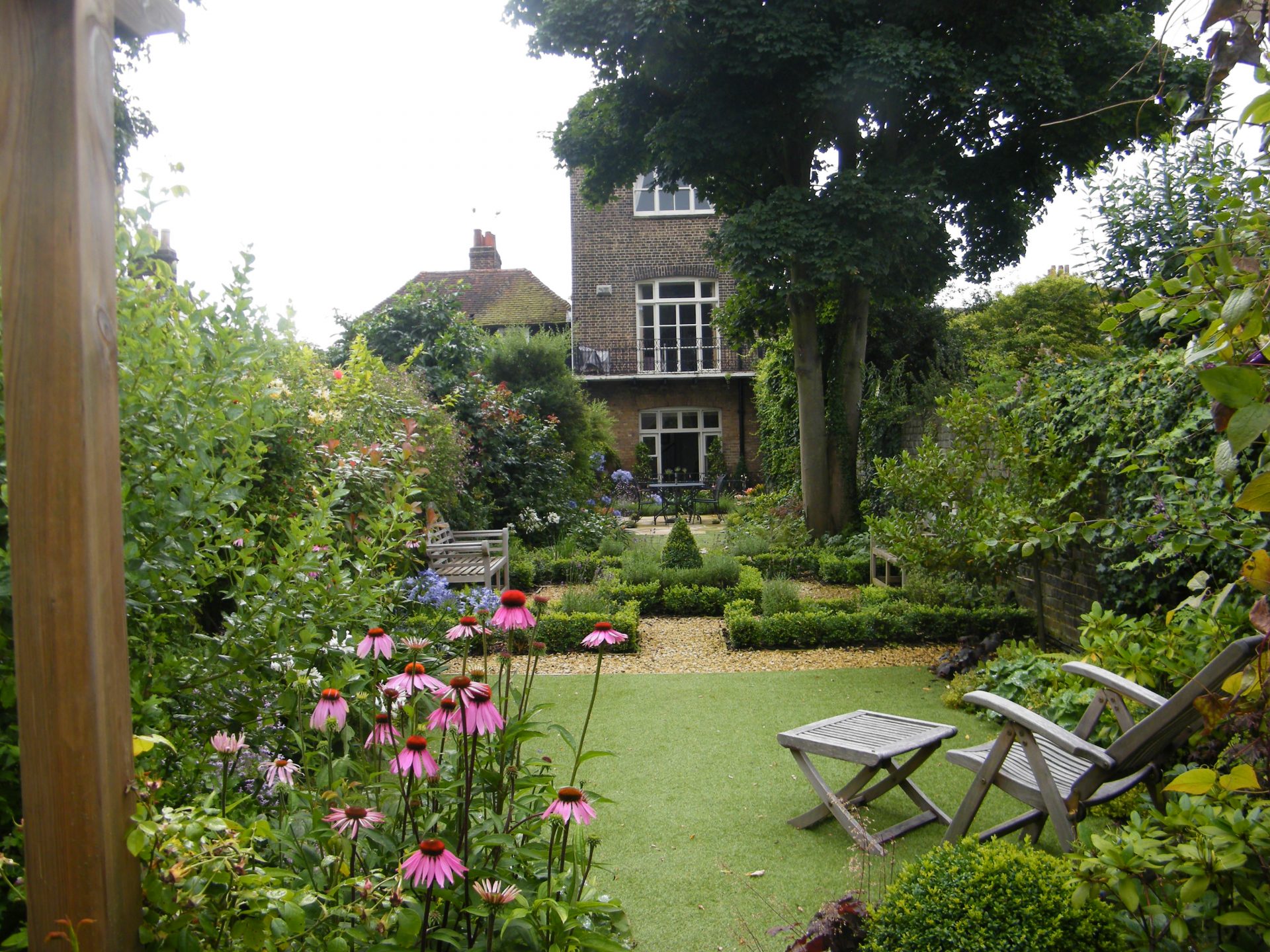
Planning Your Garden Border
Before you buy a single plant, invest time in understanding your site. Poor planning is the number one reason borders fail, and it is entirely avoidable.
Know Your Soil
South East England presents a fascinating patchwork of soil types. Much of London sits on heavy clay, nutrient-rich but prone to waterlogging in winter and cracking in summer. Parts of Kent and the North Downs have thin, chalky, alkaline soils that drain freely but can starve shallow-rooted plants of moisture. Surrey's sandy heathland areas offer acidic, free-draining conditions suited to entirely different palettes. A simple pH test kit (around £5 from any garden centre) and a squeeze test for texture will tell you most of what you need to know.
If you are gardening on heavy clay, incorporate generous quantities of organic matter, well-rotted farmyard manure or municipal green-waste compost, to improve drainage and soil structure. On chalk, a thick annual mulch of composted bark helps retain moisture and gradually builds a more workable topsoil layer. Our guide to sustainable garden design covers soil improvement in more detail.
Assess Your Aspect and Light
Note which direction your border faces. A south-facing border against a brick wall can be a sun trap perfect for Mediterranean planting, while a north-facing bed beneath a mature tree will suit shade-lovers such as ferns, hostas and epimediums. We use the Royal Horticultural Society's convention of recording at least six hours of direct sun as "full sun," three to six hours as "partial shade," and fewer than three hours as "full shade."
Measuring and Planting Density
Measure your border accurately, length, depth (front to back) and any curves. This allows you to calculate area in square metres and, importantly, work out how many plants you need. The RHS recommends the following planting densities as a starting point, though we often adjust these based on the vigour of specific cultivars and the client's patience for waiting for the border to fill in:
| Plant Type | Plants per sq m | Typical Spacing (cm) | Notes |
|---|---|---|---|
| Herbaceous perennials | 5 to 7 | 35 to 45 | Plant in drifts of 3, 5 or 7 for natural effect |
| Small shrubs | 3 to 4 | 50 to 60 | Allow room for mature spread |
| Medium shrubs | 1 to 2 | 80 to 120 | Anchor planting; provide structure |
| Ornamental grasses | 3 to 5 | 40 to 60 | Larger species (Miscanthus) need more space |
| Ground-cover plants | 7 to 9 | 25 to 35 | Close spacing for rapid weed suppression |
| Bulbs (interplanted) | 25 to 50 | 8 to 15 | Layer among perennials for spring interest |
For a typical 10 square metre border, you might therefore need 50 to 70 perennials, 10 to 15 shrubs, a handful of grasses and 200 or more bulbs. Budget accordingly. At 2025/2026 prices, expect to pay £6 to £12 per two-litre perennial, £15 to £35 per five-litre shrub, and £3 to £8 per ornamental grass in a two-litre pot. Bulbs are excellent value at £0.20 to £0.60 each when bought in bulk in autumn.
Garden Border Styles: Finding Your Look
The style of your border should complement both your home's architecture and your lifestyle. Here are the five approaches we design most often.
Cottage Garden Border
The quintessential English cottage garden border is abundant, romantic and gloriously informal. Think billowing roses scrambling through foxgloves (Digitalis purpurea), delphiniums jostling with hardy geraniums, and self-sowing aquilegias popping up in unexpected places. The key to success is disciplined informality, underlying structure from clipped box balls or yew cones, with relaxed planting spilling over edges. We explore this style in depth in our complete guide to cottage garden design.
Contemporary and Minimalist Borders
For modern homes and urban settings, a pared-back palette of architectural plants works beautifully. Repeated blocks of a single ornamental grass such as Calamagrostis x acutiflora 'Karl Foerster' (1.5m tall, upright), punctuated by clipped evergreen cubes or multi-stem trees, create a calm, sophisticated effect. Corten steel or dark metal edging reinforces the clean aesthetic. This style suits the contemporary new-builds we often design around in Surrey.
Prairie and Naturalistic Borders
Inspired by the New Perennial movement championed by Piet Oudolf, prairie-style borders use large sweeps of tough perennials and grasses to create a tapestry effect that shifts through the seasons. Key plants include echinaceas, rudbeckias, salvias, Molinia grasses and sedums. This style is inherently low maintenance once established, needing just one major cut-back in late February.
Mediterranean Borders
South-facing borders on free-draining soil are ideal for a sun-baked Mediterranean feel. Lavender, rosemary, cistus, olive trees and silvery artemisias thrive with minimal watering once their roots are established, a real bonus during increasingly dry South East summers. Gravel mulch rather than bark completes the look and keeps root crowns dry through winter. See our Mediterranean garden design guide for full plant lists.
Wildlife-Friendly Borders
Every border can support wildlife, but a dedicated wildlife garden border prioritises nectar-rich flowers for pollinators, seedheads for birds and dense ground cover for hedgehogs and invertebrates. Single-flowered varieties are far more valuable to bees than doubles, so choose species roses over hybrid teas and single dahlias over pompons.
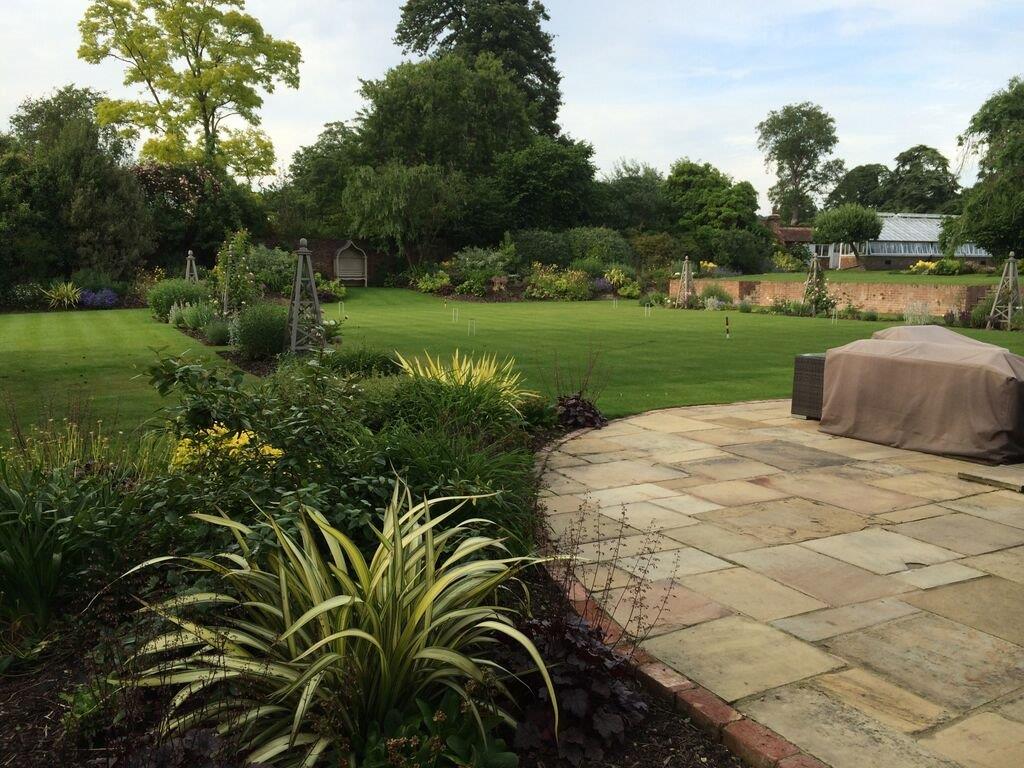
Choosing Plants for Year-Round Interest
The hallmark of a professional garden border design is continuous seasonal interest. Nobody wants a border that peaks in July and offers nothing from October to March. Here is our seasonal framework, with specific plants we use regularly across SE England.
| Season | Key Plants | Height Range | Role in Border |
|---|---|---|---|
| Early Spring (Feb to Mar) | Hellebores (Helleborus orientalis), pulmonaria (Pulmonaria 'Blue Ensign'), snowdrops, early crocus | 20 to 45 cm | Ground-level colour before perennials emerge |
| Late Spring (Apr to May) | Tulips, alliums (Allium 'Purple Sensation'), brunnera (Brunnera macrophylla 'Jack Frost'), aquilegias, forget-me-nots | 30 to 90 cm | Bulb layer and early perennial foliage |
| Early Summer (Jun to Jul) | Hardy geraniums (Geranium 'Rozanne'), roses (Rosa 'Olivia Rose Austin'), achillea (Achillea 'Terracotta'), salvias (Salvia nemorosa 'Caradonna') | 40 to 150 cm | Peak colour; fill the mid and rear of borders |
| Late Summer (Aug to Sep) | Echinaceas (Echinacea purpurea 'Magnus'), Japanese anemones (Anemone x hybrida 'Honorine Jobert'), sedums, dahlias | 50 to 120 cm | Sustain colour as earlier perennials fade |
| Autumn (Oct to Nov) | Asters (Aster novae-angliae 'Violetta'), grasses at peak (Miscanthus sinensis 'Flamingo', Stipa gigantea), nerines | 60 to 200 cm | Warm tones and movement; seedheads begin |
| Winter (Dec to Jan) | Cornus stems (Cornus sanguinea 'Midwinter Fire'), evergreen structure (box, yew, pittosporum), birch bark, winter-flowering viburnum | Variable | Structural framework; stem and bark interest |
The secret is layering. Interplant bulbs beneath later-emerging perennials, use grasses to provide movement from midsummer through to late winter, and ensure at least 30 per cent of the planting is evergreen to prevent the border looking bare from November to March.
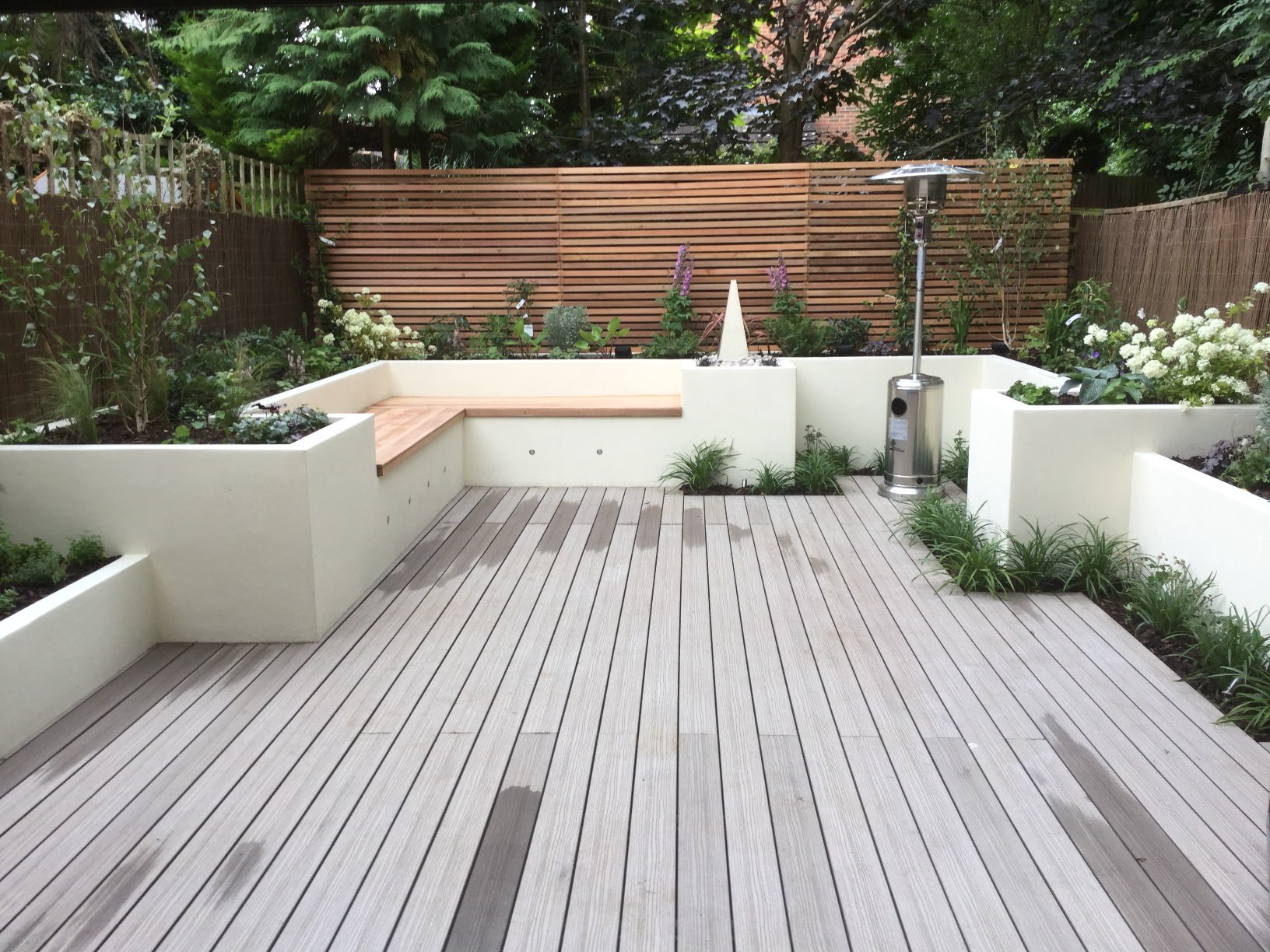
Low Maintenance Garden Border Ideas
We hear it constantly: "We love the idea of beautiful borders, but we simply do not have time to maintain them." The good news is that low maintenance garden border ideas do not mean sacrificing beauty. They mean choosing the right plants and the right systems from the outset.
Mulch Generously
A 7 to 10 cm layer of composted bark mulch applied every spring suppresses weeds, retains moisture and improves soil over time. Budget approximately £65 to £90 per cubic metre delivered in SE England (one cubic metre covers roughly 10 square metres at 10 cm depth).
Choose Tough, Self-Sufficient Plants
Some perennials simply do not need fussing over. Hardy geraniums (Geranium macrorrhizum), nepeta (Nepeta 'Six Hills Giant'), penstemon, and sedums are virtually indestructible on most SE England soils. Combine them with low-maintenance shrubs such as choisya, sarcococca, photinia and viburnum for a border that looks after itself.
Gravel Borders
A gravel mulch border, plants growing through a 5 cm layer of angular gravel over a weed-suppressing membrane, suits dry, sunny sites perfectly. It eliminates the need for annual bark mulching, drastically reduces weeding and creates a beautiful, naturalistic aesthetic. This approach works particularly well for Mediterranean-style borders on the chalky soils of Kent's North Downs.
Ground-Cover Planting
Dense carpets of ground-cover plants leave no bare soil for weeds to colonise. Excellent options include Geranium macrorrhizum (aromatic foliage, pink or white flowers), Vinca minor (evergreen, blue flowers), Pachysandra terminalis (deep shade), and Epimedium x versicolor (elegant spring flowers, tough as nails).
Small Garden Border Ideas
Limited space does not mean limited ambition. Some of the most impactful borders we have designed have been in compact London gardens where every centimetre counts. Here are our proven small garden border ideas.
Narrow Borders (30 to 60 cm Deep)
Even a 40 cm strip along a fence can be transformed with a single row of repeated planting, say, three box balls underplanted with a ribbon of Hakonechloa macra (Japanese forest grass) and spring bulbs. Keep the palette tight: two or three species maximum to avoid a busy, cluttered feel.
Mirror Planting
In a small garden, planting matching borders on either side of a central path or lawn creates a powerful sense of symmetry that makes the space feel larger and more intentional. This works beautifully with formal schemes and relaxed cottage-style planting alike.
Vertical Layers
In narrow borders, think vertically. A climber on the back wall or fence (star jasmine, climbing hydrangea or a compact clematis), a mid-height shrub or grass, and a low carpet of ground cover gives you three layers of interest in under 50 cm of depth. Strategic garden lighting with uplighters can further enhance these vertical layers after dark.
Front Garden Border Ideas
The front garden is your home's first impression, yet it is frequently neglected. Well-considered front garden border ideas boost kerb appeal, add value to your property and even improve security.
Year-Round Structure
Front borders must look presentable twelve months of the year, so prioritise evergreen structure. A framework of clipped pittosporum, lavender hedging or low box balls ensures the border never looks empty. Fill between the structural plants with seasonal perennials and bulbs for highlights.
Security Planting
Thorny or dense shrubs beneath ground-floor windows are a surprisingly effective deterrent. Berberis, pyracantha, holly and roses make it very uncomfortable for anyone attempting to access your home, while looking beautiful year-round. This is an approach we regularly recommend for our Kent garden design clients in suburban settings.
Practical Considerations
Front borders are often drier than rear gardens due to the rain shadow created by the house. Choose drought-tolerant plants, and avoid anything that will outgrow its space and obstruct paths or sightlines for drivers. Keep planting below 60 cm within two metres of a driveway entrance for visibility.
Edging Materials and Costs
Crisp, well-defined edges elevate any border from amateur to professional. The choice of edging material should complement your hard landscaping and, ideally, match or harmonise with your paving. For help choosing the right hard landscaping materials, see our guide to selecting materials for your garden project.
| Material | Cost per Linear Metre (Supply Only) | Cost per Linear Metre (Installed) | Lifespan | Best Suited To |
|---|---|---|---|---|
| Flexible steel edging (galvanised) | £8 to £14 | £20 to £35 | 15 to 25 years | Contemporary, curved borders |
| Corten steel edging | £25 to £45 | £45 to £70 | 50+ years | Premium contemporary design |
| Reclaimed brick (on edge) | £12 to £20 | £35 to £55 | 50+ years | Period properties, cottage gardens |
| Natural stone setts | £15 to £30 | £40 to £65 | 50+ years | Traditional and formal gardens |
| Timber sleepers (softwood, treated) | £10 to £18 | £25 to £40 | 10 to 15 years | Raised borders, informal gardens |
| Timber sleepers (hardwood/oak) | £25 to £40 | £45 to £65 | 20 to 30 years | Premium raised beds |
| Victorian rope-top tile | £5 to £10 | £18 to £30 | 30+ years | Period properties, cottage borders |
| Spade-cut edge (no material) | Free | £3 to £6 (labour only) | Needs re-cutting 2 to 3 times/year | Informal lawns and borders |
For most projects, we find that flexible steel or corten steel edging offers the best balance of cost, durability and clean aesthetics. It is also the easiest to install along curves, which is important for creating the flowing, organic border shapes that characterise naturalistic designs.
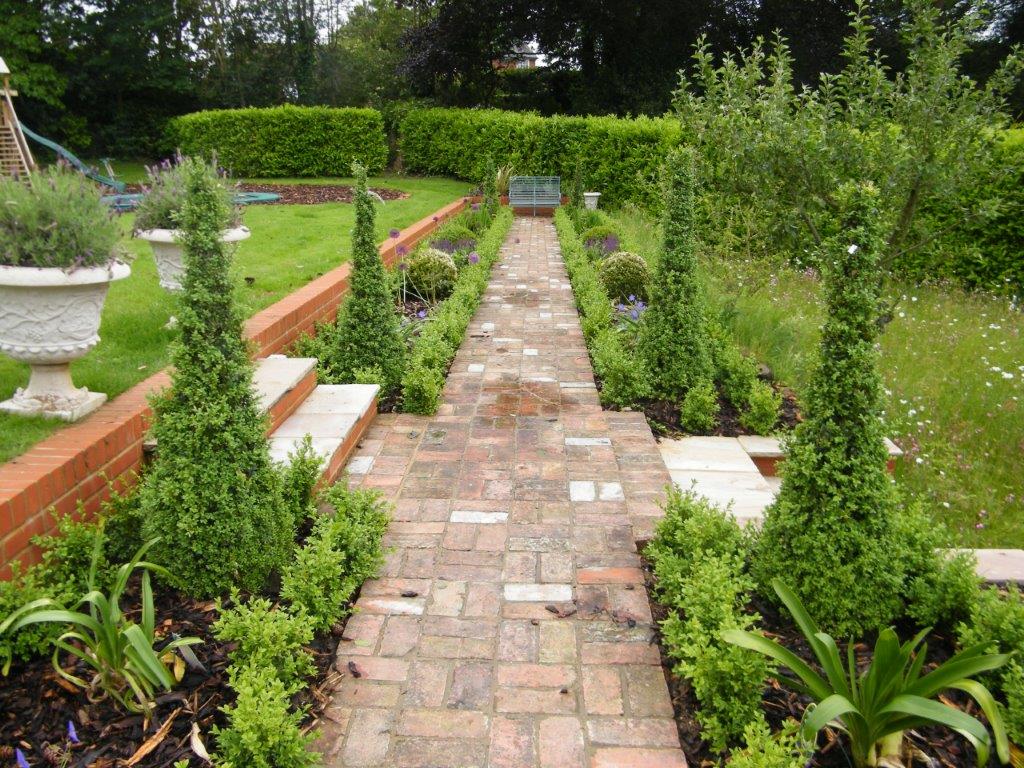
Common Border Design Mistakes to Avoid
Over the years, we have seen borders that suffer from the same recurring problems. Here are the pitfalls to watch out for:
- Planting too tightly or too sparsely. Too dense and plants compete for light and air, leading to leggy growth and disease. Too sparse and weeds fill the gaps before plants knit together. Follow the density table above as a starting point.
- Ignoring soil preparation. Skipping the hard work of digging in organic matter and removing perennial weed roots (bindweed, couch grass, ground elder) will haunt you for years. Invest the time upfront. It is the single most important step.
- Choosing plants for flowers alone. A border filled with summer-flowering perennials looks spectacular in July and desolate in December. Always ask: "What will this plant contribute outside its flowering period?" Foliage, form, seedheads and bark all matter.
- Forgetting scale. A single tall miscanthus in a 40 cm-deep border will look absurd. Conversely, a bed two metres deep planted entirely with low alpines will feel flat and underwhelming. Match plant height to border depth. A rough rule is that the tallest plants should not exceed the border's depth.
- No evergreen framework. Without evergreen structure, borders collapse visually from late autumn to early spring. We aim for a minimum of 25 to 30 per cent evergreen content in every scheme we design.
- Neglecting the edge. A wobbly, ill-defined border edge undermines even the best planting. Whether you use steel edging or a crisp spade-cut line, maintain it.
When to Plant Your Border
Timing your planting correctly saves money and gives plants the best chance of establishing quickly.
Autumn Planting (October to November)
Autumn is the ideal time to plant most hardy perennials, shrubs, trees and, of course, spring bulbs. The soil is still warm from summer, encouraging root growth, while autumn rain reduces the need for watering. Autumn is also when bareroot plants become available. Hedging, roses, fruit trees and deciduous shrubs sold without a pot at a fraction of the container-grown price. A bareroot rose costs £12 to £18 compared to £25 to £40 for the same variety in a container. Over a large border, those savings are substantial.
Spring Planting (March to May)
Container-grown plants can technically be planted year-round, but spring is the second-best window after autumn. Tender perennials (dahlias, salvias, penstemons) and grasses often establish better from a spring planting, as they dislike sitting in cold, wet winter soil. Be prepared to water regularly through the first summer if rain is scarce.
What to Avoid
Never plant into waterlogged or frozen ground. And try to avoid planting in the height of summer (July to August) unless you can commit to daily watering. Newly planted specimens simply cannot cope with heat stress and dry soil simultaneously.
Bringing Your Garden Border Planting Ideas to Life
The most successful borders we create begin with a clear vision, a thorough understanding of the site and a planting plan tailored to the client's lifestyle, taste and budget. Whether you are drawn to the romantic abundance of a cottage garden border, the sleek restraint of a contemporary scheme, or the ecological richness of a wildlife-friendly planting design, the principles remain the same: prepare the soil properly, choose plants suited to your conditions, plan for year-round interest, and invest in good edging.
If you would like to explore garden border planting ideas tailored specifically to your space, we would love to hear from you. Our approach to sustainable, considered design means every border we create is built to last and to grow more beautiful with each passing year. We work with clients across London, Kent, Surrey, Essex and Buckinghamshire, from initial consultation through to planting day and aftercare.
Ready to transform your borders? If you want a professional to handle the plant selection, layout and seasonal planning for your borders, see our planting design service in London for bespoke plans starting from £350.
Get in touch with the Soil Sisters team to book a design consultation, or call us on 0203 834 9807. We look forward to helping you create borders you will love coming home to.