
Traditional Garden Design in the UK
Traditional garden design remains one of the most enduring styles in British horticulture, defined by structured layouts, herbaceous borders, formal lawns, and classic plant palettes that have shaped UK gardens for centuries. Whether you own a period property in Kent, a Victorian terrace in Surrey, or a Georgian townhouse in London, traditional design offers a timeless framework that complements historic architecture while delivering year-round interest.
At Soil Sisters, we specialise in bespoke traditional garden design across the South East, working with listed properties, conservation areas, and modern homes where clients want the elegance and structure of a classic English garden. From herbaceous perennial borders to formal parterre layouts, we design gardens that honour tradition while functioning beautifully for 21st-century family life.
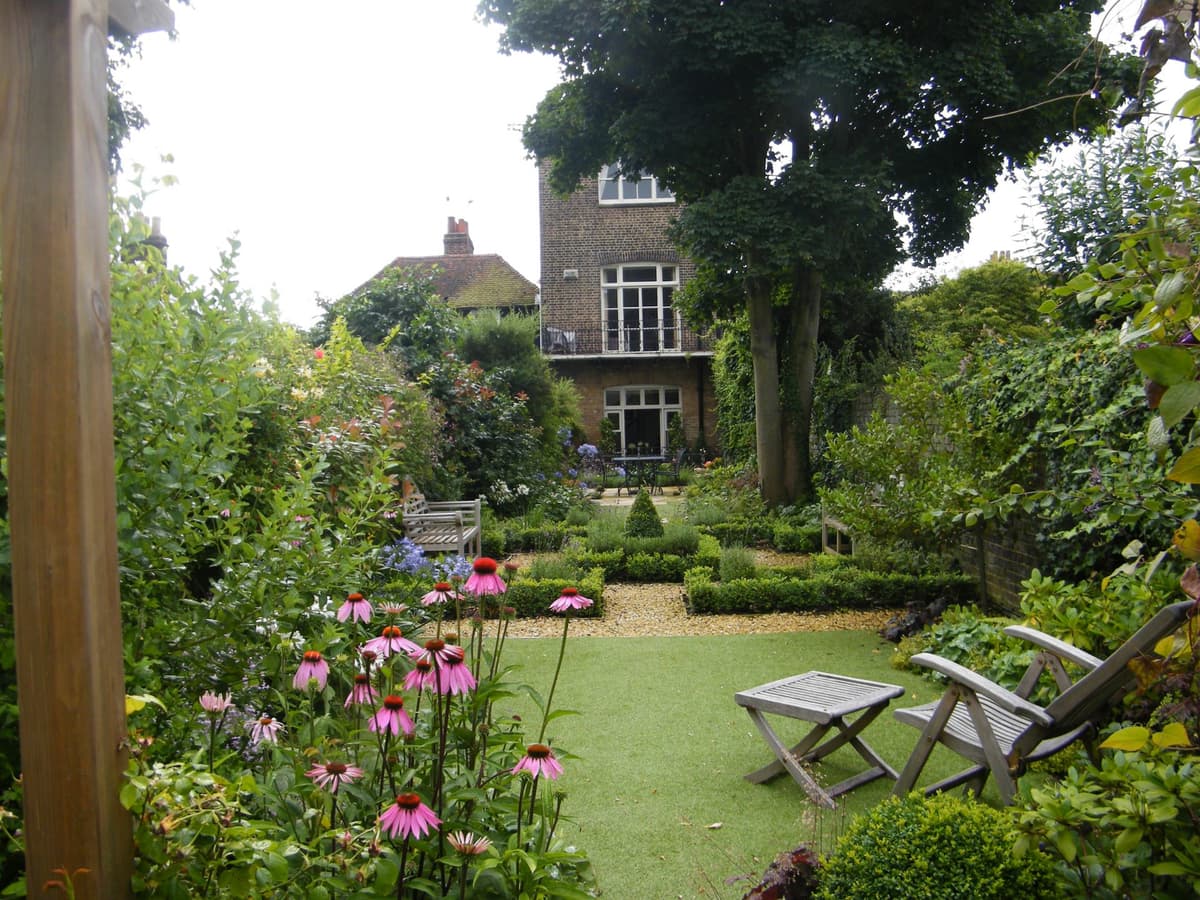
What Defines Traditional Garden Design
Traditional gardens are characterised by symmetry, order, and a reliance on plant species that have been cultivated in British gardens since the 18th and 19th centuries. Unlike contemporary naturalistic planting, traditional design emphasises control, clear edges, and defined spaces. Key features include:
- Formal lawns edged with brick or stone, often laid in geometric patterns or simple rectangles that anchor the design.
- Herbaceous borders arranged by height, colour, and flowering season, typically planted in drifts of three, five, or seven for visual impact.
- Box hedging and topiary used for structure and year-round green framework (Buxus sempervirens, though increasingly replaced with Ilex crenata due to box blight).
- Perennial beds filled with classics such as delphiniums, peonies, roses, foxgloves, and hardy geraniums.
- Hard landscaping with natural materials � York stone paving, gravel paths, reclaimed brick, and timber pergolas or arbours.
- Formal focal points including sundials, urns, stone benches, and water features such as circular ponds or wall-mounted fountains.
This approach suits period properties particularly well. If you own a home built before 1940, traditional garden design respects the architectural vocabulary of the building and creates visual continuity between interior and exterior spaces.