
A roof garden starts with engineering, not plants. Before you think about what to grow or how it will look, you need to answer three questions that determine whether your project is safe to build at all: can the roof carry the weight, where will water go, and how will you protect plants from wind? Get those right and a sunny urban roof terrace becomes one of the most productive and distinctive garden spaces you can create. Get them wrong and the consequences range from expensive to dangerous.
This guide walks you through every stage in the correct order, starting where the process must start: with the structure.
Do You Need Planning Permission for a Roof Garden?
For container planting on an existing flat roof or terrace that's already accessible, you typically won't need planning permission. The plants, pots and furniture count as movable items rather than development.
But you will need permission if you're:
- Building raised planters that are fixed to the roof structure or built into the fabric of the building
- Installing a pergola, overhead structure or trellis fixed to walls
- Changing the parapet height or roof membrane
- Converting a roof that wasn't previously accessible into a terrace (this usually requires Building Regulations approval as well)
- Working on a listed building or in a conservation area, where even temporary structures may need consent
If your property sits in a conservation area, Area of Outstanding Natural Beauty or National Park, your permitted development rights are more restricted. Even a modest trellis screen might need approval. Always check with your local planning authority before starting work.
For listed buildings, you'll need Listed Building Consent for any alterations that affect the building's character, which can include external works like roof gardens. Our planning permission guide covers the general principles for garden structures.
Structural Load Capacity: The First Step
Before placing a single pot on a roof, you must confirm the load capacity with a structural engineer. This is not optional.
Roofs are designed as weather barriers, not garden floors. A standard flat roof may have a safe imposed load of as little as 75 kg per square metre. Wet compost in large containers easily exceeds 400 kg per square metre. Add paving, furniture, water features and people, and the numbers climb fast.
A structural engineer will assess:
- The load capacity of the roof structure
- The load path through the building (where weight transfers down through walls, beams and foundations)
- Safe positioning of heavy items (planters, furniture, water features)
- Whether strengthening work is needed
Cost: A structural engineer's assessment typically costs £300 to £600 for a residential roof terrace. This is a fraction of the cost of repairing structural damage caused by overloading.
If the assessment shows your roof cannot safely support a garden, you're not necessarily stuck. The engineer can advise on strengthening work, though this is usually only viable if you have access from below and budget for structural alterations.
Wind Exposure: The Defining Challenge
Wind is the single biggest challenge in roof garden design. Rooftops are significantly more exposed than ground-level gardens. Wind dries out soil and foliage faster, can damage or topple unsecured containers and furniture, and limits which plants will survive.
A few metres of elevation makes an enormous difference. Wind speed increases with height, and there's no shelter from surrounding trees or walls. Even in central London, a fifth-floor terrace faces wind conditions a ground-level courtyard never sees.
Creating Wind Shelter
Your first design priority is creating shelter. Options include:
- Trellis panels: Slatted trellis allows some wind through, which reduces turbulence. Solid screens create downdrafts on the lee side. Fix securely to walls or use heavy planters as bases.
- Glass or acrylic balustrades: Wind-permeable at top, solid at seating height. Expensive but very effective.
- Tall planters with tough screening plants: Position around the perimeter to create a living windbreak. Use wind-tolerant evergreens like Ilex crenata (Japanese holly), Pittosporum tenuifolium, Photinia or Elaeagnus.
- Built screens: Brick, rendered block or timber screens fixed to the building structure. Usually need planning permission and add significant weight.
Wind shelter transforms what you can grow. A sheltered microclimate in the centre of the terrace can support plants that would be shredded in full exposure.
Lightweight Containers and Growing Media
Every element on a roof garden must be as light as possible while still doing its job.
Containers
Avoid: Terracotta (very heavy when filled), concrete, stone.
Use: Fibreglass, GRP (glass-reinforced plastic), lightweight resin, galvanised zinc, corten steel (thin gauge), recycled plastic.
Fibreglass planters can look like lead, stone or terracotta but weigh a fraction of the real thing. A large fibreglass planter might weigh 8 kg empty; the same size in terracotta weighs 40 kg.
False bottoms or internal reservoirs reduce the volume of compost needed and create drainage space, further reducing weight.
Growing Media
Standard topsoil is too heavy. Use lightweight growing media formulated for roof gardens and container planting. These typically contain:
- Perlite or vermiculite (volcanic glass, very light)
- Composted bark or coir
- A smaller proportion of loam or topsoil for structure
Weight comparison: Lightweight growing media weighs approximately 600-800 kg per cubic metre when saturated. Standard topsoil weighs 1,800-2,000 kg per cubic metre when wet.
For a 1-metre cube planter, that's a tonne of difference.
Drainage and Waterproofing
The roof membrane must be in good condition before you build a garden on top of it. If there's any doubt, have it inspected and repaired first. A roof garden built on a leaking roof will cause damage to the building below that's far more expensive to fix than the garden itself.
Drainage is non-negotiable. Water needs somewhere to go.
- Use containers with drainage holes, not sealed planters
- Stand containers on pot feet or tiles to allow water to drain underneath
- Ensure there's a clear path for water to reach roof outlets
- Check roof outlets regularly (leaves and debris block them fast)
- Consider a drainage mat or layer beneath containers if placing directly on the roof membrane
In heavy rain, roof outlets can become overwhelmed. Make sure there's an overflow route so water doesn't pool across the roof surface.
Best Plants for UK Roof Gardens
Wind-tolerant and drought-resistant plants are essential. As a general rule, plants with small leaves cope far better with wind than large-leaved species. Large leaves catch wind like sails and suffer tearing and scorch.
Wind-Tolerant Evergreens for Structure and Screening
- Ilex crenata (Japanese holly) – small leaves, clips well, very tough, from £25 for a 3-litre pot
- Pittosporum tenuifolium – silver-green foliage, tall and narrow, from £30 for a 5-litre pot
- Photinia × fraseri 'Red Robin' – glossy red new growth, evergreen, from £35 for a 7-litre pot
- Elaeagnus × ebbingei – silver-backed leaves, tolerates wind and salt spray, from £30 for a 5-litre pot
- Euonymus japonicus – glossy leaves, tough as old boots, from £20 for a 3-litre pot
- Lavandula (lavender) – low, aromatic, Mediterranean, from £8 for a 2-litre pot
Grasses (Exceptionally Wind-Tolerant)
Ornamental grasses are among the most wind-tolerant plants. Flexible stems and narrow leaves allow them to bend and sway without damage.
- Stipa tenuissima (Mexican feather grass) – fine, blonde, movement, from £10
- Miscanthus sinensis varieties – tall, architectural, autumn colour, from £15
- Hakonechloa macra (Japanese forest grass) – arching, golden or green, shade-tolerant, from £12
- Carex testacea (orange sedge) – orange-brown, evergreen, from £8
Perennials for Colour
- Sedum (stonecrop) – fleshy leaves, pink or white late-summer flowers, from £7
- Eryngium (sea holly) – spiky blue flowers, drought-tolerant, from £9
- Achillea (yarrow) – flat flower heads, long-flowering, from £8
- Echinacea (coneflower) – large daisy flowers, pollinator-friendly, from £10
- Salvia nemorosa – purple flower spikes, repeat-flowering, from £9
Climbers and Screening
Train climbers on trellis fixed to walls or planters to soften hard surfaces and create privacy.
- Trachelospermum jasminoides (star jasmine) – evergreen, fragrant white flowers, from £25
- Lonicera henryi (evergreen honeysuckle) – tough, wind-tolerant, from £18
- Pyracantha (firethorn) – white flowers, orange or red berries, thorny (good security screening), from £20
Trees for Height (Use with Caution)
Small trees add vertical structure but need large, stable planters and careful positioning to avoid becoming top-heavy in wind. Multi-stem specimens are more stable than single-stem trees.
- Betula utilis var. jacquemontii (Himalayan birch) – white bark, airy canopy, from £80 for 150-180 cm
- Amelanchier lamarckii – spring blossom, autumn colour, multi-stem, from £70
- Acer palmatum (Japanese maple) – slow-growing, shelter from wind once established, from £60
- Olive trees (Olea europaea) – drought-tolerant, architectural, expensive but iconic for roof terraces, from £150 for a mature specimen
Roof Garden Design Costs UK 2026
Design and build costs depend on size, access, structural constraints and specification.
| Size | Design Fee | Build Cost (materials + labour) |
|---|---|---|
| Small roof terrace (10-20 sqm, containers, planting, simple decking or tiles) | £800 - £1,500 | £3,000 - £8,000 |
| Medium roof terrace (20-40 sqm, multiple planters, screening, irrigation, seating) | £1,500 - £3,000 | £8,000 - £18,000 |
| Large roof garden (40-80 sqm, built-in planters, pergola, lighting, water feature) | £3,000 - £6,000+ | £18,000 - £40,000+ |
| Extensive roof garden (80+ sqm, bespoke build, structural work, full design-and-build service) | £6,000 - £12,000+ | £40,000 - £100,000+ |
Add-ons:
- Structural engineer's assessment: £300 - £600
- Automated irrigation system: £500 - £2,000 depending on number of zones
- Outdoor lighting (mains): £800 - £3,000+ including electrician
- Built-in seating or storage: £600 - £2,500
- Water feature (self-contained): £150 - £800
- Artificial turf: £60 - £100 per sqm installed
London prices typically run 15-25% higher than South East averages. For more detailed cost breakdowns, see our garden design cost guide for London.
Access is a major cost driver. If materials and soil have to be carried up four flights of stairs or craned in from the street, expect to add 20-30% to labour costs.
Common Roof Garden Mistakes to Avoid
1. Starting without a structural engineer's sign-off. Do not skip this. The risk is not theoretical.
2. Using standard topsoil instead of lightweight growing media. The weight difference is enormous.
3. Placing heavy planters in the centre of the roof. Load-bearing capacity is usually highest at the edges, near walls and supporting columns. Discuss positioning with your structural engineer.
4. Planting tender, large-leaved plants in full exposure. They will not survive. Choose wind-tolerant species.
5. Blocking roof drainage outlets. This causes pooling, which damages the roof membrane and risks leaks.
6. Failing to secure containers and furniture. Wind can move heavy items. Use straps, brackets or weigh down with additional ballast if needed.
7. Over-planting. Containers dry out fast on roofs. Start with fewer plants and add more once you understand how much watering they need.
Maintenance: How Much Time Will a Roof Garden Take?
A roof garden needs more maintenance than a ground-level garden because:
- Plants dry out faster (wind, sun, limited soil volume)
- Wind damages foliage more
- Containers need feeding more often (nutrients leach out with watering)
- Exposed locations mean more debris accumulates (check and clear roof outlets regularly)
Realistic time commitment:
- Small roof terrace (10-20 sqm, containers only): 1-2 hours per week in summer, 30 minutes per week in winter
- Medium roof terrace (20-40 sqm): 2-3 hours per week in summer, 1 hour per week in winter
- Large roof garden (40+ sqm): 3-5 hours per week in summer, 1-2 hours per week in winter
An automated irrigation system dramatically reduces time. Budget £500-£2,000 depending on the number of zones and complexity.
Soil Sisters' Approach to Roof Garden Design
We start every roof terrace project with a structural assessment referral. If the structure can't safely carry the garden, there's no point drawing plans.
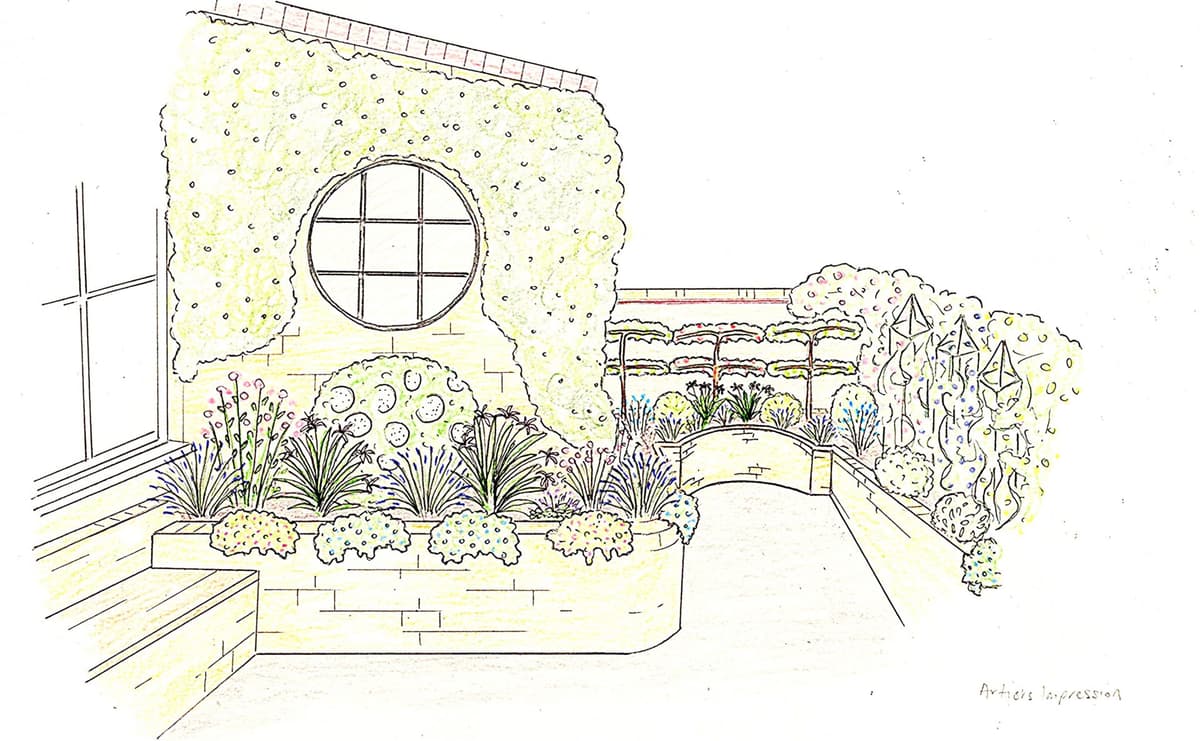
Once the engineer confirms capacity, we design around your priorities: privacy, planting, entertaining space, or a combination. We specify lightweight materials throughout, create wind shelter before adding more tender plants, and build in drainage and irrigation from the start.
Most of our London roof terrace clients want evergreen structure for year-round interest, seasonal colour from perennials and grasses, and seating or dining space. We link roof gardens visually to interiors with materials and planting style so the terrace feels like an extension of the living space, not an afterthought.
We work across London and the South East. If you're in Kent, Surrey, Essex or Buckinghamshire, we can design for roof terraces there too, though access and logistics are usually easier outside central London.
We also specialise in balcony garden design and small urban spaces where weight and wind are major constraints. Our 3D design process lets you see exactly how the terrace will look before we start building.
Frequently Asked Questions
Do I need planning permission for a roof garden in the UK?
For container planting on an existing accessible roof terrace, usually no. For fixed structures (built-in planters, pergolas, changes to the parapet), you usually do. Listed buildings and conservation areas have stricter rules. Check with your local planning authority before starting.
How much weight can a flat roof support?
It varies enormously. A standard flat roof may only support 75-150 kg per square metre. A well-built roof terrace designed for use might support 250-500 kg per square metre or more. You must have a structural engineer assess your specific roof. Do not guess.
What are the best plants for a windy roof terrace?
Small-leaved, wind-tolerant evergreens (Ilex crenata, Pittosporum, Elaeagnus, Photinia) for structure. Ornamental grasses (Stipa, Miscanthus, Hakonechloa) for movement and texture. Sedums, Eryngium and Achillea for perennial colour. Avoid large-leaved tender plants.
How do I stop containers blowing over on a roof garden?
Use heavy planters (filled, they're stable). Secure tall containers with straps or brackets fixed to walls or railings. Group containers together for mutual support. Avoid top-heavy single-stem trees unless in very large, stable planters.
How much does a roof garden cost per square metre?
For a basic container garden with planting and simple finishes, budget £150-£400 per sqm. For a designed roof terrace with built elements, irrigation and lighting, budget £400-£1,000+ per sqm. Access difficulties, structural work and high-spec materials push costs higher.
Can I grow vegetables on a roof terrace?
Yes. South-facing roofs receive more direct sun than most ground-level urban gardens. Tomatoes, peppers, courgettes, salad leaves and herbs grow well in containers. Use lightweight compost, feed regularly and water daily in summer. Wind protection is essential for tall crops like tomatoes.
How do I water a roof garden?
Hand-watering with a hose or watering can works for small terraces. For anything larger or if you travel frequently, install an automated irrigation system with drip lines or micro-sprinklers on a timer. This costs £500-£2,000 depending on size and complexity but saves hours of work and prevents plants dying when you're away.
Need help designing your roof terrace? We create roof gardens across London, Kent, Surrey, Essex and the South East. Call us on 0203 834 9807 or get in touch to arrange a free consultation.