
Designing a family garden is one of the hardest briefs we get. Parents want somewhere calm to drink coffee on a Sunday morning. Children want to launch footballs, dig holes, and use every square metre as a racetrack. Teenagers want privacy and somewhere to sit with friends. The family dog wants to patrol the perimeter and dig up anything newly planted.
A good family garden does not try to be everything to everyone. It zones the space intelligently, uses materials and plants that can take a battering, and evolves as the children grow. We have designed dozens of family gardens across Kent, Surrey, Essex and London, and the same principles keep working: clear zones, robust planting, and a lawn that is fit for purpose.
This guide covers how to lay out a family garden, what to plant (and what to avoid), realistic costs for trampolines, play equipment and hard landscaping, and how to design a garden that works for toddlers, school-age children, and teens without looking like a municipal playground.
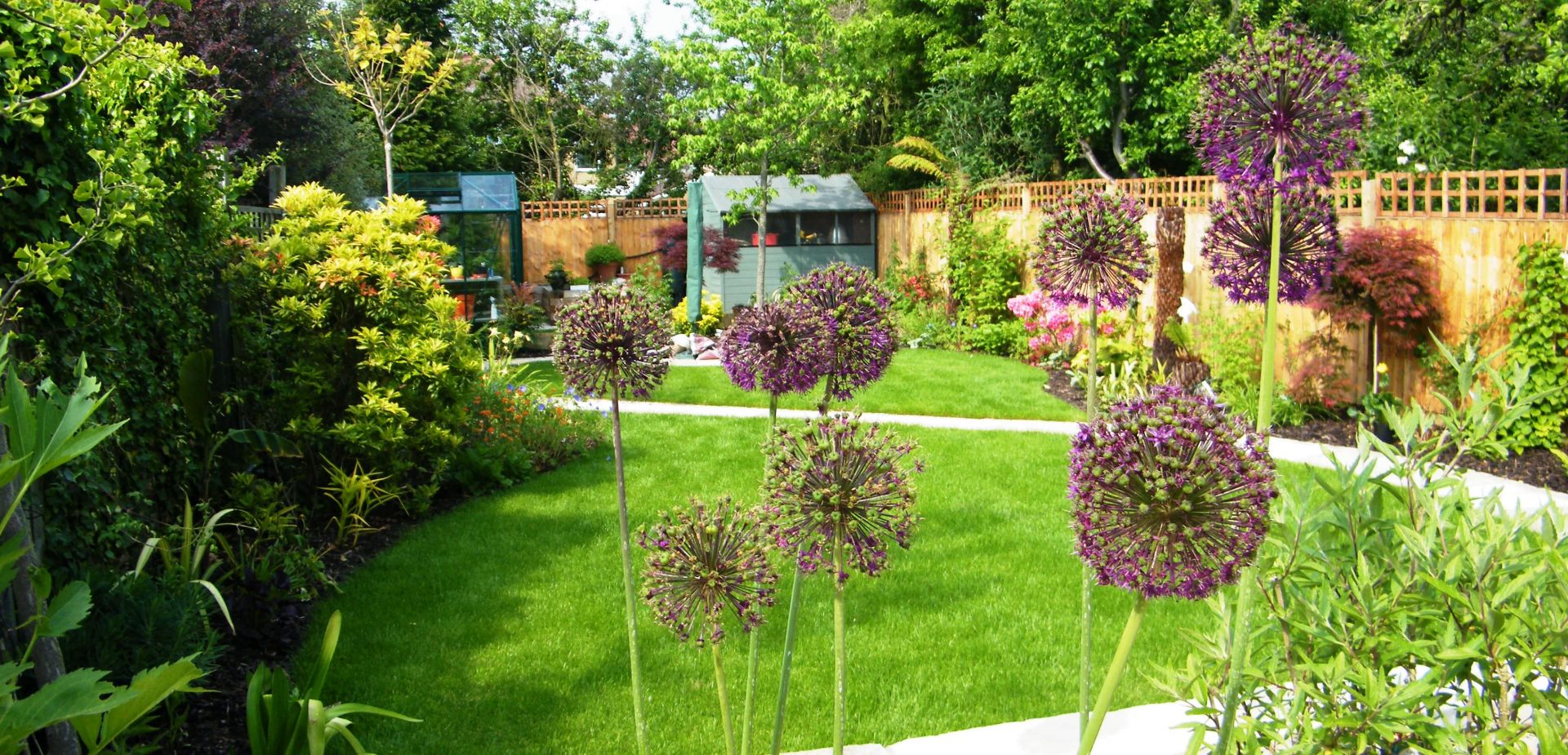
Why Most Family Gardens Fail
The default approach to a family garden is to lay a lawn, stick a swing set in the corner, and hope for the best. That works for about eighteen months. Then the lawn becomes a mud patch under the swing, the borders are full of lost footballs, and nobody uses the garden because it is either too messy or too precious.
The three most common mistakes:
No zoning. The garden is treated as one big space, so the play area and the adult seating area compete for the same ground. Children do not respect invisible boundaries, and adults end up perched on the edge of a muddy lawn with a mug of tea, watching a trampoline dominate the view.
Planting in the wrong places. Herbaceous borders along the lawn edge are a disaster in a family garden. They get trampled, used as goal posts, and filled with stray toys. Planting needs to be either out of the firing line or tough enough to survive.
Trying to keep it perfect. A family garden with young children is not the place for a pristine lawn, white rendered walls, or delicate perennials. Accept that the garden will get used hard for a decade, and design accordingly.
How to Zone a Family Garden
The best family gardens are divided into three distinct zones, each with a clear purpose. This does not mean building fences between them. It means using changes in level, materials, or planting to create psychological separation.
Zone 1: The Play Area
This is where the children spend most of their time. It needs to be visible from the house (so you can keep an eye on them while making dinner), durable, and large enough for the kind of play your children actually do.
For most families, that means a lawn. Not a pristine bowling green, but a hard-wearing utility lawn that can take trampolines, goal posts, paddling pools, and daily foot traffic. Use a tough ryegrass seed mix designed for sports pitches. Budget £15 to £25 per square metre for turf installation including ground preparation.
If you have very young children (under five), consider leaving part of the lawn as bare soil or bark chip for digging and messy play. A sandpit with a lid costs £80 to £150 for a 1.2m square timber frame model. It converts to a raised vegetable bed when the children outgrow it.
Trampolines are the single highest-use piece of play equipment for children aged five to twelve. An in-ground trampoline (set flush with the lawn) costs £400 to £800 installed, looks far better than a frame model, and removes the fall hazard of the 1m high frame edge. Above-ground trampolines cost £150 to £400 but dominate the garden visually and create a dead zone underneath where grass will not grow.
Zone 2: The Adult Terrace
This is the space immediately outside the back door. It needs to be paved (not lawn), large enough for a table and four chairs, and separate from the play area. Parents need somewhere to sit with a coffee and actually relax, not perch on the edge of a trampoline safety net.
Allow at least 3m x 3m for a functional terrace. Larger families or regular entertainers should aim for 4m x 4m. Porcelain paving costs £40 to £70 per square metre for materials, plus £40 to £60 per square metre for installation. Indian sandstone is £30 to £50 per square metre for materials. Concrete pavers are the budget option at £20 to £35 per square metre.
Position the terrace where it gets sun during the hours you are most likely to use it. For working parents, that is usually late afternoon and early evening (4pm to 7pm). A south-west facing terrace catches the evening sun. A north-east terrace will be in shade by 3pm.
Zone 3: The Shared Space
This is the transitional area between the play zone and the adult terrace. It is where planting happens, where the family eats together in summer, and where teenagers eventually claim a corner to sit with friends.
Raised beds work brilliantly here. They act as natural zone dividers, create a barrier between the lawn and the terrace without needing a fence, and bring planting up to a level where it can be appreciated (and where it is less likely to be trampled). At 40cm to 50cm height, they double as casual seating for adults watching children play.
Budget £80 to £150 per linear metre for timber raised beds (sleeper-style, 40cm high), or £120 to £200 per linear metre for rendered blockwork beds (more permanent, better for contemporary designs). Fill them with tough, structural evergreens that do not need deadheading or staking.

What to Plant in a Family Garden
The best plants for a family garden are evergreen, structurally strong, non-toxic, and able to bounce back after being sat on, used as a hiding place, or having a football lobbed into them twice a day.
Evergreen Structural Plants
These form the backbone of the planting. They look good year-round, need minimal maintenance, and survive family life.
- Fatsia japonica (Japanese aralia) — Bold, glossy leaves, tolerates shade, grows to 1.5m. Tough as old boots. £15 to £30 for a 3-litre pot.
- Pittosporum tenuifolium — Evergreen shrub with small, wavy leaves. Grows to 2m, good for screening. Not fully hardy in cold spots (Kent and Surrey fine, Essex needs shelter). £12 to £25 for a 3-litre pot.
- Viburnum tinus — White flowers in winter, dark evergreen foliage, grows to 2m. Native, fully hardy, loved by bees. £10 to £20 for a 3-litre pot.
- Photinia x fraseri Red Robin — New growth is bright red, matures to glossy green. Grows to 2m, good for hedging or specimen planting. £12 to £25 for a 3-litre pot.
- Sarcococca confusa (sweet box) — Scented white flowers in January, glossy evergreen leaves, shade-tolerant, grows to 1m. £10 to £18 for a 2-litre pot.
Grasses (Tough and Architectural)
Grasses are brilliant in family gardens because they move in the wind, look good for nine months of the year, and bounce back after being flattened.
- Calamagrostis x acutiflora Karl Foerster — Upright feathery plumes, grows to 1.5m, flowers June to October. £8 to £15 for a 2-litre pot.
- Hakonechloa macra Aureola (golden Japanese forest grass) — Low mounding habit, bright gold and green variegated leaves, tolerates shade. Grows to 40cm. £10 to £18 for a 2-litre pot.
- Miscanthus sinensis Morning Light — Tall (1.8m), fine silver-green foliage, plumes in late summer. Needs sun. £10 to £20 for a 3-litre pot.
Ground Cover (Weed Suppression and Low Maintenance)
Ground cover plants fill the gaps, suppress weeds, and reduce the amount of bare soil that turns to mud in winter.
- Geranium macrorrhizum — Spreading habit, pink or white flowers in May, aromatic foliage, tolerates shade and dry soil. Grows to 40cm. £6 to £10 for a 1-litre pot.
- Vinca minor (lesser periwinkle) — Evergreen ground cover, blue flowers in spring, spreads well, tolerates deep shade. Grows to 15cm. £5 to £8 per plant.
- Pachysandra terminalis — Evergreen ground cover for shade, white flowers in spring, spreads slowly, grows to 20cm. £6 to £10 for a 1-litre pot.
Plants to Avoid in a Family Garden
Some plants are either poisonous to children, have thorns, or are too delicate for a high-traffic garden.
Poisonous plants to avoid: Yew (Taxus baccata — all parts toxic), laburnum (seeds highly toxic), aconitum (monkshood — all parts toxic), foxglove (Digitalis — toxic if ingested), oleander (Nerium oleander — highly toxic), rhododendron and azalea (toxic to children and pets).
Thorny plants to avoid near play areas: Roses (most varieties), berberis, pyracantha, holly (Ilex). These are fine in borders away from the lawn, but not along pathways or near the trampoline.
Delicate perennials to avoid: Delphiniums, dahlias, and tall perennials that need staking will get snapped by footballs. Save these for a border well away from the action, or skip them entirely until the children are older.

Designing for Different Ages
A family garden for toddlers needs different features than a garden for teenagers. The smart approach is to design infrastructure that can evolve.
Toddlers and Pre-Schoolers (0-5 Years)
Toddlers need somewhere safe to toddle, a sandpit for digging, and a hard surface for ride-on toys and chalk drawing. They do not need a huge lawn yet. They need visibility from the kitchen window, soft-fall surfaces under climbing equipment, and a garden that is easy to supervise.
Key features: sandpit with lid, bark chip digging area, small lawn or artificial grass (15 to 20 sqm is plenty), low-level planting they can see over, a paved area for trikes and scooters. Budget £3,000 to £8,000 for a toddler-focused garden redesign including new lawn, sandpit, bark area, and family-friendly paving.
School-Age Children (5-12 Years)
This is the high-impact phase. Children want to run, climb, kick balls, and use the garden hard every day from April to September. The garden needs to absorb that.
Key features: generous lawn (40 to 60 sqm minimum for ball games), in-ground trampoline, goal posts (moveable or fixed), a paved terrace separate from the play area, robust planting in raised beds out of the firing line. Budget £8,000 to £18,000 for a full family garden redesign with new lawn, in-ground trampoline, paving, raised beds and planting.
Teenagers (13+ Years)
Teenagers want privacy, somewhere to sit with friends, and a garden that does not look like a playground. By this stage, the trampoline is usually redundant (or moved to the far end of the garden). The lawn can be smaller. The focus shifts to seating, lighting, and creating a space that feels more grown-up.
Key features: a second seating area away from the main terrace (a bench, a couple of chairs, or a built-in seat in a raised bed), festoon lighting or solar stake lights, a fire pit or chiminea (if space and safety allow), and planting that creates enclosure and privacy. Budget £5,000 to £12,000 to refresh a family garden for teenagers, including new paving, seating, lighting, and replanting.
Family Garden Costs (South East England, 2026)
Here are realistic costs for the most common elements of a family garden in Kent, Surrey, Essex and London. These are material and installation costs combined.
| Feature | Cost | Notes |
|---|---|---|
| New lawn (turf) | £15-£25/sqm | Includes ground prep, topsoil, turf. Sports-grade ryegrass mix. |
| Artificial grass | £50-£90/sqm | Low maintenance, works in shade. Not as pleasant underfoot as real grass. |
| In-ground trampoline | £400-£800 | 3m diameter. Includes excavation, drainage, installation. |
| Above-ground trampoline | £150-£400 | 3m diameter with safety net. DIY installation. |
| Timber sandpit (1.2m sq) | £80-£150 | Timber frame with lid. Converts to raised bed later. |
| Porcelain paving | £80-£130/sqm | Material + installation. Low maintenance, contemporary look. |
| Indian sandstone paving | £70-£110/sqm | Material + installation. Traditional, warm tones. |
| Timber raised beds (sleeper) | £80-£150/linear m | 40-50cm high. Doubles as casual seating. |
| Rendered blockwork beds | £120-£200/linear m | More permanent, contemporary finish. |
| Timber play equipment (slide/swing) | £300-£1,200 | Varies hugely by size and quality. Needs bark chip or rubber base. |
| Bark chip safety surfacing | £15-£25/sqm | 150mm depth for critical fall height up to 2m. |
| Rubber mulch (safer alternative) | £40-£60/sqm | Lasts longer, does not decompose. Drainage friendly. |
Safety in a Family Garden
Safety is not about wrapping the garden in bubble wrap. It is about identifying the real risks and designing them out.
Ponds and Water Features
Ponds are beautiful, but they are a drowning risk for children under five. If you have toddlers or very young visitors, either avoid a pond entirely, or cover it with a rigid steel mesh grill (£150 to £300 for a custom-made cover). The grill needs to be strong enough to hold an adult's weight.
The safer alternative is a water feature with no standing water: a bubble fountain, a rill that drains into a hidden reservoir, or a wall-mounted spout. These cost £300 to £800 installed and carry no drowning risk.
Hard Surfaces and Trip Hazards
Children run everywhere. Trip hazards like raised paving edges, steps without handrails, and uneven ground are the most common cause of garden injuries.
Keep paving flush with the lawn edge (use metal edging strips to hold the two materials at the same level). Mark steps clearly with a contrasting tread or nosing. Add a handrail to any flight of more than two steps (required by building regulations in most cases).
Boundaries and Gates
If your garden backs onto a road, a railway line, or a drop, the boundary needs to be secure. A 1.8m fence or wall is standard. Gates need to be lockable from the inside, with a latch that toddlers cannot reach.
For front gardens, a secure gate is essential if you have children under five. A bolt-latch combination (high latch, low bolt) costs £20 to £40 and prevents young children from opening the gate unsupervised.
Low-Maintenance Family Gardens
Busy families do not have time for high-maintenance gardens. The best family gardens are designed to look after themselves.
Use evergreens, not perennials. Evergreen shrubs and grasses need one prune per year. Herbaceous perennials need deadheading, staking, dividing, and clearing in autumn. If you have limited time, stick to evergreens.
Minimise lawn edges. Every curve in a lawn edge adds maintenance. Straight edges or gentle sweeping curves are far quicker to mow and edge. Use metal edging strips (£8 to £12 per linear metre) to create a mowing edge and stop grass creeping into borders.
Automate irrigation. If you are planting raised beds or containers, an automatic irrigation system saves hours of watering in summer. A basic drip irrigation kit for raised beds costs £80 to £150. Add a timer (£30 to £60) and the system runs itself.
Mulch generously. A 5cm layer of bark mulch or composted wood chip suppresses weeds, retains moisture, and reduces the need for watering. Budget £25 to £40 per cubic metre for bark mulch delivered. One cubic metre covers roughly 20 square metres at 5cm depth.
What We Include in a Family Garden Design
When you work with Soil Sisters on a family garden, you get:
- A full site survey including aspect, soil type, existing features, and drainage
- A consultation to understand how you use the garden, the ages of your children, and what you need the space to do
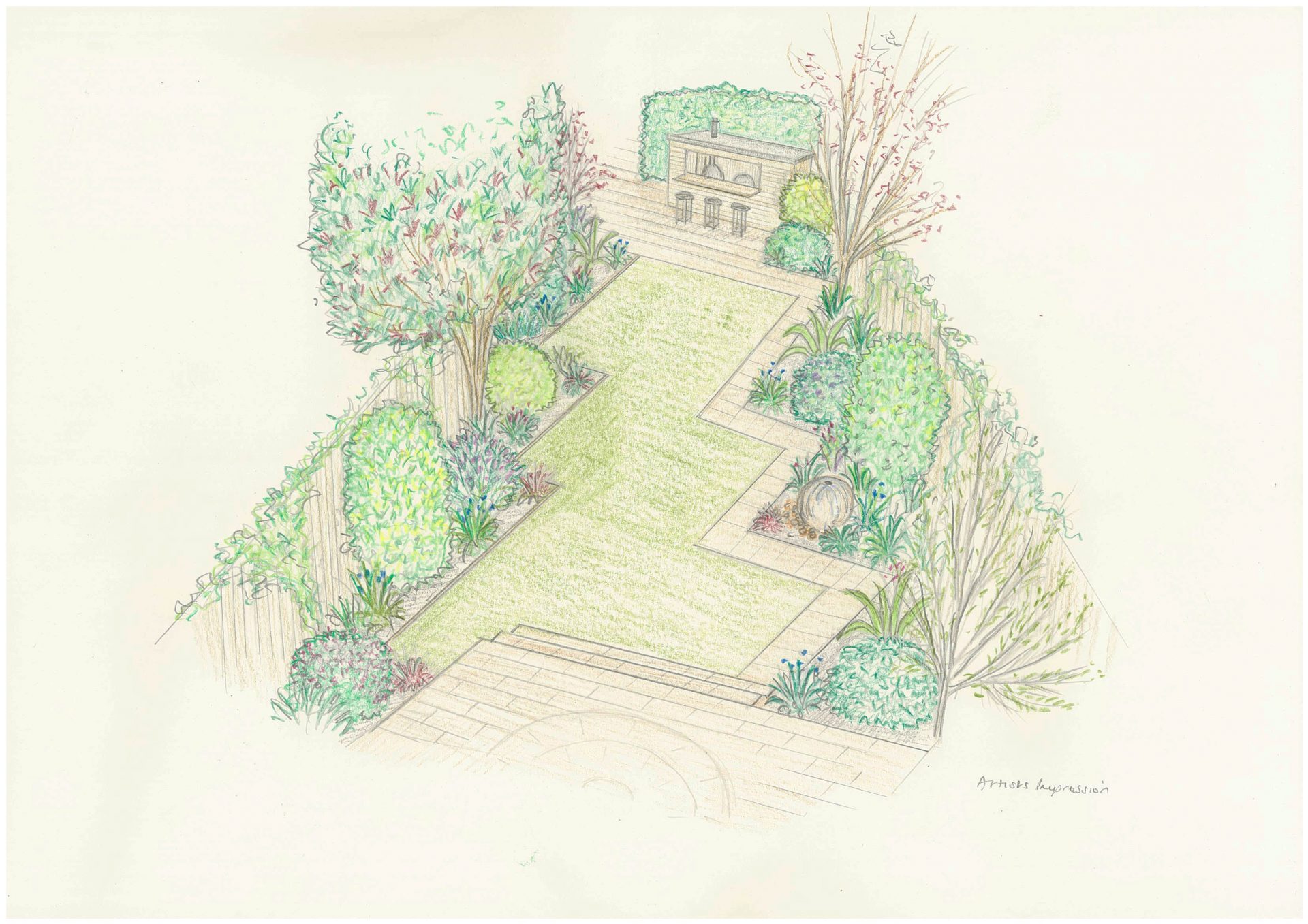
- A scaled hand-drawn plan and 3D visualisation so you can see exactly how the zoning will work
- A detailed planting plan with species, quantities, and layout
- A materials specification with costs and supplier recommendations
- Build support, including contractor recommendations or full project management if you choose our design and build service
We work across Kent, Surrey, Essex and London and the South East. If you have a family garden you want to redesign, get in touch for a free initial consultation, or call us on 0203 834 9807.
Frequently Asked Questions
How much does it cost to design a family garden?
Design fees for a typical family garden (50 to 80 sqm) range from £2,500 to £4,500 depending on complexity. A full design and build including new lawn, paving, raised beds, trampoline and planting typically costs £10,000 to £25,000 in the South East.
What is the best surface for a family garden?
A combination works best: a hard-wearing lawn for play (using sports-grade ryegrass turf), porcelain or sandstone paving for the terrace, and bark chip or rubber mulch under play equipment. Artificial grass is an option for very shaded or heavily used areas but does not feel as pleasant as real turf.
Should I have a lawn in a family garden?
Yes, if you have space for at least 30 to 40 sqm and your children are school-age or younger. A lawn is the most versatile play surface: soft for falls, good for ball games, and far cheaper than alternatives like artificial grass or rubber surfacing. Use a tough ryegrass mix and accept that it will not look pristine.
What plants are safe for children?
Safe, non-toxic plants for family gardens include: Fatsia japonica, Viburnum tinus, grasses (Calamagrostis, Hakonechloa, Miscanthus), Geranium macrorrhizum, lavender, rosemary, and most ornamental grasses. Avoid yew, laburnum, aconitum, foxglove, oleander, and rhododendron (all toxic if ingested).
How do I make a small family garden work?
Zone ruthlessly. Use the area closest to the house as a paved terrace for adults. Reserve the sunniest part for a small lawn or artificial grass (20 to 30 sqm is enough for young children). Use raised beds to define zones and create a sense of separation without fences. Avoid trying to fit everything in. A small garden that does two things well beats a larger garden that does five things badly.
When should I redesign a family garden?
The best time to redesign is when your children's needs change. Toddler to school-age (around age 5) is a common trigger: you need more lawn and a trampoline. School-age to teenager (around age 12-13) is another: the garden needs to feel less like a playground and more like a space for socialising. Redesigning in autumn or winter means the build is complete in time for spring.
Do I need planning permission for a family garden redesign?
Most family garden changes fall within permitted development and do not need planning permission. Exceptions include garden rooms over 2.5m high within 2m of a boundary, hard surfacing over 5 sqm that is not permeable, and any work in a conservation area or to a listed property. See our guide to garden room planning permission for details.
