
After designing gardens across London, Kent, Surrey and Essex for years, we can tell you something with absolute certainty: the single most important hour of any garden project isn't the day the digger arrives, or the moment the last plant goes in. It's the brief. That first proper conversation where you sit down with your designer and talk honestly about what you want, what you need, and how you actually live.
We've seen it time and again. The quality of the garden design brief determines roughly 80% of the outcome. A clear, thoughtful brief leads to a design that feels right from the first concept sketch. A vague or rushed one leads to rounds of revisions, frustration on both sides, and a garden that never quite feels like yours. The good news? Briefing a garden designer well isn't difficult. You don't need to know anything about plants, materials or construction. You just need to be honest, prepared and willing to have a proper conversation.
This guide is everything we wish every client knew before that first meeting. Whether you're commissioning a complete garden redesign or just rethinking a tired patio, these steps will help you get the most from your designer and, ultimately, end up with a garden you genuinely love.

What Is a Garden Design Brief and Why Does It Matter?
Let's clear something up straight away. A garden design brief is not a wish list. It's not a Pinterest board with 40 saved images. It's not a vague feeling that you'd like things to look "nicer." A brief is a structured conversation between you and your designer that covers how you live, what you need, what you love, what you can spend and when you want it done. It's the foundation that everything else is built on.
Think of it this way. If you asked a builder to construct a house and your brief was "something nice with a kitchen," you'd rightly expect problems. Garden design is no different. The more specific and honest you can be, the closer the first concept will be to what you actually want. And that matters, because revisions cost real money and real time.
We typically find that a well-briefed project needs one round of refinements after the concept stage. A poorly briefed one can need three or four, each one adding weeks to the timeline and potentially hundreds of pounds to the design fee. Worse, it can lead to a garden that looks beautiful on paper but doesn't work for the people who actually use it. The brief is where we learn that your dog digs up anything not anchored to bedrock, that your mother-in-law visits every Sunday and needs step-free access, or that you actually hate cooking outdoors despite what the magazines say. These details change everything.
Before the First Meeting: What to Prepare
You don't need to arrive at your garden design consultation with a finished plan. That's our job. But a little preparation goes a remarkably long way. Here are three things we always recommend doing in the week before your first meeting.
Walk Your Garden at Different Times of Day
This sounds simple, but most people have never really done it with intention. Spend ten minutes in your garden in the morning, again around midday, and once more in the late afternoon or early evening. Notice where the sun falls at each time. Where are the warm spots? Where does shade linger all day? Can you feel a draught or wind corridor along the side return or over the back fence?
In South East England, most gardens have a broadly south or west facing aspect that gets good afternoon sun, but there are huge variations depending on the height of surrounding buildings, mature trees and boundary walls. Noting these patterns helps your designer make decisions about where to place a seating area, which plants will thrive where, and whether you need shelter or screening in particular spots. If you can, jot down what you notice. Even rough notes like "back left corner sunny until 2pm then shaded by the oak next door" are incredibly useful.
Photograph Everything
Before the meeting, take photos from every angle you can think of. Stand at each window that overlooks the garden and take a shot, because these are the views you see most often and they matter enormously to the design. Photograph the garden from the back door, from the patio, from the far end looking back towards the house. Capture any problem areas: the boggy corner, the cracked paving, the fence that's about to fall over, the view of the neighbour's extension that you'd rather not see.
These photos give your designer a reference to work from between visits and help them understand your garden from your perspective, not just as a measured plan on paper.
Make a Rough List of How You Use the Space Now
Be completely honest here. If the garden is mostly used as a route to the bins and a place to dry washing, say so. If the children haven't played on the lawn in three years because they're teenagers now, that's important. If you bought raised beds during lockdown and have barely touched them since, we'd rather know.
Equally, tell us what works. Maybe the bench by the back wall is the one spot you always gravitate to with a cup of tea. Perhaps the old apple tree is the heart of the garden even though it's half dead. Understanding what you want to keep is just as important as knowing what needs to change.
The 12 Questions Every Good Garden Design Brief Should Answer
When we sit down with clients for a garden design consultation, we're essentially trying to build a complete picture of their life outdoors. These are the twelve questions that every good brief should cover. You don't need polished answers. Honest, off-the-cuff responses are usually the most useful.
1. How do you want to use the garden? This is the big one. Are you looking for a space to entertain friends and family? A quiet retreat where you can read and decompress after work? A safe place for young children to play? Somewhere to grow vegetables, cut flowers or herbs? Many gardens need to do several of these things at once, and that's absolutely fine, but knowing the priorities helps us allocate space properly. A garden designed primarily for entertaining needs generous paving, good flow from the kitchen, and possibly an outdoor kitchen or bar area. A garden for quiet contemplation needs intimate corners, screening and planting that engages the senses.
2. Who uses the garden? Tell us about everyone who'll spend time in the space. Ages matter: a garden for a family with toddlers has very different safety requirements to one for a retired couple. Think about mobility, because even a single step in the wrong place can make a garden inaccessible for someone with a walking frame or wheelchair. Do you have pets? We need to know if your Labrador will treat any new planting as a personal obstacle course, or if your cats need a safe, enclosed area. How many people do you typically have round for a gathering? Six for a Sunday lunch is a very different design challenge to thirty for a summer party.
3. What is your honest maintenance commitment? This question separates fantasy from reality. We've lost count of the number of clients who say they want a cottage garden bursting with perennials and roses, then admit they travel for work three weeks out of four. There is absolutely no judgement here. Low maintenance is a perfectly valid goal, and modern planting design can create beautiful, layered gardens that need just a few hours of attention each month. But we need to know the truth. How many hours per week or month are you genuinely willing to spend on the garden? Are you happy to mow a lawn, or would you rather not own a mower? Do you enjoy pruning, weeding and pottering, or does it feel like a chore?
4. What do you love about the garden now? Don't assume everything needs to go. Some of the best garden designs we've done have worked around existing mature trees, a beautiful old wall, or a change in level that gives the garden character. If there's a Magnolia that your grandmother planted, we want to know about it. If the view from the kitchen window of the cherry blossom in spring is the thing that sold you the house, that tree is staying.
5. What frustrates you most? Here's where the real problems come out. Poor drainage that turns the lawn into a swamp every winter. Neighbours who overlook you from an upstairs window. A garden that faces north and never feels warm. An ugly view of rooftops, pylons or commercial buildings. A layout that makes no sense and wastes half the space. These frustrations are actually the most valuable part of the brief, because solving them is what transforms a garden from something you tolerate into something you love.
6. Do you have a budget range? We know this question can feel uncomfortable, but it's genuinely one of the most helpful things you can share with your designer. You don't need an exact figure. A ballpark is fine. Knowing whether you're thinking £15,000 or £50,000 completely changes the design approach, the materials we specify and the complexity of the planting scheme. For context, design-only fees in South East England typically range from £1,500 to £5,000 depending on garden size and complexity. A full design and build project might range from £15,000 for a modest courtyard garden up to £80,000 or more for a large family garden with premium materials and features. You can explore our complete garden design budget guide for a detailed breakdown of what different investment levels can achieve.
7. What is your timeline? When do you want to be sitting in the finished garden with a glass of something cold? If you're planning a party in August and it's already March, we need to know that immediately because it will affect every decision from design complexity to contractor availability. Most garden projects take 6 to 8 weeks for the design phase and 3 to 6 months for the build, depending on scale. Working backwards from your ideal completion date helps us set a realistic schedule.
8. Do you need planning permission for anything? This catches people out more often than you'd think. Boundary walls over 2 metres high, outbuildings beyond a certain size, any structure near a listed building or within a conservation area, these all need planning consent. If you're considering a garden room, studio or substantial pergola, it's worth reading our guide to garden room planning permission requirements before the brief meeting. Your designer will advise on this, but flagging it early prevents nasty surprises later in the process.
9. What style appeals to you? Here's where reference images genuinely help, but less is more. Show your designer 3 to 5 images that capture a feeling, material palette or layout you're drawn to. Not 50. When we receive a folder of dozens of images spanning Japanese minimalism, tropical exuberance, formal parterre and industrial chic, it tells us nothing about your actual taste. Pick the ones that make your heart beat a little faster and tell us what specifically you like about each one. Is it the colour of the paving? The shape of the planting beds? The way the lighting creates atmosphere? Being specific helps us understand your eye, not just your Pinterest algorithm.
10. How important is privacy? In London and across the suburbs of Kent, Surrey and Essex, overlooking is one of the most common concerns we hear. Are neighbours looking directly into your garden from upper windows? Do you feel exposed when sitting on your patio? Do you want complete screening or just a sense of enclosure? The solutions range from strategic tree planting, which takes a few years to mature, to instant screening with pleached trees or tall hedging, to architectural elements like hit-and-miss fencing or raised planters with climbers. The level of privacy you need shapes the design significantly.
11. Do you want evening and night use? If you'd like to use your garden after dark, whether for entertaining, dining or simply enjoying the view from indoors, garden lighting design needs to be planned from the very beginning. Running cables, setting transformer locations and positioning light fittings all need to happen during the construction phase, not after. Good lighting transforms a garden. It extends the hours you can enjoy it by months each year and creates entirely different moods from daytime. But retrofitting it is expensive and disruptive, so mention it early.
12. Are there practical necessities? Every garden has unglamorous requirements and they need to be part of the brief. Where do the bins go? Do you need a washing line or rotary dryer? What about a shed, bike storage, a log store for a wood burner, or space for a compost heap? Do you need hose access at multiple points? Is there a side access gate that needs to remain functional? These practical elements don't make it onto mood boards, but forgetting them leads to frustration once the garden is built. We'd always rather know about them upfront and design them in elegantly than have you trying to squeeze a bin store into a finished garden that has no space for one.

What Your Designer Will Bring to the Brief Meeting
The brief isn't a one-way conversation. While you're sharing how you live and what you want, your designer is bringing professional expertise that shapes the brief into something buildable, beautiful and site-appropriate.
A good designer will carry out a thorough site survey, either before or during the brief meeting. This includes a measured drawing of the garden with accurate dimensions, an assessment of levels and gradients, and a look at the existing soil conditions. In South East England, soil varies enormously even within a few miles. Much of London and the Thames basin sits on heavy London clay that drains poorly and cracks in summer. Head into the Kent and Surrey hills and you'll hit chalk, which is free draining but alkaline and limits your plant choices. Pockets of sandy soil in parts of Essex behave differently again. Your designer will know what grows well in your specific conditions and, just as importantly, what won't.
They'll also bring knowledge of local planning rules and permitted development rights, which vary between boroughs and districts. Material expertise is crucial too. Knowing which natural stones weather beautifully in our damp climate, which composite decking brands actually last, and which porcelain pavers are genuinely non-slip rather than just marketed as such. This is the kind of knowledge you're paying for, built from years of specifying materials and seeing how they perform over five, ten, fifteen years.
Perhaps most valuably, an experienced designer brings knowledge of what actually works versus what looks good on paper or in a show garden. That sunken fire pit looks spectacular at Chelsea, but in a London back garden with clay soil and high water table, it becomes a puddle-filled hazard within two winters. Those ornamental grasses look ethereal in September photographs, but by February they're a sodden, collapsed mess that needs cutting back. Working with a garden designer who knows South East England's specific conditions, from late spring frosts in the Weald to salt-laden winds near the Thames Estuary, means your garden is designed for reality, not for a single photogenic moment.
Common Briefing Mistakes That Cost Time and Money
We've been through hundreds of garden design consultations and certain mistakes come up repeatedly. Avoiding these will save you time, money and frustration.
The 50-Image Pinterest Board With No Priority
We love that clients bring visual references. But there's a world of difference between five carefully chosen images with notes about what you like in each one, and a sprawling Pinterest board with 50 pins spanning every garden style imaginable. The latter tells us that you like gardens in general, which isn't particularly useful. If you send us a curated selection, perhaps a paving colour you love, a planting combination that caught your eye, a seating area that feels like the right scale, we can immediately start understanding your taste. Quality over quantity, always.
Not Mentioning the Budget
We understand that talking about money feels awkward. But designing without a budget is like asking an architect to design a house without knowing if you can afford a cottage or a mansion. We're not going to judge your number. We work across every budget level and we're equally proud of a beautifully designed small courtyard as we are of a large estate garden. What we need is a realistic framework so we can create a design that's actually achievable, not a fantasy that leads to disappointment when the quotes come in.
Designing for Summer Only
This is a classic trap in the UK. You brief your designer in June when the garden is bathed in sunshine and everything feels possible. But you'll be looking at this garden every single day of the year, including November, February and March. A good design has structure, form and interest in every season. Evergreen hedging, bark and stem interest for winter, early spring bulbs beneath deciduous trees, the skeletal beauty of a well-placed multi-stem birch against a winter sky. Mention the seasons you find most challenging during the brief and your designer will plan for them specifically.
Forgetting the Boring Stuff
Bins. Hose connections. Side access for wheelbarrows during the build phase. Meter boxes that need to remain accessible. Manholes and inspection covers. The route the oil delivery driver takes. These mundane details have a genuine impact on the design and they're much easier to accommodate when planned from the start. We once had to redesign an entire terrace layout because the client forgot to mention a manhole cover that sat right in the middle of the proposed dining area. Tell us everything, even the boring things.
Changing Your Mind After the Concept Stage
The concept stage is exactly the right time to make changes. Once you've seen the initial layout and had a chance to sit with it, refinements are normal and expected. What becomes expensive is changing fundamental requirements after the detailed design is complete and the planting plans are drawn. Deciding you actually want a lawn after all, when the entire design is based on gravel and planting, means going back to square one. This is why the brief matters so much. Getting the fundamentals right at the beginning means the concept stage is about refining a good idea, not rethinking a flawed one.
What Happens After the Brief
Once the brief meeting is done, the design process follows a clear sequence. Understanding this helps you know what to expect and when your input will be needed.
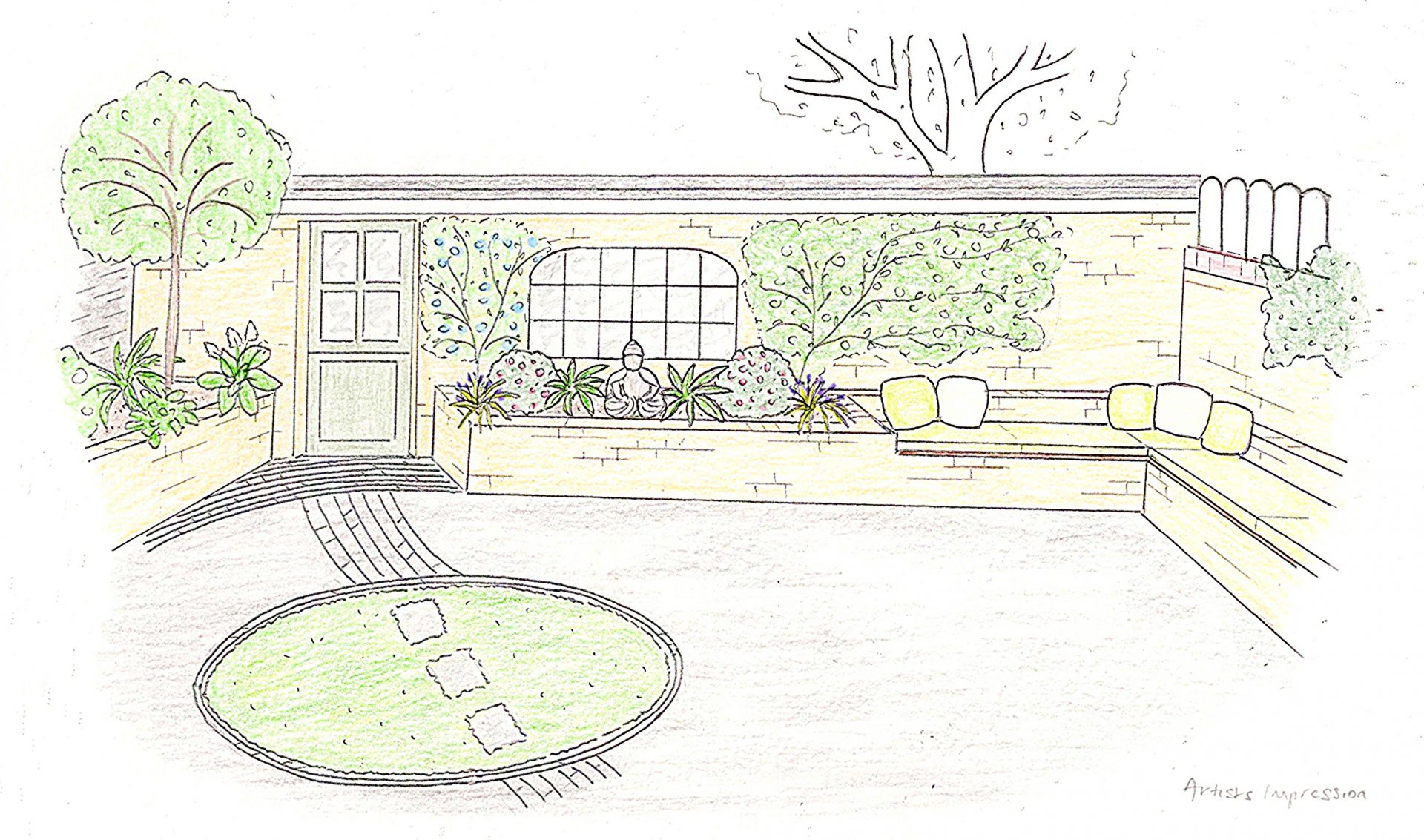
After the brief, your designer will go away and develop concept sketches. This typically takes 2 to 3 weeks and results in one or two layout options that respond to everything discussed in the brief. You'll then have a feedback session where you can react to the concepts, ask questions, and suggest changes. This is the most important review stage, so take your time with it. Live with the concept for a few days before responding.
Once the concept is agreed, the designer moves to the detailed design phase. This includes a fully dimensioned layout plan, material specifications, and a planting plan showing every plant, its position and its quantity. At Soil Sisters, we also produce 3D visualisations of the design so you can see exactly what the finished garden will look like from multiple viewpoints and at different times of year. This step removes almost all uncertainty and is particularly valuable for clients who find it difficult to read flat plans.
Finally, the designer prepares a contractor brief: a package of drawings and specifications that allows landscapers to quote accurately and build to the design intent. This is what ensures the garden you discussed in the brief actually gets built as designed, not as interpreted by the contractor.
The typical timeline from brief to completed design is 6 to 8 weeks. The build phase, depending on scale and complexity, usually takes 3 to 6 months. We always recommend starting the design process in autumn or winter for a spring or summer build, because this is when good landscaping contractors have availability. Leave it until March and you'll be competing with everyone else for summer slots.
How Much Does a Garden Design Consultation Cost?
Cost is one of the most common questions homeowners have before approaching a garden designer, and rightly so. Here's a straightforward breakdown of what to expect.
An initial consultation, where a designer visits your garden, discusses your ideas and gives you a sense of what's possible, typically costs between £100 and £250 across the industry. Some designers, including Soil Sisters, offer this initial consultation for free because we believe it should be a relaxed, no-pressure conversation where both sides decide if they're the right fit for each other.
Full garden design fees in South East England generally range from £1,500 to £5,000 for a design-only package. This varies based on the size and complexity of the garden, the level of detail required, and whether the package includes extras like 3D visualisations, planting plans and contractor tender management. For a detailed look at what different budget levels achieve, our garden design budget guide with Soil Sisters tiers breaks everything down clearly.
It's worth noting that a good design almost always saves you money overall. It prevents costly mistakes during the build, ensures materials are specified correctly first time, and means contractors can quote accurately rather than padding their prices to cover unknowns. We've seen clients save thousands on the build phase simply because the contractor had a clear, detailed design to work from rather than a vague sketch and a verbal description.
Your Garden Design Brief Checklist
Here's a quick reference summary of everything to prepare before your garden design brief meeting. Print this out or save it on your phone.
- Walk the garden at morning, midday and evening. Note sun, shade and wind patterns.
- Photograph the garden from every window, from the back door, and from the far end looking back at the house.
- List how you currently use the garden, honestly.
- Note what you love and want to keep.
- Note your biggest frustrations and problems.
- Define how you want to use the garden going forward: entertaining, play, relaxation, growing.
- List everyone who uses the garden: ages, mobility needs, pets.
- Be honest about your maintenance commitment in hours per week or month.
- Set a budget range, even a rough one.
- Decide on your ideal completion date and work backwards.
- Check whether you might need planning permission for any structures or boundary changes.
- Select 3 to 5 reference images that capture the style or feeling you're after.
- Consider privacy requirements and which boundaries need screening.
- Decide whether you want evening and night use, as this affects lighting design.
- List all practical necessities: bins, washing line, shed, bike storage, compost, hose access.
- Note any access constraints for the build phase: narrow side return, shared access, parking restrictions.

If you've read this far, you already know more about how to brief a garden designer than most homeowners do when they pick up the phone. But here's the thing we really want you to take away: the brief is a conversation, not an exam. You don't need to have all the answers. You don't need to know the difference between Corten steel and powder-coated aluminium, or whether your soil is pH 6.5 or 7.2. That's what we're here for.
The best garden design briefs we've ever had weren't the most technically detailed or the most visually polished. They were the most honest. The clients who told us they were embarrassed by their garden but didn't know where to start. The couple who admitted they had completely different ideas about what they wanted and needed a designer to find the middle ground. The family who said "we just want to actually use it" after years of staring at it through the kitchen window.
Good designers draw the answers out of you. We ask the questions that help you articulate things you might not have thought about. We listen to the things you say casually, the throwaway comments that turn out to be the most important insight in the whole meeting. And we bring it all together into a design that feels like it was always meant to be there.
If you're thinking about redesigning your garden and you'd like to see what's possible, have a look through our portfolio of completed garden design projects across London, Kent, Surrey and Essex. When you're ready, book a free consultation with Soil Sisters and we'll come to you for that all-important first conversation. No obligation, no pressure, just an honest chat about your garden and what it could become. You can also call us directly on 0203 834 9807. We're always happy to talk gardens.