
Urban gardens in London and the South East are rarely spacious. Most of the city gardens we design sit somewhere between 15 and 60 square metres—courtyards behind Victorian terraces, narrow side returns, walled gardens in Edwardian conversions, the occasional roof terrace. Small, yes. But limited? Not at all.
The challenge isn't the size. It's understanding how city conditions differ from rural plots, then designing around those realities. Urban gardens come with specific constraints: shade from surrounding buildings, poor or contaminated soil, wind funnelling between properties, lack of privacy. But they also offer advantages—warmer microclimates that extend the growing season, walls that reflect light into shaded corners, vertical surfaces perfect for climbers and living walls.
We've designed urban gardens across London, Kent, Surrey and Essex for years. This guide covers what actually matters: layouts that make small spaces feel larger, plants that thrive in urban conditions, realistic costs, and the design details that separate a functional garden from one you'll want to spend time in.
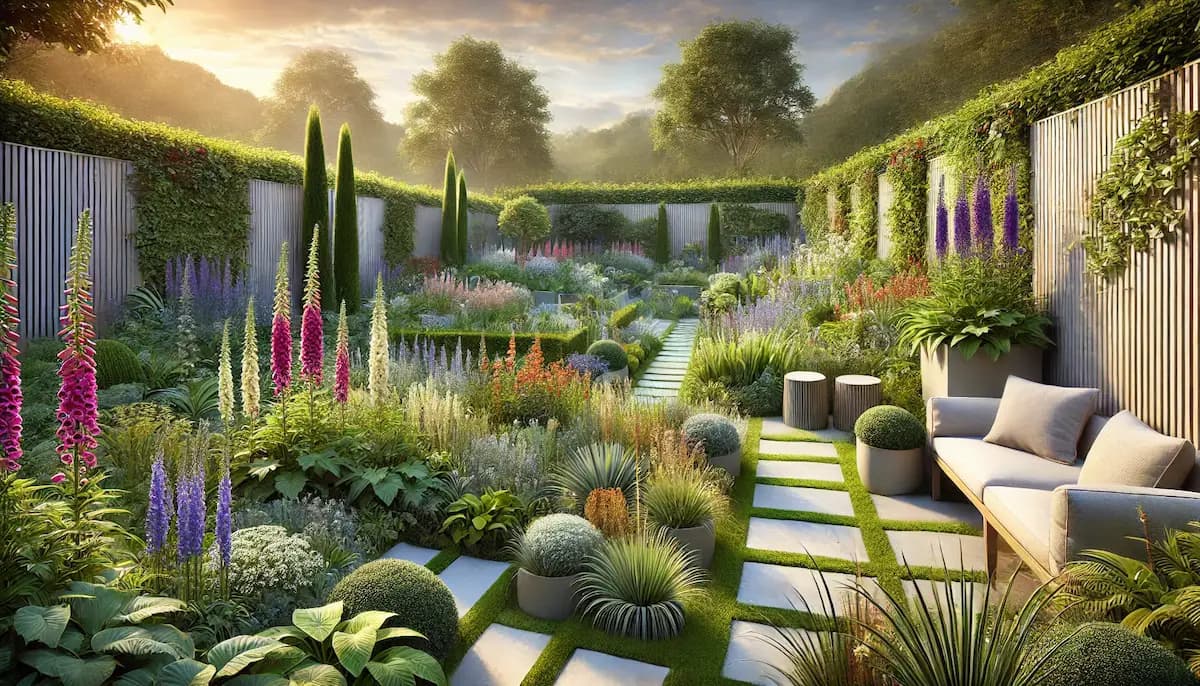
Understanding Urban Garden Conditions in the South East
Before you choose a single plant or material, you need to know what you're working with.
Microclimates and the Urban Heat Island Effect
Cities run 2-5°C warmer than the surrounding countryside year-round. In London, that means 4-6 weeks of extra growing season compared to rural Kent or Surrey. Heat absorbed by brick walls, paving and roof tiles releases overnight, keeping urban gardens milder through winter.
For tender plants like salvias, agapanthus, cordylines and phormiums, that warmth is the difference between thriving and barely surviving. South-facing walls create Mediterranean-style microclimates where rosemary, lavender and fig trees flourish.
Light and Shade
Most urban gardens in the South East are partially shaded by neighbouring buildings or mature trees. North-facing plots receive very little direct sun, especially in winter. But reflected light from pale walls or white-painted fences bounces sunlight back into shaded corners, adding hours of indirect light.
When we assess a new urban garden, we map sun and shade patterns across the day and through seasons. That tells us where to place seating (south-facing for warmth), which walls to paint white (north-facing to maximise reflected light), and where to position sun-loving versus shade-tolerant plants.
Soil Quality and Drainage
Urban soil is often poor, compacted, or contaminated by decades of building work, coal ash, or industrial waste. Victorian terraces in South London and Kent frequently have London clay subsoil—heavy, poorly draining, waterlogged in winter and cracking in summer.
Raised beds with imported topsoil or large containers filled with quality compost give you control over soil structure and drainage, sidestepping contamination entirely. If you're growing edibles, raised beds are essential on older urban plots.
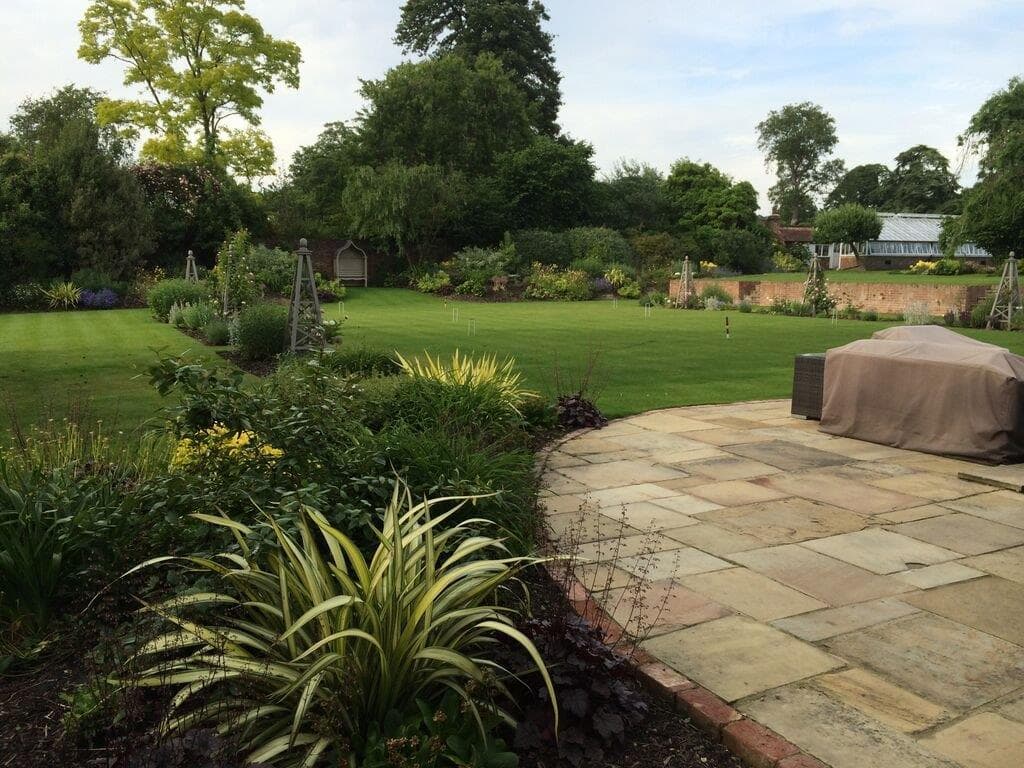
Wind and Privacy
Wind accelerates in narrow spaces between buildings, creating turbulent gusts that snap stems and stress plants. Roof terraces and balconies are particularly exposed. Screening with trellis, slatted fencing, or tough evergreen shrubs (griselinia, holly, yew) reduces wind speed without blocking light.
Privacy is one of the most common requests we hear. Overlooking neighbours and proximity to other gardens mean you're often visible from multiple angles. Tall planting (bamboo, pleached trees, climbers on trellis) and carefully positioned screening give seclusion without making the garden feel boxed in.
Design Principles for Small Urban Gardens
Good urban garden design is strategy, not decoration. Every element needs to earn its place.
Create Zones, Even in Small Spaces
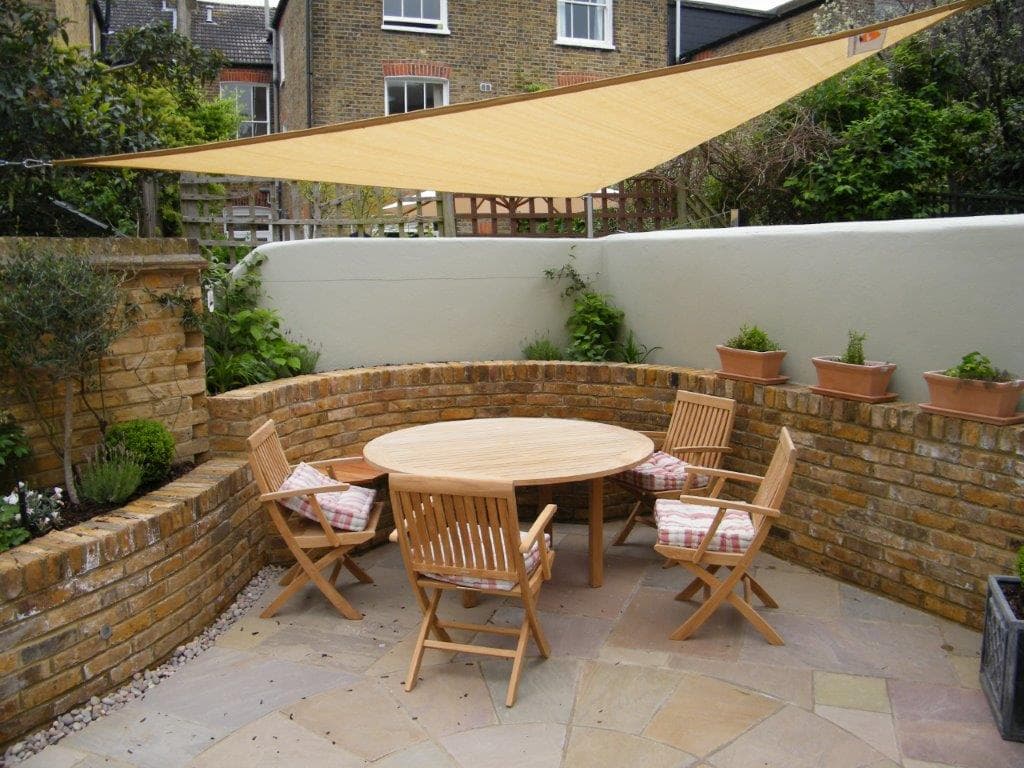
Dividing a small garden into distinct zones makes it feel larger and more purposeful. A 30 sqm courtyard can have a paved seating area, a planted border, and a zone for herbs. Use changes in level, material, or planting style to mark transitions without physically partitioning the space.
Low raised beds (40-50cm high) double as seating edges. A shift from paving to gravel signals a change of use. Even a single step creates the illusion of separate 'rooms'.
Maximise Vertical Space
Walls and fences are as valuable as the ground. A 2m fence around a 20 sqm courtyard gives you 16 sqm of vertical growing space—nearly doubling your planting area.
Climbing plants on trellis, espalier fruit trees against walls, and wall-mounted planters lift greenery to eye level, softening hard boundaries. We use evergreen climbers (star jasmine, climbing hydrangea) mixed with seasonal interest (roses, clematis) to keep vertical surfaces looking good year-round.
Use Light Colours to Reflect Light
Dark paving and fences absorb light, making small gardens feel smaller and gloomier. Pale materials—limestone paving, white-painted trellis, light render—bounce light back, brightening shaded corners.
We specify pale Indian sandstone or porcelain paving for most urban courtyard projects. It costs £80-£150 per sqm installed, but the visual impact justifies it.
Choose the Right Hard Landscaping
Hard landscaping sets the tone for the entire garden. In small urban spaces, we favour clean, simple materials that don't compete with planting.
Porcelain paving (£100-£170 per sqm installed) is low-maintenance, frost-proof, and available in pale tones. Natural stone like Indian sandstone (£80-£150 per sqm) ages beautifully and suits period properties. Composite decking (£120-£200 per sqm) works well for roof terraces where weight matters. Self-binding gravel (£35-£50 per sqm) adds texture for paths and borders.
Best Plants for Urban Gardens in the South East
Urban planting needs to tolerate pollution, shade, wind, and limited root space while looking good year-round.
Evergreen Structure Plants
Evergreens give structure and privacy.
- Box (Buxus sempervirens) – Low hedging, shade-tolerant, clips to shape. £8-£15 per plant (30-40cm).
- Portuguese laurel (Prunus lusitanica) – Glossy leaves, pollution-tolerant, excellent screening. £25-£40 per plant (80-100cm).
- Yew (Taxus baccata) – Dense, slow-growing, tolerates deep shade. £30-£50 per plant (60-80cm).
- Sarcococca confusa – Low evergreen, fragrant winter flowers, thrives in dry shade. £12-£18 per plant.
Shade-Tolerant Perennials
Most urban gardens are partially shaded. These perennials perform well with limited sun.
- Hakonechloa macra 'Aureola' – Arching golden grass, autumn colour. £10-£15 per plant.
- Japanese anemones – Late summer flowers, tough, spreads to fill gaps. £8-£12 per plant.
- Geranium 'Rozanne' – Long-flowering (June-November), sun or part shade. £10-£15 per plant.
- Epimedium – Groundcover for dry shade, spring flowers, evergreen. £8-£12 per plant.
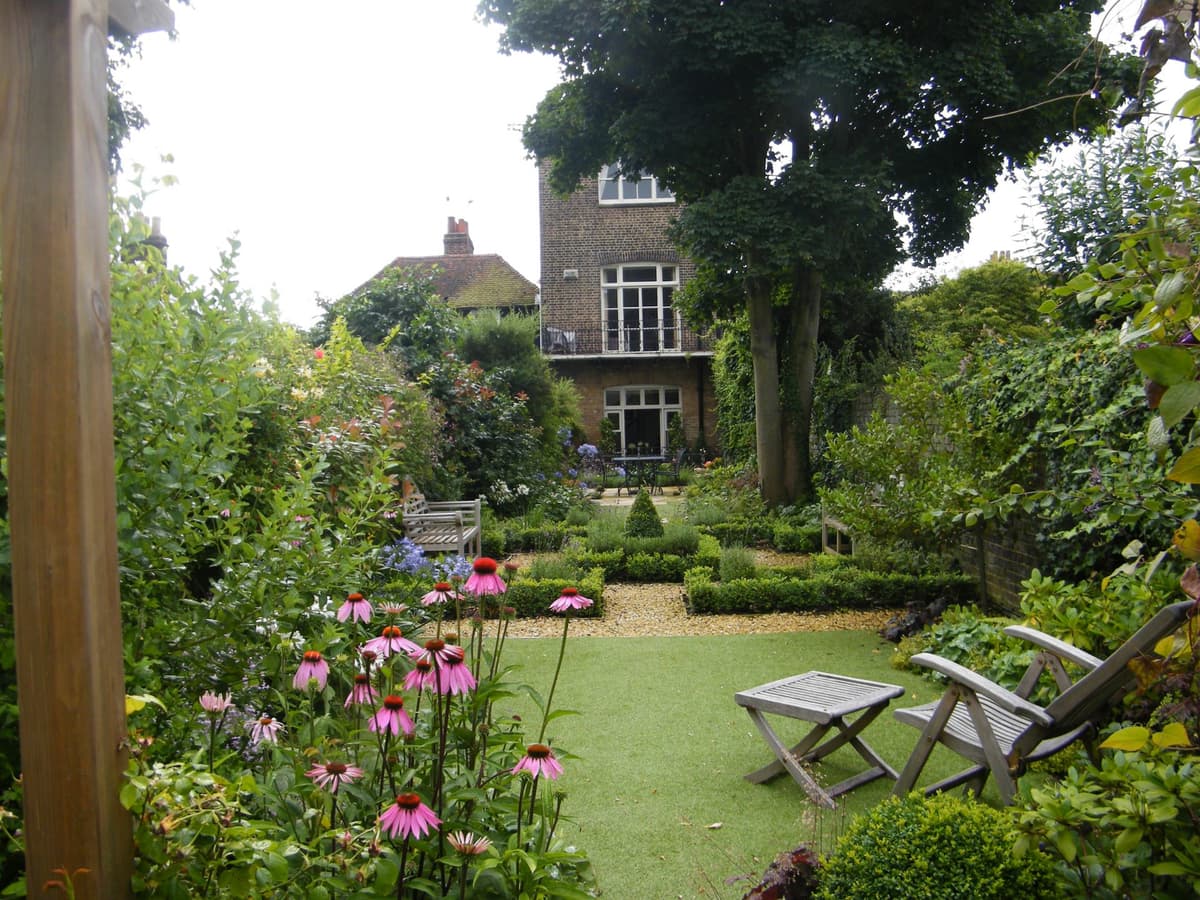
Climbers for Walls and Fences
Climbing plants add vertical greenery without taking ground space.
- Star jasmine (Trachelospermum jasminoides) – Evergreen, fragrant white flowers, south/west walls. £18-£30 per plant.
- Climbing hydrangea (Hydrangea petiolaris) – Large white flowers June, north/east walls. £20-£35 per plant.
- Roses – 'New Dawn' (pale pink), 'Gertrude Jekyll' (deep pink). £20-£30 per plant.
- Clematis – 'Henryi' (white), 'Jackmanii' (purple). £15-£25 per plant.
Small Trees for Urban Gardens
Small trees add height without overwhelming compact spaces.
- Amelanchier lamarckii – Multi-stem, white spring blossom, autumn colour. £80-£150 (150-200cm).
- Acer palmatum – Japanese maples, elegant foliage, slow-growing. £60-£200.
- Prunus 'Kojo-no-mai' – Dwarf cherry, zigzag branches, white blossom. £40-£70.
- Olive trees (Olea europaea) – Drought-tolerant, architectural. £80-£250.
Urban Garden Design Costs (London & South East)
Design-Only Services
- Small courtyard (up to 20 sqm): £1,500 - £2,500
- Medium urban garden (20-50 sqm): £2,500 - £4,500
- Large town garden (50-100 sqm): £4,500 - £8,000+
Design and Build Costs
Full projects including groundworks, paving, and planting.
- Small courtyard (10-20 sqm): £12,000 - £25,000
- Medium garden (20-50 sqm): £25,000 - £50,000
- Large town garden (50-100 sqm): £50,000 - £100,000+
London adds 15-25% premium due to access issues and higher labour rates.
Material Costs Per Square Metre
- Porcelain paving: £100 - £170 per sqm
- Natural stone paving: £80 - £150 per sqm
- Composite decking: £120 - £200 per sqm
- Raised planters (brick/render): £200 - £300 per linear metre
- Turfing: £20 - £35 per sqm
- Garden lighting: £150 - £350 per light
Urban Garden Layout Ideas
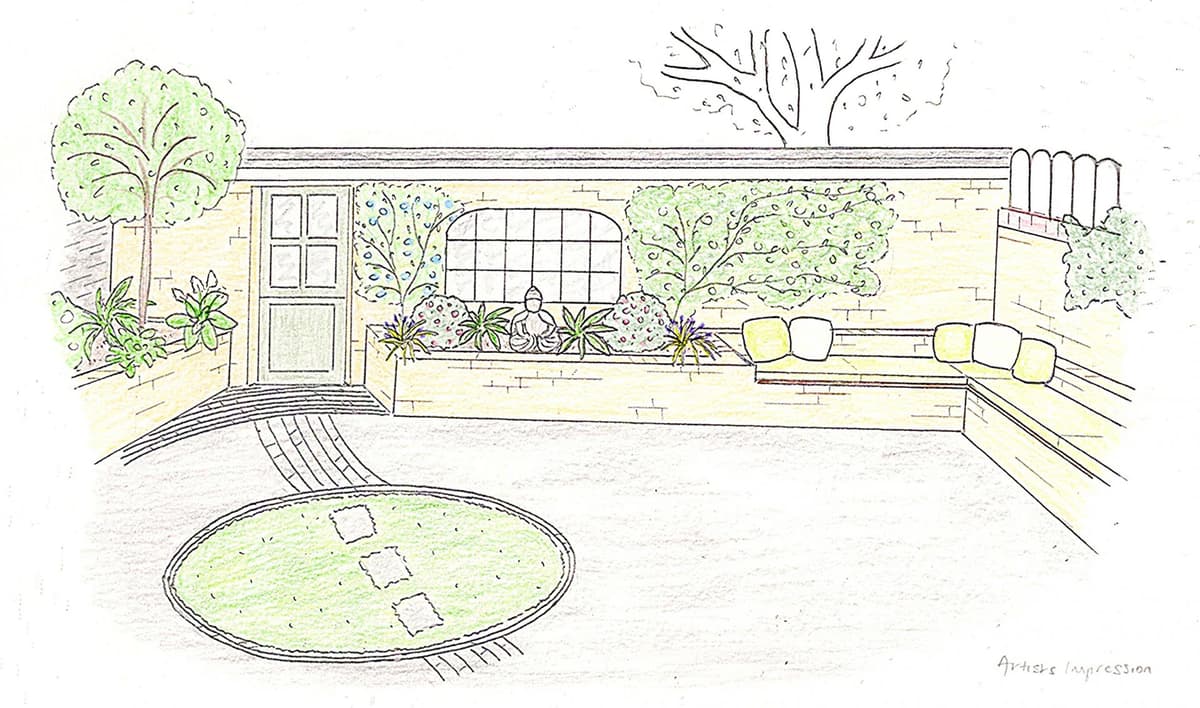
The Contemporary Courtyard
Best for: Walled gardens behind Victorian/Edwardian terraces, 15-30 sqm.
Clean lines, minimal planting, quality materials. Large area of pale porcelain paving with raised planters in corten steel or rendered brick. Architectural planting (clipped box, grasses, olive trees). Uplighters and festoon bulbs for lighting. Slatted cedar screen for privacy.
Cost: £18,000 - £30,000 (20 sqm).
The Green Oasis
Best for: Clients wanting maximum planting in 20-40 sqm.
Fill the garden with greenery at every level—climbers on walls, small trees, shrubs and perennials in borders, groundcover softening edges. Minimal paving (small seating area and narrow path), self-binding gravel elsewhere. Raised beds from railway sleepers or brick.
Cost: £22,000 - £40,000 (30 sqm).
The Productive Urban Garden
Best for: Growing edibles, 20-50 sqm.
Raised beds (60cm high) along sunny walls for vegetables and herbs. Espalier fruit trees on fences. Containers on south-facing patio for tomatoes and courgettes. Includes composting area, water butt, practical paved zone for seating.
Cost: £16,000 - £32,000 (35 sqm).
Common Mistakes in Urban Garden Design
Overcrowding the Space
Small gardens need breathing room. Too many plants, furniture, or materials makes the space cluttered. Edit ruthlessly.
Choosing Plants That Outgrow the Space
A Leylandii hedge or fast-growing bamboo might seem like quick privacy, but it'll dominate within two years. Choose plants that suit the scale.
Ignoring Maintenance Realities
If you're out at work all week, don't design a high-maintenance garden. Be honest about time available and design accordingly.
Dark Paving and Boundaries
Dark paving and fences absorb light and make spaces gloomy. Use pale materials to reflect light.
How Soil Sisters Can Help
We design urban gardens across London, Kent, Surrey, Essex, and the South East. Whether you have a 15 sqm courtyard or a 60 sqm town garden, we'll create a design that works with your site conditions, budget, and how you want to use the space.
Our process includes site visit and consultation, scaled design with planting plan, 3D visuals, and full project management if you want it. We also offer design-only services if you're doing the work yourself.
Get in touch to book a free consultation, or call us on 0203 834 9807.
Frequently Asked Questions
What size is a typical urban garden in the South East?
Most urban gardens we work with are 15-60 sqm. Courtyards behind Victorian terraces average 20-30 sqm, terraced house gardens in outer London or Kent are typically 40-60 sqm.
How much does it cost to redesign an urban garden?
Design-only starts at £1,500 for a small courtyard. Full design and build ranges from £12,000 (small courtyard) to £50,000+ (larger town gardens).
What are the best plants for shaded urban gardens?
Sarcococca, Japanese anemones, hostas, ferns, Hakonechloa, Epimedium, and climbing hydrangea all tolerate shade well.
Can I grow vegetables in a small urban garden?
Yes. Raised beds (60cm high) give you the depth and drainage needed. South or west-facing walls are ideal for tomatoes, courgettes, beans. Herbs and salad leaves grow well in 15-20 litre containers.
Do I need planning permission for an urban garden renovation?
Most garden landscaping doesn't need permission, but check with your council if you're building structures over 2.5m high, excavating near boundaries, or working in a conservation area.
How do I make a small urban garden feel bigger?
Use pale paving and fences. Create zones with changes in material or level. Plant vertically. Avoid clutter.
What's the difference between urban and rural garden design?
Urban gardens deal with shade, pollution, poor soil, limited space, and overlooking neighbours. Design priorities shift to vertical planting, privacy screening, raised beds, and pollution-tolerant plants.