
A roof garden transforms a neglected flat roof into usable outdoor space, but unlike ground-level gardens, you are building above a structure never designed to carry the weight of soil, containers, people and furniture. The opportunity is significant. The constraints are real.
This guide works through the structural checks, planning permissions, design decisions, plant selection, cost breakdowns and drainage considerations that separate a successful UK roof garden from an expensive mistake. Written from a garden designer perspective with experience across London, Kent, Surrey and Essex.
Structural Load Capacity: The First Question
Before choosing plants or ordering containers, confirm the roof can carry the intended load. This is not optional. A standard flat roof may be designed for as little as 75kg per square metre. A large container filled with wet compost, plants and people can easily exceed 400kg per square metre in a concentrated area.
Hire a Structural Engineer
A chartered structural engineer assesses:
- The roof current load-bearing capacity
- Where loads can safely be positioned (load-bearing walls vs mid-span areas)
- Whether reinforcement or modifications are needed
- Safe weight limits for containers, decking, furniture and people
Cost: £500 to £1,000 for a roof structural survey (2026 UK prices). A simple beam calculation for a single opening is £300 to £500. Full structural design for complex roof garden projects with raised planters or built structures runs £1,500 to £3,000.
The structural engineer report is often required by Building Control and your insurer. Without it, you are building blind.
Weight Distribution Strategy
Heavy containers must sit over load-bearing walls or beams, not in the middle of unsupported spans. The structural load path in a building runs down through walls and columns to foundations. Place the largest planters against the perimeter wall or over identified load-bearing points.
Mid-span areas can carry lighter loads: smaller pots, furniture, gravel paths. The structural engineer marks safe zones on a plan.
Planning Permission and Building Regulations
When You Need Planning Permission
- Container planting on an existing accessible flat roof: Usually permitted development (no permission needed)
- Adding structures: Pergolas, raised planters, screening taller than 1 metre, changes to parapets or railings may require permission
- Listed buildings or conservation areas: Almost always need permission for any external changes
- Changing use: If the roof was not previously accessible and you are creating a new outdoor terrace, Building Regulations approval is likely required
Check with your local planning authority before starting any fixed works. A phone call takes ten minutes. Retrospective permission applications cost more and create uncertainty.
Building Regulations (Building Control)
If the roof is being changed from non-accessible to accessible (a new terrace where people will regularly spend time), Building Regulations usually apply. This covers:
- Structural adequacy (the engineer calculations address this)
- Fire safety and means of escape
- Balustrades and edge protection (minimum 1.1 metres high, gaps no wider than 100mm)
- Waterproofing integrity (no penetrations through the membrane without proper detailing)
Building Control fees vary by local authority but typically run £300 to £800 for a roof garden project.
Wind: The Defining Challenge
Wind is the primary environmental constraint on UK roof gardens. At rooftop height, wind speeds are consistently higher than ground level. Urban locations compound the problem as buildings channel and accelerate airflow.
Effects of Wind Exposure
- Containers dry out in hours, not days
- Foliage scorches and tears
- Stems snap
- Pots topple
- Transpiration rates spike
- Growing conditions far more hostile than the sunshine suggests
A roof garden without wind protection is an expensive maintenance burden.
Wind Protection Strategy
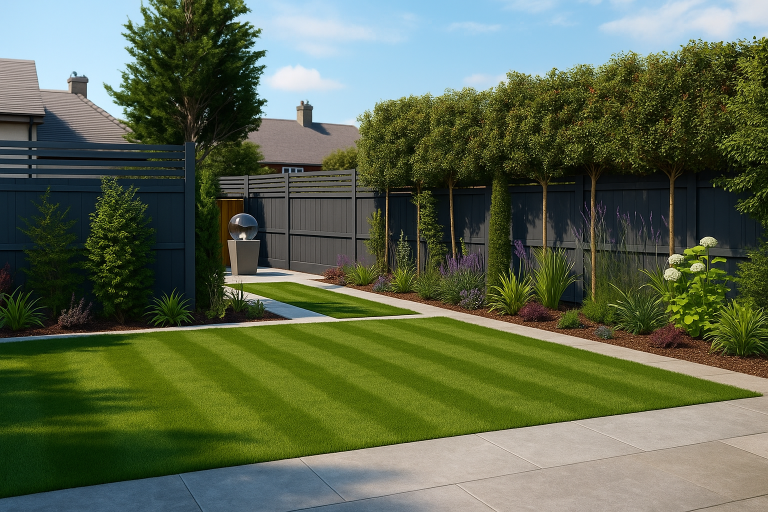
Semi-permeable screens work better than solid barriers. Solid walls create turbulent eddies on the leeward side, making conditions worse. Slatted timber screens, trellis panels, tensile mesh or woven willow hurdles filter and slow the wind without creating turbulence.
Position screens to shelter the prevailing south-westerly wind direction across most of the UK. This creates sheltered microclimates where less wind-tolerant plants can establish.
Planting layout follows exposure:
- Perimeter (most exposed): wind-tolerant structural plants (bamboo, grasses, phormium)
- Interior (sheltered): more varied planting palette
Establish shelter first, then plant everything else in its lee. For more guidance on small-space planting, see our courtyard and small garden design guide.
Containers and Growing Media
Lightweight containers are essential. Terracotta and stone are beautiful but too heavy for most roof structures.
Best choices:
- Fibreglass (GRP): Replicates the appearance of lead, stone or timber at a fraction of the weight. Highly durable in exposed conditions. Available in all sizes. This is the professional choice for roof gardens.
- Plastic/polypropylene: Lightweight, affordable, frost-proof. Less visually refined than fibreglass but functional.
- Powder-coated metal: Lightweight if thin-walled. Good for contemporary designs. Choose mellow colours (dark grey, anthracite, bronze) that recede visually so plants take centre stage.
Avoid terracotta and concrete unless the structural engineer confirms capacity.
Minimum recommended sizes:
- Shrubs and small trees: 60cm diameter × 50cm deep
- Perennials and grasses: 40cm diameter × 40cm deep
- Annuals and seasonal displays: 30cm diameter × 30cm deep
Shallow containers need watering twice daily in summer. Deeper containers buffer moisture stress.
Standard peat-free compost weighs 400 to 500kg per cubic metre when wet. For roof gardens, amend the mix with perlite to reduce weight and improve drainage.
Recommended mix:
- 60-70% peat-free multipurpose compost
- 30-40% perlite (lightweight volcanic glass)
This reduces weight by 20-30% and improves aeration, critical in containers that can waterlog during wet UK autumns.
Best Plants for UK Roof Gardens
Plant selection for a roof garden follows different logic to ground-level gardening. Wind tolerance comes before aesthetics.

Bamboo (clumping varieties): Fargesia robusta Campbell or Fargesia murielae. Fast-growing, evergreen, architectural. Creates instant windbreak at 2-3 metres height. Non-invasive clumping types. Cost: £80-£150 per plant in 20-litre pot.
Ornamental grasses: Miscanthus sinensis varieties, Calamagrostis acutiflora Karl Foerster, Stipa tenuissima. Move gracefully in wind without damage, year-round interest. Cost: £15-£35 per plant.
Phormium (New Zealand flax): Bold strap leaves in bronze, purple, variegated forms. Year-round presence, tolerates wind and drought. Position in most exposed corners. Cost: £30-£60 per plant.
Lavender and Rosemary: Lavandula angustifolia Hidcote or Munstead, Rosmarinus officinalis. Thrive in dry, sunny, wind-exposed conditions. Low water needs, attract pollinators. Cost: £8-£15 per plant.
For more planting inspiration suited to exposed conditions, see our Mediterranean garden design guide which covers drought-tolerant species.
Once wind shelter is established, the planting palette expands significantly: Agapanthus, Echinacea, Salvia, Geranium, Verbena bonariensis, Pittosporum, Viburnum tinus, Hebe, Photinia Red Robin, Euonymus.
Avoid in exposed positions: Large-leaved plants (Fatsia, Gunnera), tender exotics (tree ferns, bananas) unless very sheltered, tall soft perennials that snap in wind (delphiniums, hollyhocks).
Small trees add height, privacy and seasonal interest but require structural engineer approval and larger containers (minimum 80cm diameter × 60cm deep). Suitable species: Amelanchier lamarckii, Betula utilis var. jacquemontii, Prunus Amanogawa, Olive (Olea europaea). Cost: £150-£400 per tree.
Irrigation and Drainage
Roof garden containers dry out faster than ground-level beds due to wind exposure, shallow root zones and heat from the roof surface.
Summer watering: Often twice daily (early morning and evening) during hot, windy periods. A 40cm container in full sun and wind can dry out completely between 9am and 6pm in July.
Year-round watering: Required except during freezing conditions. Even in winter, evergreen plants transpire and containers under building overhangs receive no rainfall.
For roof gardens larger than 15 square metres, an automatic irrigation system is cost-effective and prevents plants dying during holidays or heatwaves. Drip irrigation setup: timer-controlled system connected to an outdoor tap or rainwater tank, individual drip emitters to each container (adjustable flow rates), battery-powered timer (no mains required). Cost: £300-£800 for a 20-container system installed.
Ensure excess water drains to the roof existing gullies and downpipes. Do not allow runoff to sheet across the roof membrane.
Design Considerations
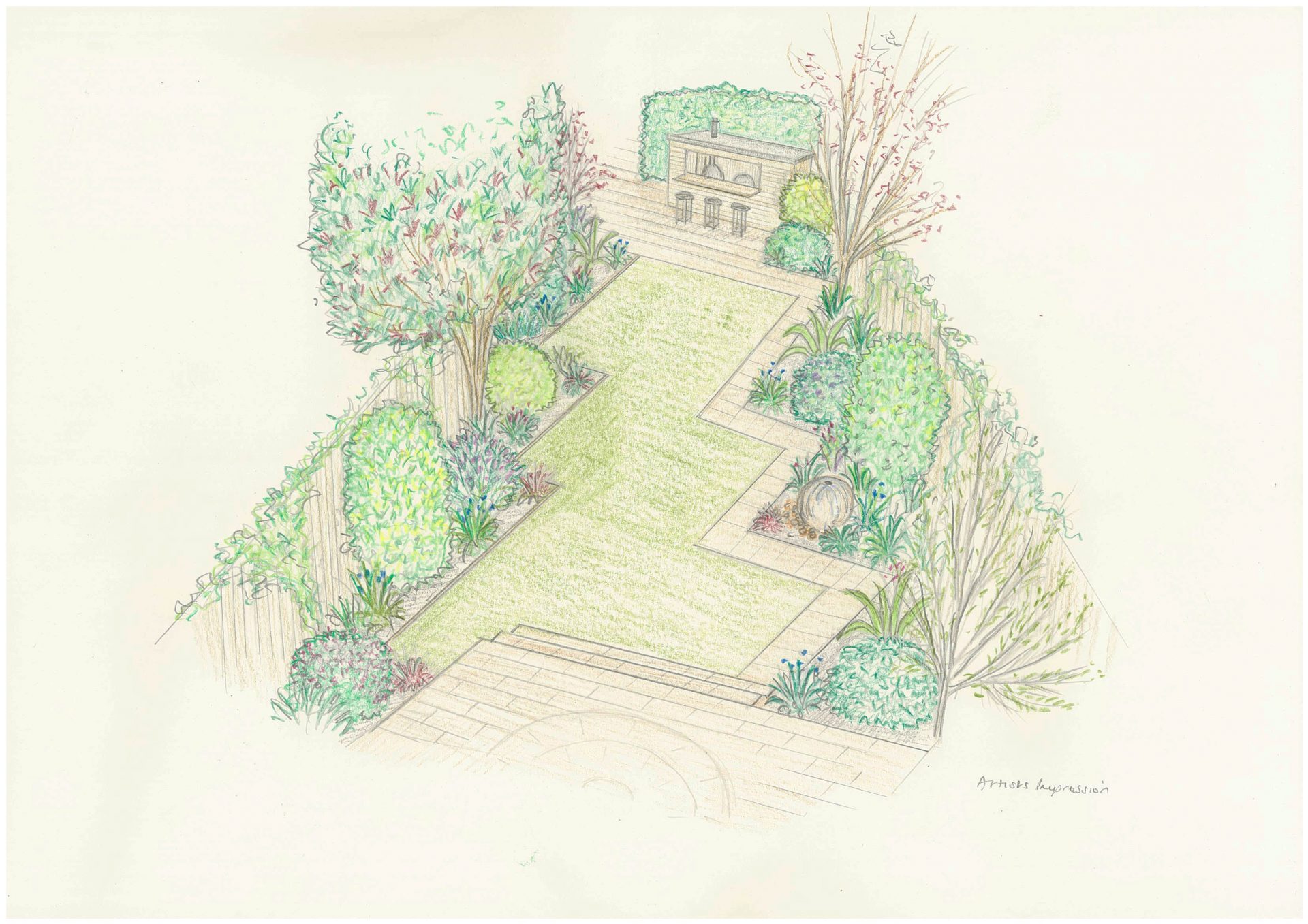
A successful roof garden feels like an outdoor room, not a row of pots along the edge. Divide the space using tall planters, screens or changes in deck level to create distinct zones (dining, seating, planting). Mix container heights (tall structural plants, mid-height shrubs, low groundcover) to create depth and rhythm. Position focal plants or screening to create both open vistas and sheltered corners.
For small roof terraces, our small London garden design guide offers strategies for maximising limited space.
Lightweight furniture: aluminium, powder-coated steel, synthetic rattan. Built-in seating around planters saves space and reduces furniture load. Decking or tiles: porcelain tiles are lightweight and frost-proof. Composite decking is lighter than hardwood. Both must be installed over a permeable sub-frame.
Low-voltage LED lighting extends usability into evenings: uplighters in large planters, strip lights under benches or deck edges, table lamps or lanterns. Cost: £500-£1,500 for a basic LED lighting scheme installed. For comprehensive lighting design advice, see our garden lighting design UK guide.
Roof Garden Design Costs (2026 UK)
Structural and Professional Fees: Structural engineer survey £500-£1,000. Structural engineer full design (complex projects) £1,500-£3,000. Garden designer (design and planting plan) £1,500-£4,000 depending on complexity. Planning application (if required) £206 (householder application fee) + agent fees £400-£800. Building Control approval £300-£800.
Construction and Materials: Waterproofing check/repair £500-£2,000. Decking or porcelain tile installation (10 sqm) £2,500-£5,000. Raised planter construction £400-£1,200 per linear metre. Screening/trellis panels £150-£400 per panel installed. Irrigation system (20 containers) £300-£800. Lighting (basic LED scheme) £500-£1,500.
Planting: Large structural plants (bamboo, phormium, small trees) £80-£400 per plant. Shrubs and perennials £15-£60 per plant. Containers (fibreglass GRP) £80-£400 each. Growing media (compost + perlite mix) £150-£300 per cubic metre delivered.
Small roof terrace (10 sqm): Structural survey £600, 10 fibreglass containers £1,500, Planting (40 plants) £1,200, Compost and materials £400, Irrigation system £500. Total £4,200.
Medium roof garden (25 sqm): Structural engineer design £2,000, Decking installation (15 sqm) £4,500, Raised planters (4 linear metres) £3,200, Screening panels £800, Planting (60 plants including small trees) £3,500, Irrigation and lighting £1,800. Total £15,800.
Large roof terrace (50 sqm): Structural engineer and Building Control £3,500, Decking, raised planters, built-in seating £18,000, Screening and pergola £3,500, Planting (120 plants including trees) £8,000, Irrigation, lighting and furniture £4,000. Total £37,000+.
All costs exclude garden design fees. Add £1,500-£4,000 for professional design services. For more detailed cost guidance, see our garden designer cost UK guide.
Maintenance Requirements
Roof gardens need more intensive maintenance than ground-level gardens due to wind exposure, container growing and irrigation demands. Watering daily (or twice daily) in summer, 2-3 times weekly in winter. Feeding liquid feed every 2-3 weeks during growing season (May-September), or slow-release granules at planting. Top-dressing replace top 5cm of compost annually in spring. Re-potting every 2-3 years for shrubs, 3-5 years for trees.
A maintenance visit every 4-6 weeks (2-3 hours) keeps a medium roof garden in good condition. DIY-capable homeowners can handle this themselves. Professional garden maintenance costs £40-£60 per hour in London and the South East.

Common Mistakes to Avoid
- Starting with plants, not structural checks: The most expensive mistake. Always confirm load capacity first.
- No wind protection: A roof garden without screening is an open battleground. Establish shelter before planting.
- Containers too small: Larger containers dry out more slowly and give roots room.
- Blocking drainage: Ensure water can flow freely to existing gullies.
- Ignoring irrigation in the design phase: Hand-watering twice daily is not sustainable long-term.
- Planting tender or large-leaved plants in exposed positions: Match plants to microclimates.
- No maintenance plan: Roof gardens need regular attention.
Professional Roof Garden Design Services
At Soil Sisters, we design roof gardens across London, Kent, Surrey and Essex with full structural coordination, detailed planting plans and 3D visuals.
Our roof garden design service includes coordination with structural engineers (we can recommend trusted engineers or work with yours), planning and Building Control liaison, detailed planting plans with wind-tolerant species suited to UK conditions, container sizing and specification, irrigation and lighting design, full construction drawings for contractors, planting supervision.
Design fees from £1,500. Full build projects from £100 per square metre depending on complexity.
Contact us for a free consultation – 0203 834 9807.
Summary: The Roof Garden Checklist
Before starting your roof garden project:
- Structural engineer survey confirms load capacity
- Planning permission and Building Regulations checked (and approved if required)
- Waterproofing membrane in good condition
- Wind protection strategy planned (screens and windbreak planting)
- Lightweight containers specified (fibreglass GRP preferred)
- Irrigation system designed and costed
- Drainage routes confirmed (water flows to existing gullies)
- Plant selection matches exposure (wind-tolerant perimeter, sheltered interior)
- Maintenance plan agreed (DIY or professional)
- Budget covers professional fees, construction, planting and contingency (add 15%)
A well-designed UK roof garden adds value, creates privacy and delivers outdoor living space in locations where ground-level gardens are impossible. The constraints are real but manageable with proper planning, structural coordination and wind-appropriate plant selection.
Get the engineering right first. Everything else follows.
For more design guidance tailored to urban outdoor spaces, explore our guides on balcony garden design, contemporary garden design, and garden design and build services in London.