
Garden lighting transforms outdoor spaces from places you glimpse through a window into rooms you actually use after dark. Done well, lighting extends your garden into the evening, highlights features that disappear at dusk, and creates atmosphere that's impossible to achieve with daylight alone.
The difference between good garden lighting and a scattering of spotlights is design. It's knowing where to place light, what to leave in shadow, and how to build layers that work together rather than compete.
This guide covers garden lighting design for UK climates, from planning a scheme through to the practical details that determine whether your lighting looks considered or accidental.
Why Garden Lighting Design Matters
Most people buy garden lights and work out where to put them afterwards. That approach usually ends with an uneven distribution of bright spots, no sense of depth, and fixtures that look like afterthoughts during daylight hours.
Garden lighting design starts with the space itself. What do you want to see from inside? Where do you walk after dark? Which features deserve attention, and which can fade into the background?
The answers to those questions shape where lights go, what type you need, and how powerful they should be. It's the difference between lighting a path because you need to see the ground, and lighting it in a way that also draws your eye along a route through the garden.
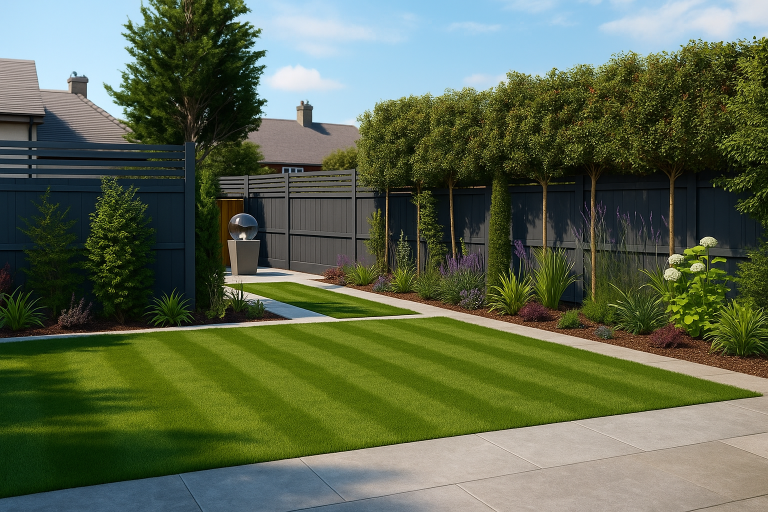
Good lighting design also considers what you see from multiple viewpoints. The view from your kitchen is probably more important than the view from the bottom of the garden. Lighting positioned for one viewpoint can create glare from another. A design considers all of these angles before a single fitting goes in the ground.
Types of Garden Lighting and What They Do
Garden lighting falls into a few distinct types, each with a specific job. Mixing them creates the layered effect that makes a lighting scheme look professional rather than accidental.
Path and Step Lights
Low-level fixtures that sit 30-50cm above the ground, designed to illuminate walkways without creating glare at eye level. Path lights prevent stumbles and define routes through the garden after dark.
Modern path lights are recessed into walls or posts, or mounted on low stakes. The best ones cast light downward and to the sides, avoiding any upward spill that would shine in your eyes.
For UK gardens, IP65-rated path lights are the minimum. IP67 is better for ground-level recessed fittings where standing water collects.
Uplighting
Spotlights positioned at ground level, angled upward to illuminate trees, walls, or architectural features. Uplighting creates drama by reversing the natural direction of daylight, producing shadows that move upward rather than down.
Use uplighting sparingly. One or two well-placed uplights on a mature tree or a textured wall create more impact than six spread across the garden. The fixtures themselves should be hidden behind planting or features during daylight.
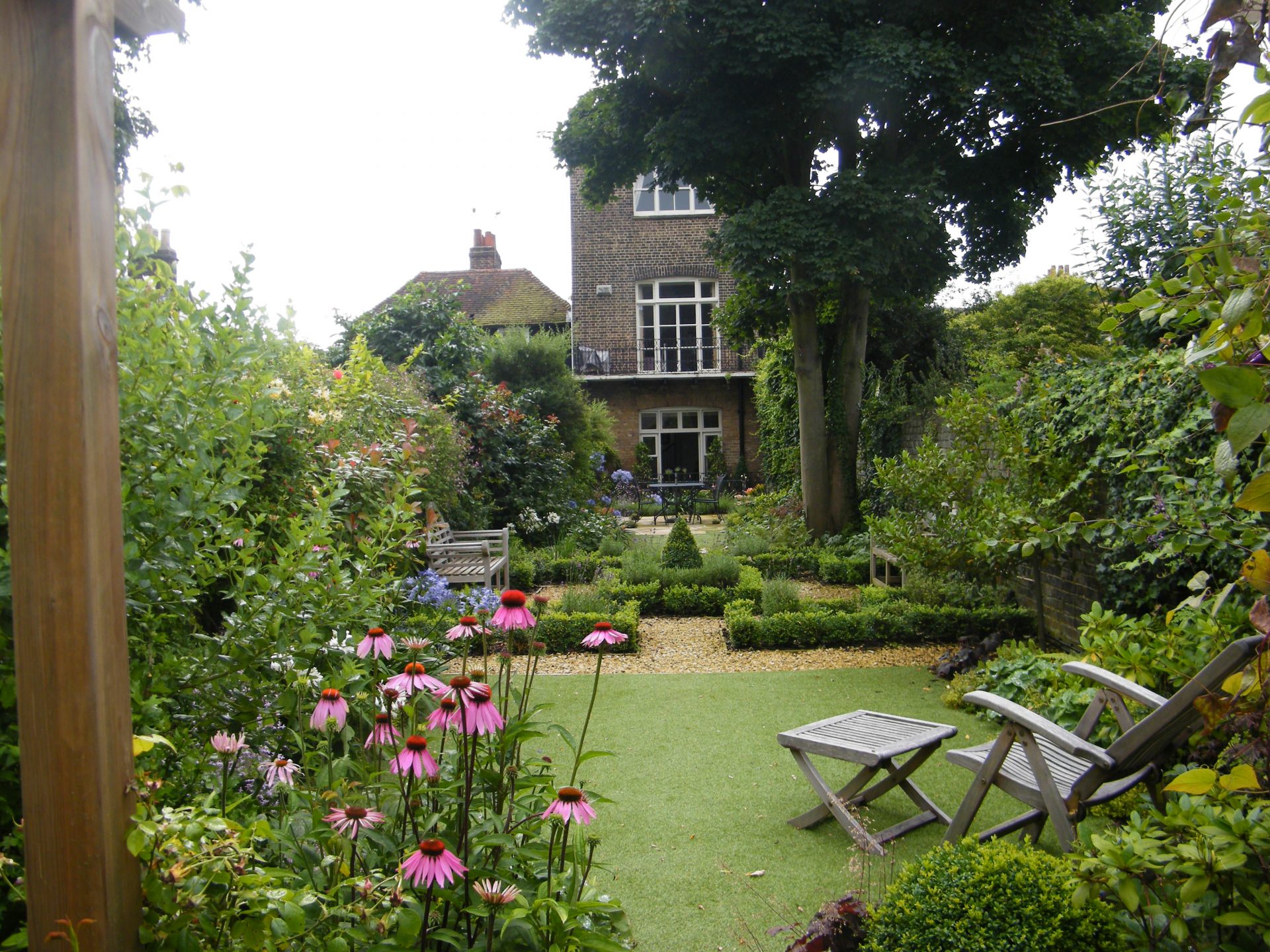
For tree uplighting, position the fixture 30-50cm from the trunk and aim for the canopy. Narrow beam angles (15-30 degrees) work best for tall trees. Wider beams (40-60 degrees) suit shorter features or walls.
Downlighting
Fixtures mounted above eye level, such as on walls, pergolas, or the underside of tree canopies. Downlighting mimics natural daylight and creates a softer, more familiar effect than uplighting.
Wall-mounted downlights work well either side of doors or along boundary walls. Pergola-mounted lights create pools of light over seating areas. Tree canopy downlighting (moonlighting) filters through branches to create dappled light on the ground below.
Downlighting is less dramatic than uplighting but more comfortable for spaces you sit in for extended periods.
Wash Lighting
Spotlights angled to graze light across a surface rather than illuminating it directly. Wash lighting emphasises texture - brick walls, rendered surfaces, or layered planting all benefit from this approach.
Position wash lights at a shallow angle to the surface (20-30 degrees). The light should skim across rather than hit head-on. This technique is particularly effective on walls with interesting textures or on borders with varied planting heights.
Accent and Feature Lighting
Small, focused lights that highlight specific elements: a sculpture, a specimen plant, or a water feature. Accent lighting adds visual interest and gives you control over what draws attention after dark.
For water features, submersible LED lights (IP68-rated) create movement and reflection. Position them to light the falling water rather than the pool itself - the movement is more interesting than a static glow.

Festoon and String Lights
Decorative lights strung between posts, pergolas, or building walls. Festoon lights create ambient glow over seating areas and add a softer, more casual atmosphere than spotlights.
Modern LED festoon lights are more robust than older bulb strings and use far less energy. For permanent installations, hard-wire them to your mains supply. For occasional use, plug-in versions work fine.
Festoon lights work best over defined zones - a patio, a dining area, or a path between two structures. Stringing them randomly across a garden rarely looks intentional.
Planning a Garden Lighting Scheme: Step by Step
Start with a garden plan, even a rough sketch. Mark existing features, paths, seating areas, and viewpoints (where you'll typically look from). This gives you a base to work from.
1. Define Your Priorities
Ask yourself:
- What do you want to see from inside?
- Where do you walk after dark?
- Which features deserve attention?
- Where do you sit in the evening?
Your answers determine where lights go. If you never sit outside but you look at the garden from your kitchen, prioritise the view from that window. If you walk from the house to a garden office every evening, light that path first.
2. Choose Your Focal Points
Most gardens have 2-4 features worth highlighting: a mature tree, a textured wall, a water feature, a specimen plant. Mark these on your plan.
Focal points should be distributed across the garden, not clustered in one area. If all your lighting is near the house, the rest of the garden disappears into darkness.
Darkness is part of the design. Leave some areas unlit to create contrast and depth. A garden lit evenly from edge to edge looks flat and artificial.
3. Add Functional Lighting
Mark paths, steps, and doors on your plan. These need light for safety, not just aesthetics. Path lights should be spaced evenly (1.5-2m apart for low-level lights) and positioned to avoid glare.
Steps need lighting at tread level or riser level, not from above. Recessed step lights or low-level wall lights work best.
4. Layer Your Lighting
Good schemes use multiple layers:
- Ambient light: Background glow across the space (from downlights, festoon lights, or wash lighting on walls).
- Task light: Functional lighting for paths, steps, and seating (path lights, step lights, wall-mounted downlights).
- Accent light: Highlights for specific features (uplights on trees, spotlights on sculpture, water feature lights).
Each layer has a different job. Ambient provides the base, task makes the space usable, accent adds visual interest.

5. Consider Angles and Glare
Walk your garden after dark with a torch. Hold it at different angles against walls, trees, and features. Take photos. This ten-minute exercise shows you where lights will create glare and where they'll create interesting shadows.
Avoid positioning lights where they'll shine directly into your eyes from common viewpoints. If a light is visible from your kitchen window or patio, angle it away or shield it with planting.
6. Choose Your Power Source
UK gardens use four power types:
- Mains 230V: Brightest, most reliable, requires a qualified electrician. Best for permanent schemes with multiple fixtures.
- 12V plug-and-play systems: Lower voltage, DIY-friendly, good for small to medium gardens. Safer and easier to install than mains.
- Solar: No wiring, free to run, limited brightness. Best for path markers and decorative lights. UK solar lights produce 25-35% of their summer output in winter.
- Battery-powered: Portable, no installation, limited runtime. Good for temporary or seasonal lighting.
For a permanent, well-designed scheme, mains or 12V systems are the better choice. Solar works for accents but struggles to provide enough light for functional or ambient layers.
7. Calculate Your Budget
Garden lighting design fees typically start at £500-£1,500 for a consultation and lighting plan. Full design and specification (including fixture selection, cable runs, and placement drawings) ranges from £1,500-£4,500+ depending on garden size and complexity.
Installation costs vary by system:
- DIY 12V system: £500-£2,000 for fixtures, transformer, cable, and fittings
- Electrician-installed mains system: £3,000-£8,000 for a typical 100-200m² garden (labour + materials)
- High-spec professional installation: £8,000-£15,000+ for large gardens with multiple zones and smart controls
Fixture costs range from £20-£50 for basic spike lights to £150-£400+ for architectural-grade wall lights or recessed fittings. A typical garden scheme uses 8-20 fixtures.
For context, a well-designed lighting scheme for a 150m² garden in Kent or Surrey typically costs £4,000-£7,000 fully installed (design + fixtures + labour).
UK-Specific Considerations for Garden Lighting
Weather and IP Ratings
UK weather is wet. Your lighting needs to cope with it.
IP ratings define protection against dust and water. The format is IP followed by two numbers: first digit is dust protection (0-6), second is water protection (0-9).
For UK gardens:
- IP44: Minimum for sheltered positions (covered porches, pergolas)
- IP65: Standard for exposed positions (paths, borders, open patios)
- IP67: Ground-level recessed lights where water pools
- IP68: Submersible lights for ponds and water features
Cheap lights often claim IP65 but fail after one winter. Stick to reputable manufacturers (Hunza, Light Graphix, SLV, John Cullen) and check warranty periods - good fixtures have 3-5 year warranties minimum.
Cable Runs and Installation
Buried cable should sit 50cm deep minimum to avoid damage from digging. Use armoured cable (SWA cable) for mains installations. For 12V systems, use outdoor-rated cable with waterproof connectors.
Black cable is less visible than grey or white when laid on soil or mulch. Bury it under a layer of soil or bark to hide it completely.
Junction boxes should be IP65 minimum and positioned away from areas where you're likely to dig. Mark cable runs on a plan - you'll thank yourself when you're planting three years later.

LED vs Halogen
Halogen is obsolete for UK gardens. LED equivalents use one-tenth the energy, last 15-25 years rather than 1-2 years, and produce less heat (which matters less for outdoor use but makes fixtures safer to touch).
A 50W halogen spotlight produces similar brightness to a 5W LED. For a typical garden with 12 lights running 4 hours per night, replacing halogen with LED saves £200-£300 per year at current UK electricity rates.
LED colour temperature matters. For gardens, aim for 2700-3000K (warm white). Anything above 4000K looks clinical and washes out plant colours.
Solar Performance in UK Winters
Solar panels charge even on overcast days, but output drops significantly in winter. A solar light producing 100 lumens in summer might manage 25-35 lumens in December.
If you're relying on solar for functional lighting (paths, steps), test it in winter before committing to the scheme. Solar works better as a supplement to mains or 12V systems rather than as your primary light source.
Smart Controls and Timers
Smart garden lighting systems let you adjust brightness, set schedules, and control zones from your phone. Brands like Philips Hue, LIFX, and Lutron offer outdoor-rated smart lights and controllers.
Smart systems add £500-£2,000+ to installation costs but give you flexibility to change the scheme without rewiring. You can dim lights for different occasions, turn off zones you're not using, or schedule lights to follow sunrise/sunset times automatically.
For non-smart systems, basic timers (£15-£50) or photocell sensors (£10-£30) automate your lighting without app control. Timers need seasonal adjustment as sunrise/sunset times shift. Photocells turn lights on at dusk automatically but offer no brightness control.
Common Garden Lighting Design Mistakes
Overlighting
The single most common mistake. More lights do not equal better lighting.
A well-designed scheme leaves some areas in darkness to create contrast and depth. If every part of your garden is equally bright, the whole space looks flat and artificial.
Aim to light 30-50% of your visible garden, not 100%. The dark areas make the lit areas more striking.
Glare
Lights positioned at or above eye level create glare, especially if you can see the fixture itself from common viewpoints.
Path lights should cast light downward, not outward. Spotlights should be angled away from your sightlines, not toward them. Wall lights should direct light up or down, not horizontally into your eyes.
Mismatched Colour Temperatures
Mixing 2700K warm white lights with 5000K cool white lights in the same scheme looks jarring. Stick to one colour temperature across your entire scheme, or at least within each zone.
For UK gardens, 2700-3000K is the safe choice. It's warm, flattering to plants and materials, and reads as more natural than cool white.
Ignoring Fixture Visibility During Daylight
Your lighting will be visible during the day. If you position fixtures in obvious spots - middle of the lawn, ends of borders, on display near seating areas - they'll dominate the space during daylight.
Hide fixtures behind planting, tuck them into corners, or choose low-profile designs that blend with materials. The goal is to see the light, not the fitting.
Inconsistent Fixture Quality
Mixing cheap solar stakes with high-quality mains fixtures creates a visual mismatch. The cheap lights will fail first, leaving you with patchy coverage and a half-functional scheme.
Stick to one quality tier across your scheme. You don't need the most expensive fixtures, but you do need consistency.

Garden Lighting for Different Garden Types
Small Gardens and Courtyards
Small gardens benefit from restraint. Two or three well-placed lights create more impact than eight scattered randomly.
Prioritise uplighting on walls to create vertical interest and make the space feel larger. Wall-mounted downlights near seating areas add ambient glow without taking up floor space.
For courtyard gardens, consider lighting the perimeter to define the space, then add one or two focal points (a specimen plant, a water feature) in the centre.
Path lighting is less critical in small gardens where routes are obvious, but step lighting is essential if you have level changes.
Large Gardens
Large gardens need hierarchy. Light the immediate area near the house as a priority, then add one or two distant focal points (a tree, a summer house, a sculpture) to create depth.
The gap between zones can be left dark. This creates a sense of discovery as you move through the space and prevents the lighting from looking like a car park.
For large gardens, zone your lighting so you can control different areas independently. You might want the patio lit every evening but the far end of the garden only when you're using it.
Contemporary Gardens
Contemporary gardens suit minimal, architectural fixtures: recessed step lights, linear wall lights, and hidden uplights. The fixtures themselves should be invisible or reduced to simple geometric forms.
LED strip lighting works well in contemporary designs for linear features: recessed into steps, under bench seating, or along the edges of raised beds.
For contemporary garden design, colour temperature should be consistent across the entire scheme. 3000K is a good middle ground - warm enough to feel inviting but not so warm it looks dated.
Traditional and Cottage Gardens
Traditional gardens can handle more decorative fixtures: wall-mounted lanterns, post-top lights, and ornamental stake lights. But the design principles remain the same - focal points, layers, and restraint.
Uplighting works particularly well in traditional gardens with mature trees and hedges. The textured bark and layered canopies create interesting shadow patterns.
For cottage garden designs, avoid overlighting. Cottage gardens have a naturalistic, informal quality that's lost if every plant is spotlit.
Sloping Gardens
Sloping gardens need careful placement to avoid glare. Lights positioned on upper levels will shine directly into your eyes if you're standing on lower levels.Cross-lighting (two lights from different angles on the same feature) works better than single uplights on sloping sites. It reduces harsh shadows and avoids the glare issue.
For terraced slopes, light each level independently rather than trying to illuminate the entire slope with lights from one terrace.
Energy Costs and Running Costs
LED garden lighting is cheap to run. For context:
Typical setup: 12 LED spotlights (5W each) + 6 LED path lights (3W each), running 4 hours per night at £0.25/kWh:- Total wattage: (12 × 5W) + (6 × 3W) = 78W
- Annual runtime: 4 hours × 365 days = 1,460 hours
- Annual energy use: 78W × 1,460 hours = 113.88 kWh
- Annual cost: 113.88 kWh × £0.25 = £28.47 per year
For comparison, a single 50W halogen spotlight running the same schedule costs £18.25 per year. Twelve would cost £219 - nearly eight times more than the equivalent LED setup.
Solar lights cost nothing to run but require panel replacement every 3-5 years (£10-£30 per light). Factor that into your long-term cost comparison.
Smart systems add a small standby power draw (transformers and hubs typically use 2-10W even when lights are off), but the ability to dim lights or turn off unused zones more than compensates.
Maintenance and Longevity
Good LED fixtures last 15-25 years if properly installed. The weak point is usually the driver (transformer) rather than the LEDs themselves.
Annual maintenance checklist:
- Clean fixture lenses (dirt reduces output by 20-40%)
- Check cable connections (moisture ingress is the main failure cause)
- Trim planting that's grown over fixtures or blocked light paths
- Test timers and sensors (batteries in photocells need replacing every 2-3 years)
- Adjust angles as plants mature and change the balance of the scheme
For mains systems, have an electrician inspect the installation every 5 years. For 12V systems, check transformer output voltage annually - if it's dropped below spec, replace the transformer before fixtures start failing.
Stainless steel fixtures need washing with fresh water twice a year to prevent salt spray staining (particularly in coastal areas). Brass fixtures patinate to a green-brown colour over time, which is normal and considered desirable.
When to Hire a Garden Lighting Designer
DIY lighting works for small, simple gardens where you're adding a few path lights or spotlights. For anything more complex, a lighting designer saves money and prevents costly mistakes.
Hire a designer if:
- Your garden is larger than 100m²
- You have multiple levels or complex planting
- You want integrated smart controls
- You're installing mains-powered lighting (designer works with electrician)
- You're unsure where to start or what's possible
A designer provides a lighting plan showing fixture positions, angles, power requirements, and cable runs. Good designers also specify exact fixtures, not just generic types, and can source trade-quality products you won't find in retail catalogues.
Expect to pay:
- Initial consultation: £150-£500 (site visit, discussion, rough concepts)
- Design and specification: £1,000-£4,000+ (detailed plan, fixture schedule, cable layout)
- Project management: £500-£2,000+ (liaison with electrician, site visits during installation)
For context, Soil Sisters' garden lighting design service includes site visit, design concept, detailed fixture schedule, and installation liaison. Design fees start at £1,500 for small gardens and scale with complexity.
Bringing It All Together: A Real Example
Here's a recent lighting scheme we designed for a 180m² garden in Sevenoaks, Kent:
Client brief: Light the garden for evening viewing from the kitchen and dining room. Highlight the mature oak tree, improve path visibility from house to garden office, and create ambient light over the patio seating area. Solution:- Two uplights on the oak tree (10W LED spotlights, narrow beam, positioned 40cm from trunk, angled at canopy)
- Wall wash on the boundary wall behind planting (two 8W LED spotlights, mounted on stakes, angled 25 degrees)
- Six path lights along the route to the garden office (3W LED low-level spike lights, spaced 1.8m apart)
- Festoon lighting over the patio (15m of warm white LED festoons, hung between pergola posts)
- Two wall-mounted downlights either side of the back door (5W LED, IP65-rated)
Total fixtures: 12. Total installed wattage: 72W. Annual running cost (4 hours/night): £26.28.
Installation: 12V plug-and-play system with single transformer located in the garage. DIY installation over two weekends. Total cost including fixtures, cable, and transformer: £1,840.
Frequently Asked Questions
Do I need an electrician for garden lighting?For mains 230V systems, yes. For 12V plug-and-play systems, no. Solar and battery lights need no installation at all.
What's the best lighting for a small garden?Wall-mounted downlights and one or two uplights on features. Path lighting is optional in small spaces where routes are obvious.
How many lights do I need?Most gardens need 8-20 fixtures depending on size. A 100m² garden typically uses 10-15 lights. Focus on focal points rather than even coverage.
Can I install garden lighting myself?12V systems are DIY-friendly. Mains systems require a qualified electrician. If you're unsure, hire a professional - poorly installed lighting is a safety risk and won't last.
Should I use solar or mains lighting?Mains or 12V for primary lighting. Solar for accents and path markers. Solar output drops significantly in UK winters.
How much does garden lighting cost?DIY 12V systems: £500-£2,000. Professionally installed mains systems: £3,000-£8,000 for typical gardens. Design fees: £1,500-£4,500+. See the budget section above for full cost breakdown.
Next Steps
Good garden lighting starts with a plan, not a trip to the garden centre. Walk your garden after dark. Mark the features you want to highlight and the paths you need to light. Consider the view from inside.
If you're designing your own scheme, sketch it out before buying fixtures. Test positions with a torch to check for glare.
If you'd rather work with a designer, get in touch with our team. We design lighting schemes across Kent, Surrey, Essex, and London, either as part of a full garden design or for existing gardens.
For more garden design advice, see our guides to contemporary garden design, small garden design, sustainable garden design, and wildlife garden design.
We offer free initial consultations for all garden design projects including lighting schemes. Call us on 0203 834 9807 or book a consultation to discuss your garden.