
We fix a lot of gardens. Most of them were designed by the homeowners themselves, with good intentions and often a healthy budget, but a few recurring errors that derail the whole project. This is not about taste. It is about the structural decisions that make a garden harder to use, more expensive to maintain, or visibly wrong within two growing seasons.
Here are the mistakes we see most often across Kent, Surrey, Essex and London, with the specific fixes that work.
1. Skinny Borders Around a Central Lawn
This is the single most common layout mistake in suburban UK gardens. The idea is simple: push all the planting to the perimeter, keep a large central lawn, and the garden will feel bigger.
It does the opposite. A 1.8-metre fence or hedge is a strong vertical that draws the eye to the boundary. A 60cm border in front of it does nothing to soften that line. The garden feels enclosed, not spacious.
The fix: Match the bed depth to the boundary height. If you have a 1.8m fence, you need a bed at least 1.5-1.8m deep to balance it visually.
That depth also gives you room for layered planting: a small tree or tall shrub at the back (Amelanchier lamarckii, Cornus kousa), mid-height evergreens (Viburnum tinus, Osmanthus burkwoodii), and perennials at the front (Geranium, Nepeta, Salvia). One tier of planting looks thin. Three tiers read as a garden.
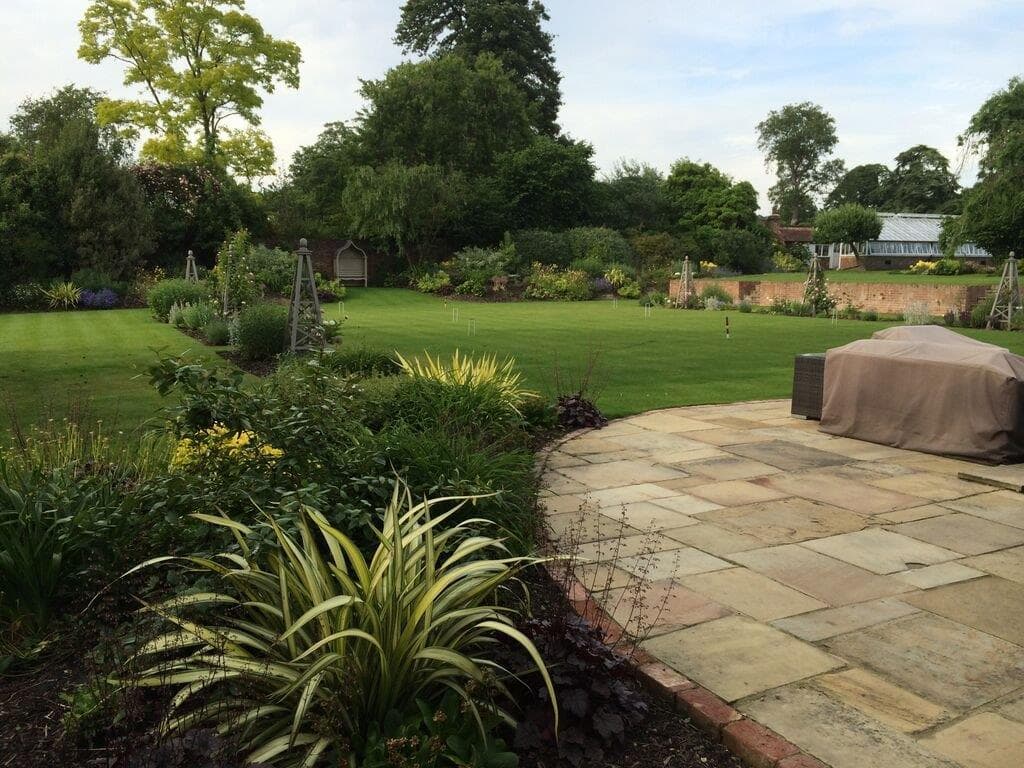
Wider beds also mean less annual pruning. A Choisya or Pittosporum will reach 1.2-1.5m spread. In a 60cm bed it overhangs the lawn within two years and you are cutting it back every spring. In a 1.5m bed it sits comfortably for five years.
2. Not Planning for Drainage
South East England clay is unforgiving. If you lay a patio or path without fall, without a soakaway, or without checking where the water will actually go, you will have a pond by November.
We have lifted patios that were laid dead flat. We have dug out gravel paths sitting in a clay bowl with no outlet. Both are expensive to fix and both should have been caught at the planning stage.
The fix: Every hard surface needs a 1:60 fall (roughly 1cm drop per 60cm length) away from the house. On clay, that water needs to go somewhere: a soakaway, a planted border that can absorb it, or a drainage channel to an existing drain.
Soakaways cost £200-400 to dig and fill (1m cube, filled with aggregate, wrapped in membrane). That is cheaper than lifting a flooded patio two years later.
If your garden is lower than the house, you may need a linear drain at the patio edge. That is another £150-300 supply and fit, but again, cheaper than the repair.
3. Choosing Paving by Photo, Not by Site
Porcelain paving looks clean in the brochure. It also shows every leaf, every smudge of mud, and every streak of silt from the clay border behind it. Indian sandstone weathers beautifully. It also grows lichen in shaded north-facing courtyards and needs annual jet washing or soft scrubbing.
Neither is wrong. Both are wrong if you pick them for the wrong site.
The fix: Match the material to the conditions.
- Shaded, damp, north-facing: Avoid smooth porcelain (slippery when wet) and pale sandstone (lichen magnet). Use riven sandstone in mid-tones (buff, grey) or textured porcelain with R11 slip rating.
- Sunny, south-facing, high use: Porcelain is fine here. It stays clean, does not fade, and handles foot traffic.
- Under trees: Anything pale will stain. Use dark grey or black limestone, or accept that you will be cleaning it.
See our guide to choosing the right paving material for UK gardens for full cost and maintenance comparisons.
4. Planting Sun-Lovers in Shade (and Vice Versa)
Lavender in a north-facing border. Hostas in full sun. We see both regularly.
Lavender (Lavandula) needs at least six hours of direct sun and free-draining soil. In shade it gets leggy, flowers poorly, and often dies over winter from root rot. Hostas scorch in full sun and need consistent moisture.
The fix: Observe your garden for a full day before you buy plants. Mark where the sun hits at 9am, noon, 3pm, and 6pm in summer. Then match plants to those conditions.
For full shade (north-facing, under trees, enclosed courtyard): Ferns (Dryopteris, Polystichum), Epimedium, Brunnera, Tiarella, Heuchera, Ajuga, Vinca.
For full sun (south-facing, open aspect, no tree cover): Lavender, Rosemary, Salvia, Perovskia, Eryngium, Verbena bonariensis, Stipa, Nepeta.
For part shade (morning sun, afternoon shade, or dappled light): Geranium, Astrantia, Alchemilla, Digitalis, Aquilegia, Helleborus.
If you are working with a challenging site like a north-facing courtyard, our north-facing garden design guide has plant lists and layout principles that work.
5. Ignoring Mature Plant Size
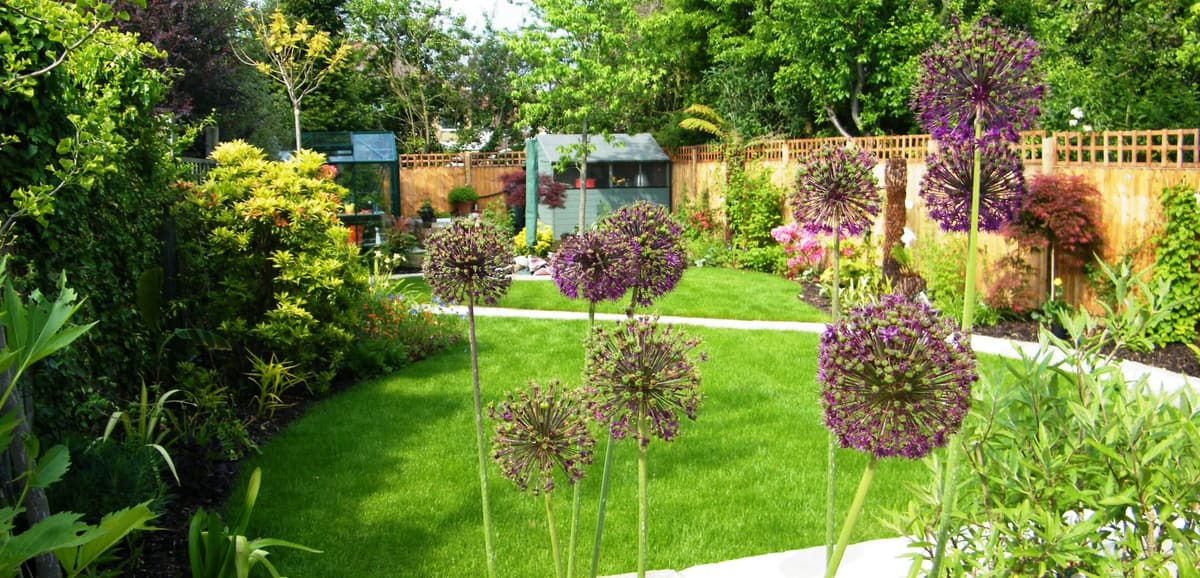
A 2-litre Choisya ternata looks tidy in the garden centre. Five years later it is 1.5m tall and 1.5m wide, smothering the Lavender you planted 40cm away.
The same applies to Photinia, Viburnum tinus, Pittosporum, Escallonia, and most evergreen shrubs. They all reach 1.2-1.8m spread if left unpruned.
The fix: Check the mature size before you plant, then space accordingly.
For a mixed border with shrubs and perennials, allow:
- Small shrubs (Lavender, Hebe, dwarf Pittosporum): 60-80cm spacing
- Medium shrubs (Choisya, Viburnum tinus, Osmanthus): 1.2-1.5m spacing
- Large shrubs (Photinia, Elaeagnus, Magnolia): 2-2.5m spacing
Yes, it looks sparse for the first two years. That is why we infill with perennials (Geranium, Nepeta, Salvia, Verbena) that fill the gaps while the shrubs establish, then get edited back as the woody plants mature.
If you plant shrubs at their final spacing from day one, you save yourself years of annual pruning and the border looks better.
6. Designing for Instagram, Not for Use
A sunken seating area with three steps down looks dramatic in the render. It also fills with water in winter, is a trip hazard at night, and makes moving furniture in and out a pain.
We have built gardens with these features. Some clients love them. Most would have been better served by a level patio with one or two shallow steps.
The fix: Test the function before you commit to the form.
Ask yourself:
- How often will we actually use this?
- Who will be using it? (Kids, elderly relatives, wheelchair users?)
- What happens when it rains?
- Can we get a table, a barbecue, or a wheelbarrow to this spot easily?
If the answer to any of those is uncomfortable, simplify the design.
For practical layout principles that balance aesthetics and usability, see our guide on how to brief a garden designer.
7. Forgetting About Maintenance
A white-painted fence looks crisp when new. It also needs repainting every two years. A hedge gives you privacy and wildlife habitat. It also needs cutting once or twice a year. A gravel path is cheap to lay. It also needs annual top-ups and weeding.
None of these are wrong choices. They are wrong if you do not want to do the maintenance.
The fix: Be honest about how much time you have, then design accordingly.
Low maintenance alternatives:
- Instead of painted fences: Stained timber (re-stain every 4-5 years) or composite panels (no treatment needed).
- Instead of privet or Leylandii hedges: Fence with climbers (evergreen Trachelospermum jasminoides, or deciduous Clematis armandii) or a low hedge (Buxus, Ilex crenata) that only needs one cut per year.
- Instead of gravel paths: Resin-bound gravel (weed-free, stable, no top-ups) or self-binding gravel (Cedec, Breedon) with good edging.
For a full breakdown of low-maintenance planting and materials, see our article on sustainable garden design.
8. Underestimating the Cost of Groundworks
Digging out and levelling a sloping site costs £80-120 per cubic metre of soil removal, plus haulage. If you need to move 10 cubic metres, that is £1,000-1,500 before you have laid a single paver.
Retaining walls add another £150-300 per linear metre for brick or blockwork, more for oak sleepers or natural stone.
If your garden has a 1.5m drop over 10m length and you want a flat patio, the earthworks alone can cost £3,000-5,000. That is often half the total project budget.
The fix: Work with the slope where you can.
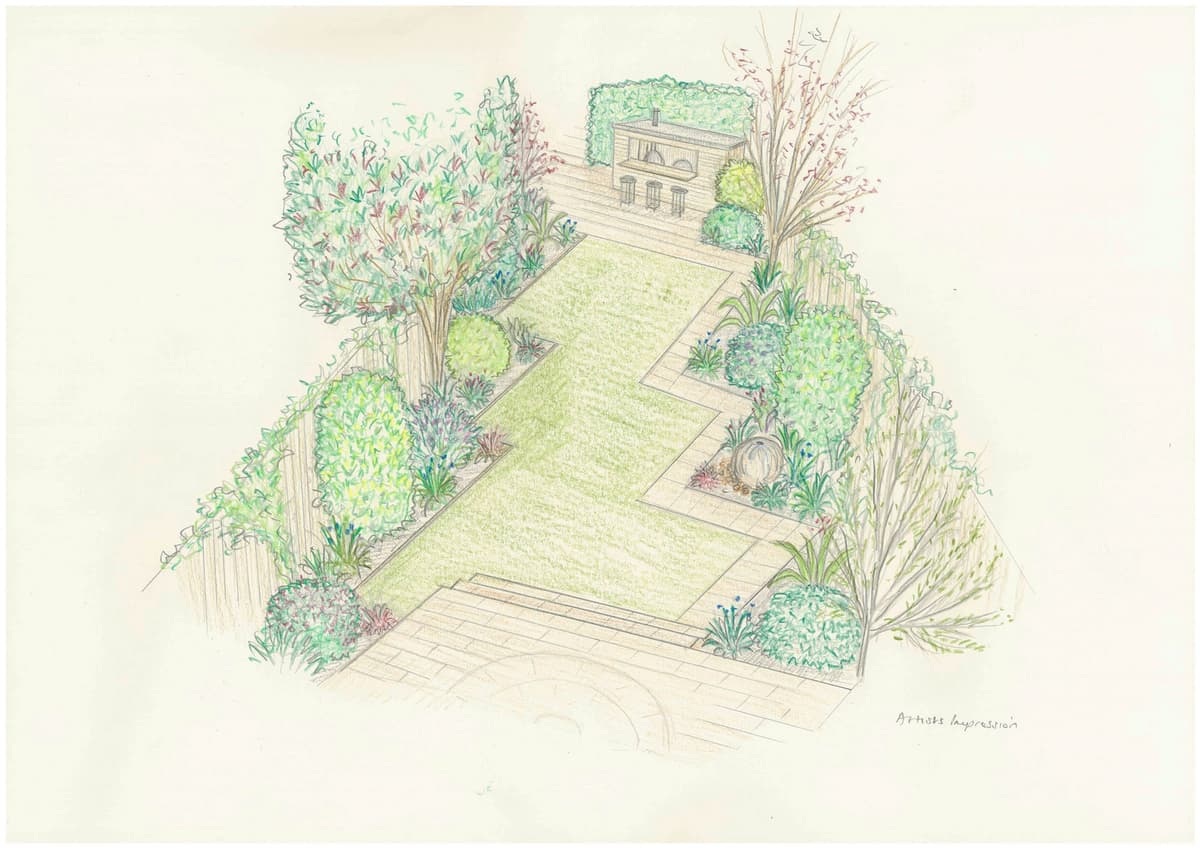
Instead of one large flat terrace, consider two smaller levels linked by steps. Instead of a retaining wall, use planting to stabilise the slope (Cotoneaster horizontalis, Geranium macrorrhizum, Vinca minor).
If you do need to level a section, keep it to the area you will actually use: a 3x4m patio rather than a 6x8m one.
For realistic project costs across the South East, see our guides to garden design costs in Kent and garden design costs in Surrey.
9. Ignoring Your Soil Type
If you garden on London clay, Wealden clay, or the heavy stuff around Sevenoaks and Tunbridge Wells, you cannot plant Mediterranean species (Lavender, Cistus, Rosemary) straight into the ground and expect them to survive.
Clay holds water. Mediterranean plants need sharp drainage. The roots sit in wet soil over winter and rot.
The fix: Either improve the soil or choose plants that tolerate clay.
To improve drainage for Mediterranean planting: Dig in 30-50% grit or sharp sand to a depth of 30cm, or build a raised bed with free-draining topsoil mix (60% topsoil, 40% grit). Cost: £40-60 per cubic metre of improved soil.
To plant for clay without amendment: Choose shrubs and perennials that tolerate heavy soil.
- Clay-tolerant shrubs: Viburnum tinus, Choisya ternata, Osmanthus, Philadelphus, Cornus, Weigela, Ribes.
- Clay-tolerant perennials: Geranium, Astrantia, Persicaria, Helenium, Rudbeckia, Hemerocallis, Hosta (in shade).
10. No Lighting Plan
Most gardens get designed for daylight and ignored at night. If you use your garden after work between April and September, that is a missed opportunity.
Lighting extends the usable hours, improves safety on steps and paths, and can make a small garden feel larger by drawing the eye to lit features rather than the boundaries.
The fix: Plan for lighting during the design phase, not as an afterthought.
You need three types:
- Task lighting: Steps, path edges, door thresholds. Use low-level recessed lights or bollards. Budget £40-80 per fitting installed.
- Ambient lighting: Uplighting a tree, washing a wall, or lighting a planting bed. Use spike-mounted spots or well lights. Budget £60-120 per fitting installed.
- Feature lighting: A sculpture, water feature, or architectural plant. Use directional spots. Budget £80-150 per fitting installed.
For a typical 50-60sqm garden, expect to spend £800-1,500 on a basic lighting scheme (6-8 fittings, cabling, transformer, installation).
For a full breakdown of types, costs, and regulations, see our garden lighting design guide.
11. Trying to Fit Everything In
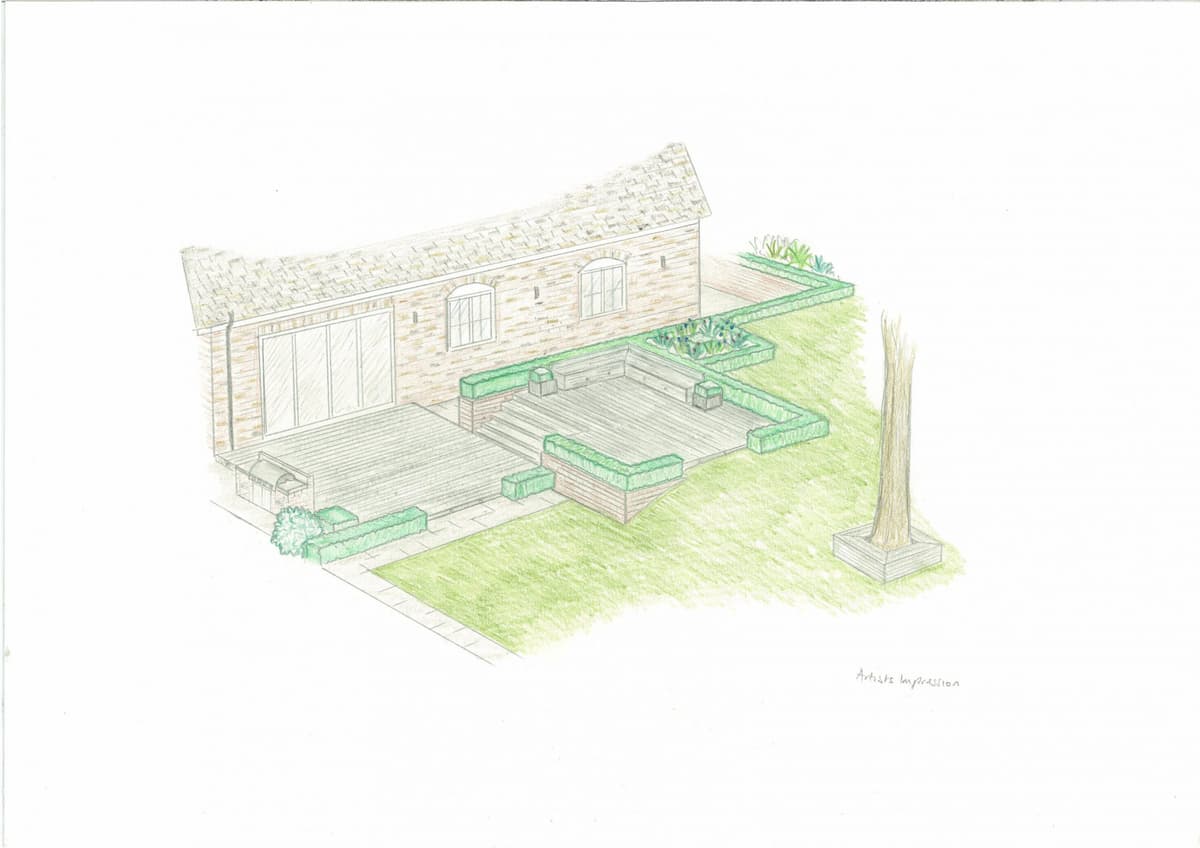
A 40sqm garden cannot comfortably hold a dining area, a lounge area, a play space, a vegetable patch, a lawn, and a shed.
We have been asked to fit all of that into smaller plots. The result is always compromised: each zone is too small to use properly, the layout feels cluttered, and the garden never settles into a coherent style.
The fix: Pick two or three functions and do them well.
For a young family in a 50sqm garden, that might be: a 3x4m patio for dining, a small lawn for play (20sqm), and borders with low-maintenance evergreen structure. The vegetable patch and the lounging area can wait until the kids are older and the play space is no longer needed.
For an empty-nest couple in the same size garden, the priority might shift: a larger patio (4x5m), no lawn, deeper planted borders, and a small greenhouse or potting bench.
If you are working with a small urban plot, our guide to urban garden design has layouts that maximise function without clutter.
12. Not Getting a Survey or Level Check
You cannot design a patio, a path, or a retaining wall accurately without knowing the levels. Guessing costs money.
We have re-laid patios that were specified at the wrong height because the client measured with a spirit level and a plank rather than a laser or dumpy level. The 3cm error meant the patio sat below the damp-proof course and water tracked into the house.
The fix: If your garden has any slope, any change in level, or any interface with the house (patio, path, steps), get it surveyed.
A basic survey for a suburban garden costs £200-400 and gives you spot heights across the site, the house threshold level, and the drain positions. That is enough to design and price accurately.
If you are working with a designer, they will usually arrange the survey. If you are doing it yourself, hire a local surveyor or use a builder with a laser level and dumpy.
What to Do if You Have Already Made One of These Mistakes
Most of these are fixable. Skinny borders can be widened by lifting turf and extending the bed line. Poor drainage can be addressed with a soakaway or a French drain. Poorly spaced plants can be moved in autumn or early spring.
The ones that are expensive to fix are the structural errors: patios laid at the wrong level, retaining walls built without proper foundations, sloping sites that were levelled badly. Those require re-work and that costs.
If you are planning a garden renovation and want to avoid these pitfalls, start with a design. It does not have to be a full drawing set. A layout plan with measurements, materials, levels, and a planting schedule will cost £600-1,200 for a typical suburban garden and will save you several times that in avoided mistakes.
See our guide on garden makeover costs and planning for what to expect at each stage.
The One Thing That Prevents Most of These Mistakes
Plan before you plant. Measure before you order materials. Observe the site for a full season if you can, or at least for a month, before you make permanent decisions about layout, drainage, and planting positions.
Every garden we have fixed started with good intentions. The mistakes happened because someone skipped the planning stage and went straight to the garden centre or the builders merchant.
You do not need to hire a designer for every project. But you do need to think through the drainage, the levels, the mature plant sizes, the sun and shade patterns, and the actual use before you commit to a layout.
If you want to talk through your garden project and get an idea of what is realistic for your budget and site, we offer free initial consultations across Kent, Surrey, Essex and London. Get in touch and we will come and have a look.